Euro-Office comes to your desktop with the Nextcloud Office Desktop app
The Euro-Office desktop app is here. Learn about the app’s features, how to install it, and how to co-edit files with your team through Nextcloud Hub.
Read More

Explore what’s new in the release blog!
Read moreOne year ago, on 19 November 2025, the European Commission proposed the Digital Omnibus: a package meant to “simplify” EU digital rules. That word was used to justify some of the biggest changes to online data protection since the GDPR went live in 2018. They included proposals such as:
And this isn’t only about data collected from now on: critics warn it could also open up the posts, chats and documents companies have gathered about you over the years. That resembles a lot what US Big Tech companies have been asking for, as noted by MEP Michael McNamara at a European Parliament hearing
One year later, part of the package is law. But the most important fight, over your data and AI, is still open.
The Omnibus came in two parts. The AI part delayed and loosened rules in the EU AI Act. It moved fast and entered into force on 27 July 2026. The data part rewrites the GDPR, and it is still being negotiated. That is where the question of AI training on your data will be decided.
Under the GDPR, companies need a legal basis to use your personal data. One of them is “legitimate interest”. This means a company may use your data without consent if its interests outweigh yours. The Commission proposed a new article confirming that companies can rely on legitimate interest to develop and run AI. In return, it promised you an unconditional right to opt out.
In October, EU governments agreed on their own version. It keeps the AI article, adding that AI development is not automatically a legitimate interest. But it removes the unconditional right to object. You would keep only the ordinary right, which a company can override if it shows compelling legitimate grounds.
The privacy group noyb warns that, under the government’s text, processing personal data “in the context of AI” would automatically be lawful, letting Big Tech use personal data collected over decades with almost no restrictions.
The EU’s own data protection authorities, the European Data Protection Board (EDPB) and European Data Protection Supervisor (EDPS), also criticized the AI article. In a joint opinion, they called the AI article unnecessary as it doesn’t really clarify anything.
There’s a simpler way to keep your documents out of someone else’s training set: keep the AI where your data is
Learn more about Nextcloud AssistantCorporate Europe Observatory and LobbyControl counted 655 lobbying meetings with Members of the European Parliament on the Omnibus since November 2025. 83% of them were with business interests. In Denmark, Sweden and Ireland, former government officials have gone on to lobby for Meta on the file.
Bram Vranken, campaigner and researcher at Corporate Europe Observatory, added: “Our research shows that Big Tech enjoys unprecedented access to the highest levels of government across Europe.”
Pressure from civil society, regulators and MEPs has already changed the package:
But the AI training article survived, and so the right you have as a consumer to say no was weakened.
The European Parliament hasn’t made a final decisition on its position. The two lead committees for industry (ITRE) and civil liberties (LIBE) have received more than 1,000 amendments and haven’t set a vote date. A vote might happen in early 2027, and only then can Parliament and EU governments negotiate the final text.
That means there is still time to be heard. If you live in the EU, contact your MEP and tell them you want an unconditional right to object to AI training on your data. The lead negotiators are Aura Salla (EPP, Finland) and Marina Kaljurand (S&D, Estonia), but you can also contact your own MEP.
Whatever the final text says, it decides what companies can do with data they already hold about you. The surest way to keep your documents, chats, and email out of someone else’s training set is not to hand them over in the first place.
With Nextcloud, organizations run AI on their own servers. Nextcloud Assistant summarizes mail threads, helps with writing, translates, and answers questions about your documents using local models. Nothing is sent to external AI services unless an administrator turns that on.
If you do want to connect an external provider, the Nextcloud Ethical AI Rating shows for every AI feature how open its software, model, and training data are, so you can decide what fits your data. Self-hosting alone doesn’t make anyone GDPR-compliant, but it does mean you decide who touches your data.
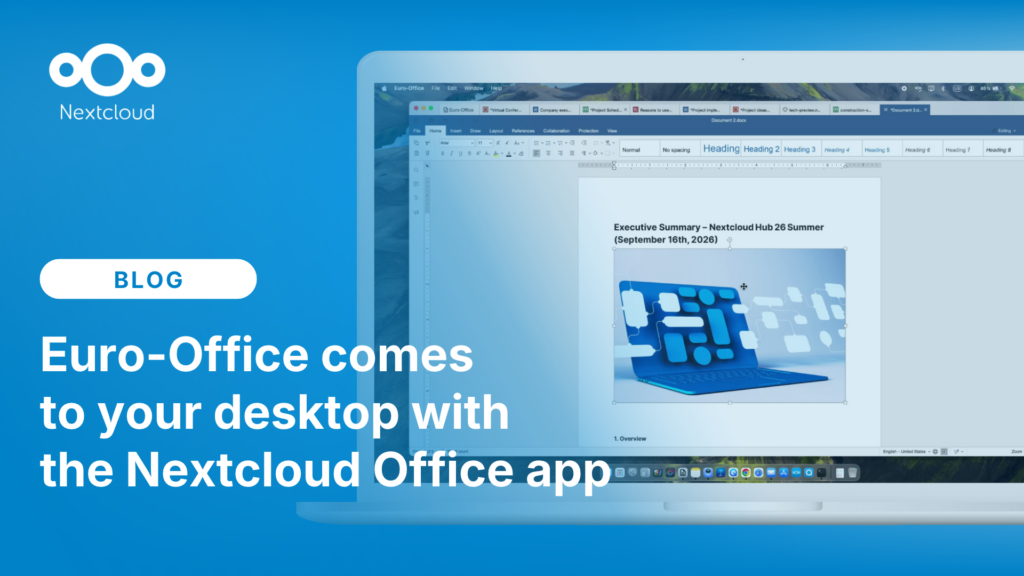
The Euro-Office desktop app is here. Learn about the app’s features, how to install it, and how to co-edit files with your team through Nextcloud Hub.
Read More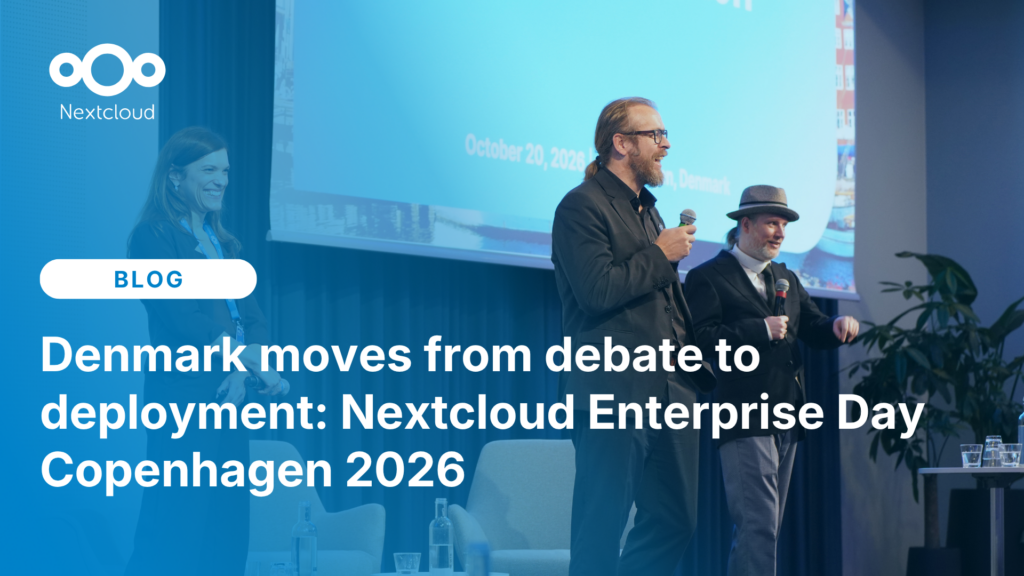
At the second Nextcloud Enterprise Day Copenhagen, municipalities, universities and other public organisations discussed how they can reduce their dependency on US Big Tech. Read our recap of the event.
Read More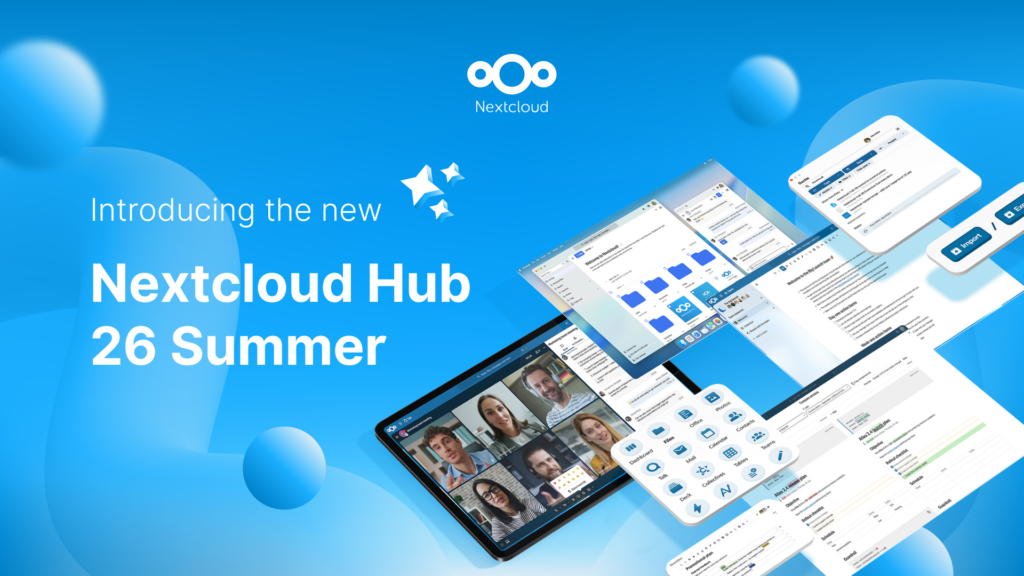
Created in a joint effort of our team, community, and partners, Nextcloud Hub 26 Summer learns from real people using our tools every day. Create your team's own space with Nextcloud Teams, organize your memories in new Nextcloud Photos, and enjoy the updates you asked for across all apps. Read on for a full rundown of our latest release!
Read More
We are introducing the Nextcloud ISV Partner Program to support independent app developers through the Nextcloud app store. Read more in this article and get in touch with our team if you want to join the program.
Read More
We explore challenges Nextcloud Talk solves that Microsoft Teams can't, uncovering a stronger alternative for organizations that that prioritize digital sovereignty, compliance, and control.
Read More
Following two successful Nextcloud Enterprise Days in The Hague in 2025, we brought the event to Utrecht this year, where a massive 750 registrations brought a big crowd to the Jaarbeurs venue. The kickoff in the morning pre-announced the launch of the book “Sovereignty! But how?“ by well-known Dutch IT security journalist and author Brenno […]
Read More
Looking for a sovereign Microsoft Office alternative? Learn how Nextcloud puts you back in control of your data and online collaboration.
Read More
Nextcloud has published its first Digital Sovereignty Index (DSI) to showcase the status of digital sovereign infrastructure.
Read More
Discover the Microsoft 365 alternative by Nextcloud and IONOS: the Nextcloud Workspace office suite, launching in the course of 2025.
Read More
Nextcloud becomes the first cloud software platform to earn the Blauer Engel ecolabel, proving that digitally sovereign and green IT is possible.
Read More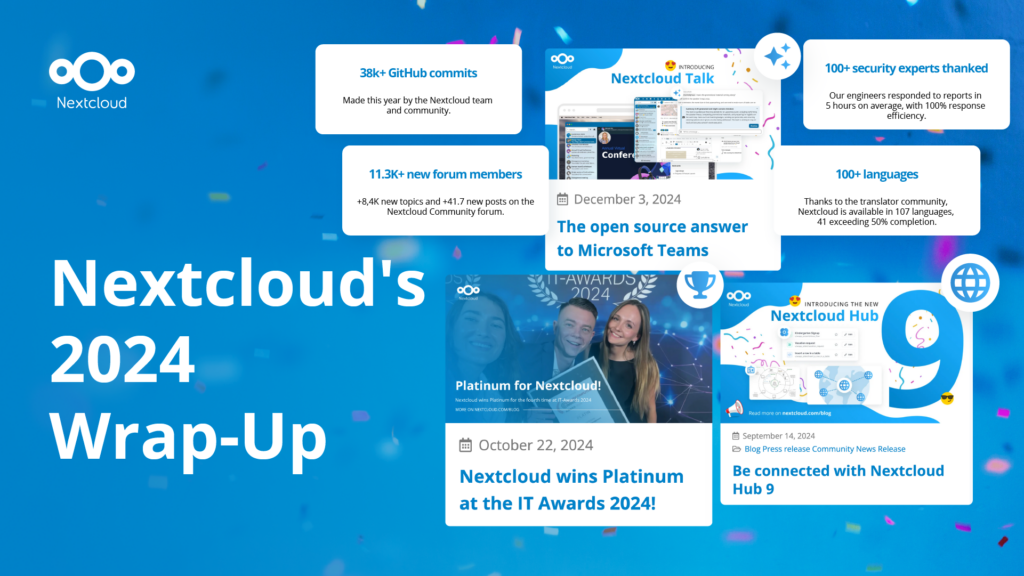
In the Nextcloud 2024 wrap-up, we want to take a moment to celebrate this year's achievements. Join us as we continue to reimagine what’s possible - shaping a world where open source, privacy and connection come together and drive progress for the greater good.
Read More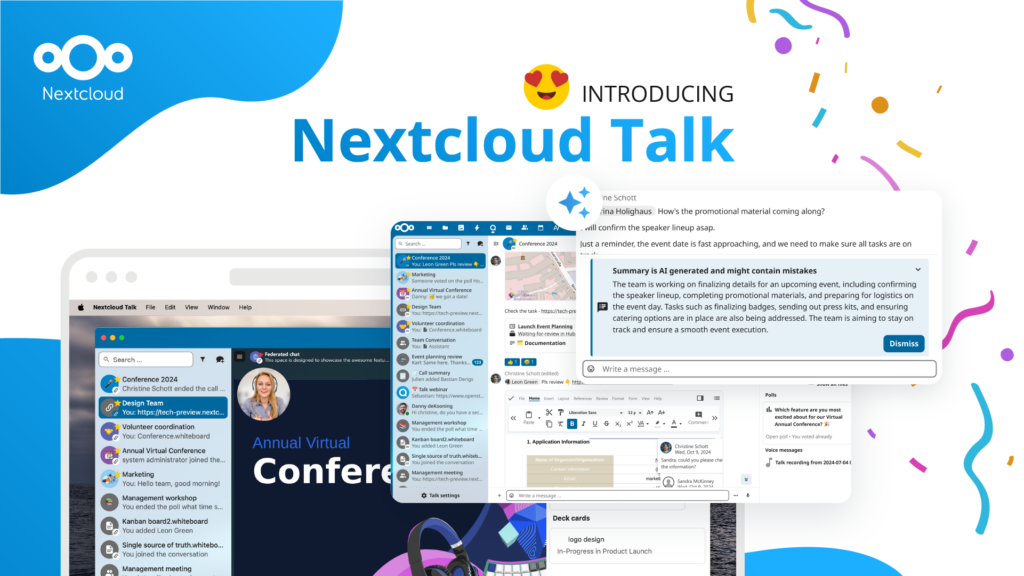
Organisations, small and large, need a way to ensure the resiliency and digital sovereignty of their operations – an open-source, privacy-respecting alternative to Teams. And today, we present that solution - Nextcloud Talk.
Read More
Nextcloud has been recognized with the World Summit Award Germany that selects and promotes local digital innovation improving society, aiming to contribute to the United Nations' agenda of sustainable development goals.
Read More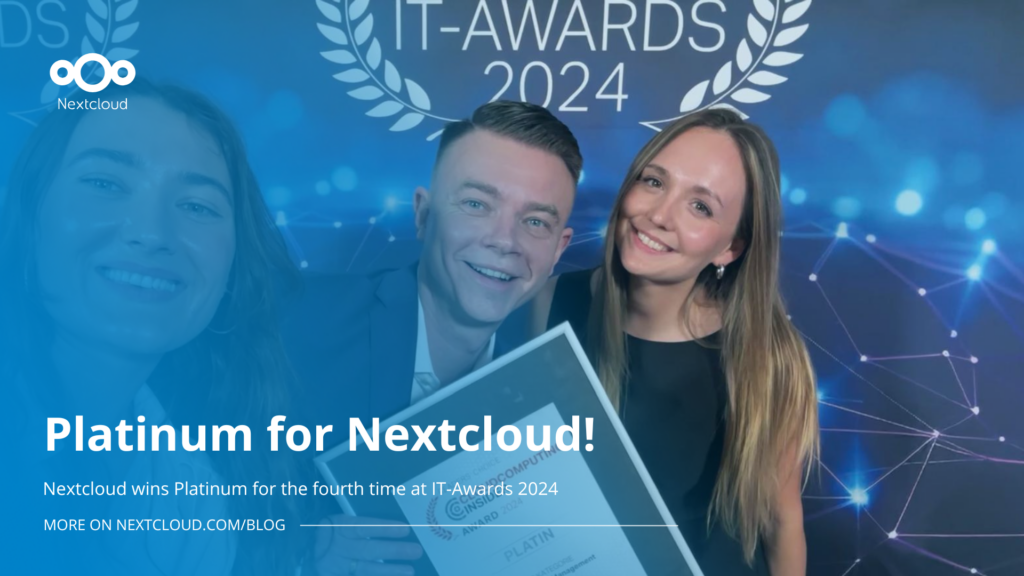
Nextcloud has been awarded Platinum at the IT Awards 2024. Today, we celebrate this win together!
Read More
DIE ZEIT, a prominent German outlet, interviewed Nextcloud’s founder Frank Karlitschek for an article on Microsoft’s anti-competitive behaviour on the European office software market. Read for a recap of the article and the key takeaways.
Read More
MagentaCLOUD’s migration to Nextcloud in 2021 resulted in a fully equipped Online Storage with an integrated online office suite that further improves the user experience, flexibility and security for customers.
Read More
We bring you a major update to the Nextcloud AI Assistant, plus the news we work with several big hosting providers like IONOS and OVHcloud to bring AI-as-a-Service options to you!
Read More
Bechtle and Nextcloud announce today a complete managed collaboration platform for the public sector that requires no tender and can be deployed immediately.
Read More
Discover how to make the switch from ownCloud to Nextcloud. Our quick guide provides insights into the migration process, helping you make the transition smoothly.
Read More
Today, US-based file sync & share vendor Kiteworks announced their acquisition of ownCloud and Dracoon. Kiteworks points out that their customers now have access to their file-sharing application. It is to be expected they will not maintain 3 similar products, but customers will have to migrate to the US firms’ platform or look for another […]
Read More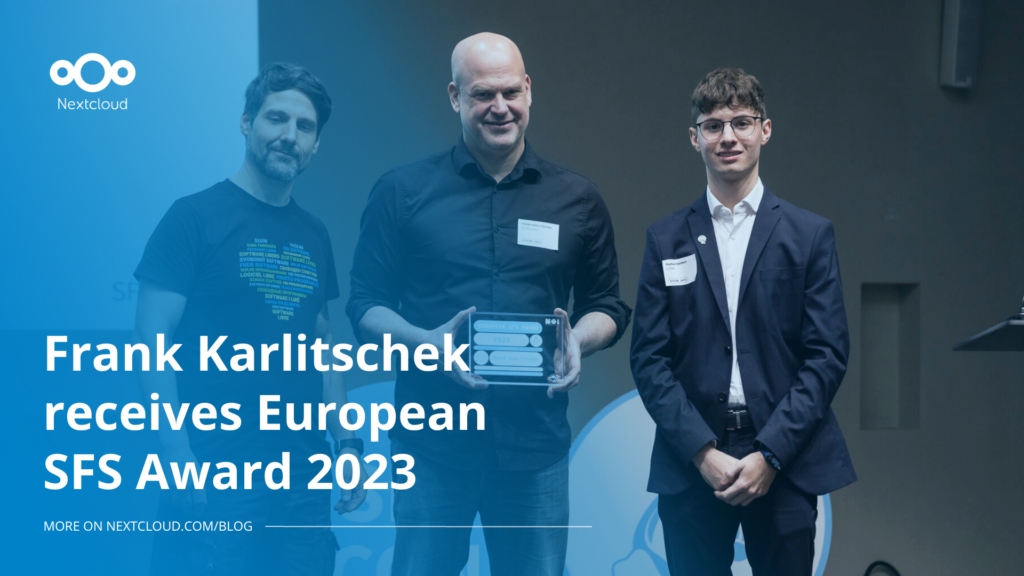
Nextcloud founder and CEO Frank Karlitschek earns the honorary SFS Award at the 20th annual SFSCON taking place in South Tyrol, Italy.
Read More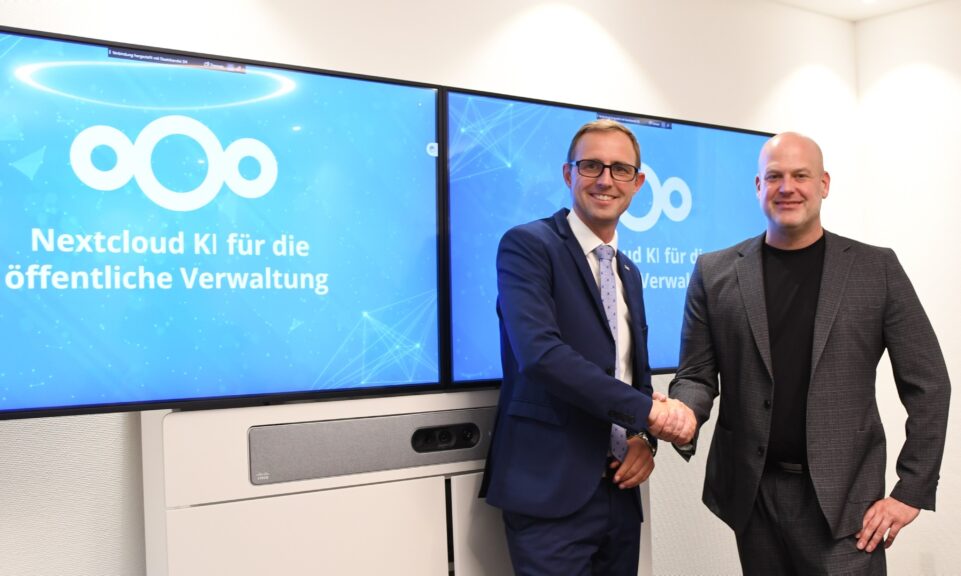
As part of Schleswig-Holstein's state digitization strategy, the state chancellery has announced they will work with Nextcloud to develop AI for working with government documents. This comes just after we announced the first private AI assistant last weekend with Hub 6. The German state already uses Nextcloud and their AI strategy aligns with our work on ethical, local AI technologies.
Read More
One year ago, the European Commission proposed the Digital Omnibus, a package to “simplify” EU digital rules. Its most important part is still being negotiated: a GDPR change that would make it easier for companies to train AI on your personal data, while EU governments want to weaken your right to say no. Here’s where things stand, who’s lobbying, and how to keep your data out of someone else’s AI.
Read More
What does the dependency on U.S. Big Tech put at risk and what can Canadian organizations learn from Europe’s digital sovereignty movement? In this article, we try to find the answers.
Read More
Jan Vales, System Administrator for the TUcloud at TU Wien, tells us about university's 35,000-user Nextcloud setup, how share links solved TU Wien’s external collaboration problems, and why he thinks open source should win over closed source.
Read More