Since launching on March 27, Euro-Office has moved quickly. We have been heads-down on the things that matter most for a young open-source project: making it easier to build & contribute to, documenting our code and processes, and publishing a Euro-Office roadmap.
We are also happy to welcome two new members to the coalition, and existing coalition members are hiring. Besides these formal contributions, significant community contributions have been received, especially in improving security and performance.
Here is an update on where things stand.
Euro-Office roadmap: Security, performance, and ODF support
Over the coming days, we plan to publish a roadmap on GitHub, so everyone can see where we are headed. While we collect existing tickets and create new things, we wanted to share an overview of our goals so the community has a clear picture of where Euro-Office is headed.
Already started & ongoing
When we started, our focus was on making Euro-Office easier to build, removing unneeded dependencies, replacing binary blobs, and so on. Much of this work is done, but there is still a fair bit to do:
Improve the build process further
Set up automated testing
Translate code comments that aren’t in English
Improve documentation
Clean up and refactor code that has outdated dependencies or binary blobs
When we went live, a lot of the contributions had to do with performance or were related to security. These are, of course, important concerns, and we will keep working on them.
Improve security: Various PR’s were done, including updates to an outdated OpenSSL and more
Improve performance
Bugfixes/improve stability
Removal of some artificial restrictions, like limits to mobile editing and the admin panel
Next steps: improved ODF support, integrations, mobile apps, and more
While we work on all those very technical things, we also want to ship a product! Our goal is first to make a production-ready build of the server, clean up the code, and make integration with the various products like Nextcloud and OpenProject easier. Then we will work on the desktop and mobile apps.
Make Euro-Office production-ready on the server (incl PDF editor)
Improve ODF support
Improve integration features: Allow skipping different cloud services, chat, and other unneeded features, and allow using a different AI back-end
Improve Nextcloud integration: Build an easy Office selector, and integrate Smart Picker and other tools
Release the desktop app for Windows, Mac, and Linux
Release Mobile apps for Android and iOS
One item we want to call out specifically: Euro-Office will work towards full ODF support. That is not only because it matters technically, but also reflects our priorities: a focus on open standards.
OOXML, or Office Open XML, was not designed for interoperability, but to do something very specific: to encode Microsoft Office’s binary formats in XML in such a way as to allow Microsoft to claim compliance with the standard without relinquishing control over users through lock-in.
The Document Foundation
Global Community Blog
Euro-Office exists precisely to give users and organisations a genuine alternative — one that treats open standards as a foundation, not a compatibility afterthought. Prioritizing improvements to ODF support is a natural expression of that commitment.
New members joining Euro-Office: OX and Office EU
Next, we are pleased to announce that two new organisations are joining the Euro-Office coalition: Open-Xchange and Office.EU. Both bring resources and commitment that will meaningfully accelerate the project, and of course, both are very much aligned with our mission.
Office EU
Office EU joined the Euro-Office open source project to strengthen a growing ecosystem of European platforms united by open collaboration. Open standards should be the norm, not the exception. When platforms work together on shared foundations, everyone benefits. A step forward in regaining control and building a free, transparent, and sovereign working environment for Europe.
Open-Xchange (OX)
Open-Xchange (OX) welcomes the Euro-Office initiative, as it believes it is essential that end-users have a choice of real alternatives to solutions from global hyperscalers that are truly independent and support the drive to digital sovereignty; This includes a secure and open office suite that can handle existing formats.
Next, let’s address the question of how you, too, can join the Euro-Office project.
Euro-Office: How to get involved and governance
A trustworthy open-source project needs clear rules on how newcomers can become part of the community and how decisions are made. We have taken concrete steps on both fronts.
Contributing to Euro-Office
We have introduced a CONTRIBUTE.md file covering everything a new contributor needs to know: design principles, coding guidelines, and how we handle pull requests. You should be able to get started there right away!
This process seems to be working even before we published this documentation. We are incredibly humbled by all the attention and the many contributions we have already seen.
Besides our team, a dozen external developers opened 15 pull requests across the repositories. A third of these have been merged, 1 was closed without a merge, while the rest are under review. Many relate to security and performance, bringing immediate benefits across the code base.
Apart from code contributions, over 120 people engaged in conversations, tested builds, reported issues, and contributed bug reports and feature requests. We welcome more contributions in any of those areas going forward!
For those looking for a more formal membership, the process of becoming a member has been defined in the README. It works as follows:
For individuals: Contribute over the course of a few months, and we will add you to the GitHub project. Sustained contribution is the bar; there is no formal application process.
For organisations: Reach out, tell us what you want to work on, and we will discuss and vote on your involvement following the governance process above. Once approved, your organisation joins the list of members, and your team members are added to the project.
Governance at Euro-Office
The README now includes a governance section, alongside a code of conduct based on the widely-adopted Contributor Covenant. For now, our current decision-making model is straightforward: we follow the open-source principle of who codes, decides with consensus-based decision-making in case of disagreement. Concretely:
Decisions are made by consensus among all project members — meaning full agreement, or an agreed-to-disagree outcome.
Members are the members of the GitHub project.
Regular contributors are added to the project by consensus of existing members.
These rules can be changed by a majority vote.
This is a starting point, not an endpoint. As we scale up, we will set up a more formal steering committee, and we will share more on that structure as it takes shape. But for now, these basic rules will suffice, as they do for many other open source projects.
Euro-Office is hiring!
Of course, there is a third way to get involved: join one of the teams at the various current contributors to Euro-Office!
In response to the immense interest from the market in Euro-Office, Nextcloud plans to double the team working on it. The same goes for IONOS, which has already shared details here. Please check our jobs page and submit your resume if you’re interested in working full-time at Euro-Office, and stay tuned for more messages about Euro-Office from IONOS on LinkedIn!
Of course, other partners are also ramping up their efforts, and we will keep you updated.
Join us
We now have a Euro-Office roadmap, a governance model, a contribution process, and a growing coalition with lots of open job positions. The foundations are solid. If your organisation shares our belief in digital sovereignty, open standards, and software that genuinely serves its users, now is a great time to get involved. Reach out, and let’s talk.
Euro-Office is gaining momentum with a clear roadmap focused on security, performance, and full ODF support. New coalition members, growing community contributions, and defined governance mark the next phase of building an open, sovereign office ecosystem.
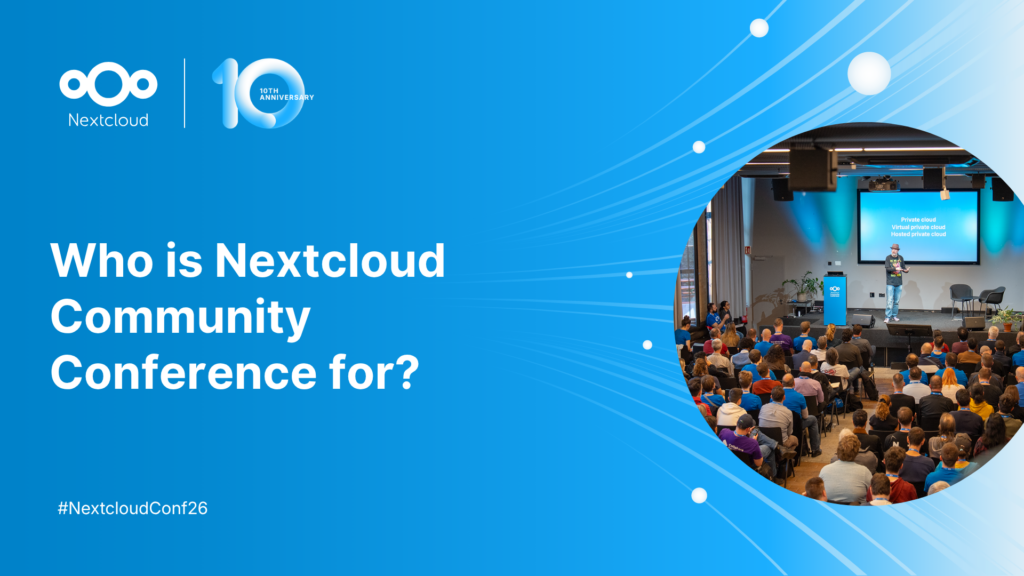
You don't need to run Nextcloud to enjoy the Nextcloud Community Conference and take a great deal of value home with you. Let's answer the question: who is the Nextcloud Community Conference for?
We are introducing the Nextcloud ISV Partner Program to support independent app developers through the Nextcloud app store. Read more in this article and get in touch with our team if you want to join the program.
We explore challenges Nextcloud Talk solves that Microsoft Teams can't, uncovering a stronger alternative for organizations that that prioritize digital sovereignty, compliance, and control.
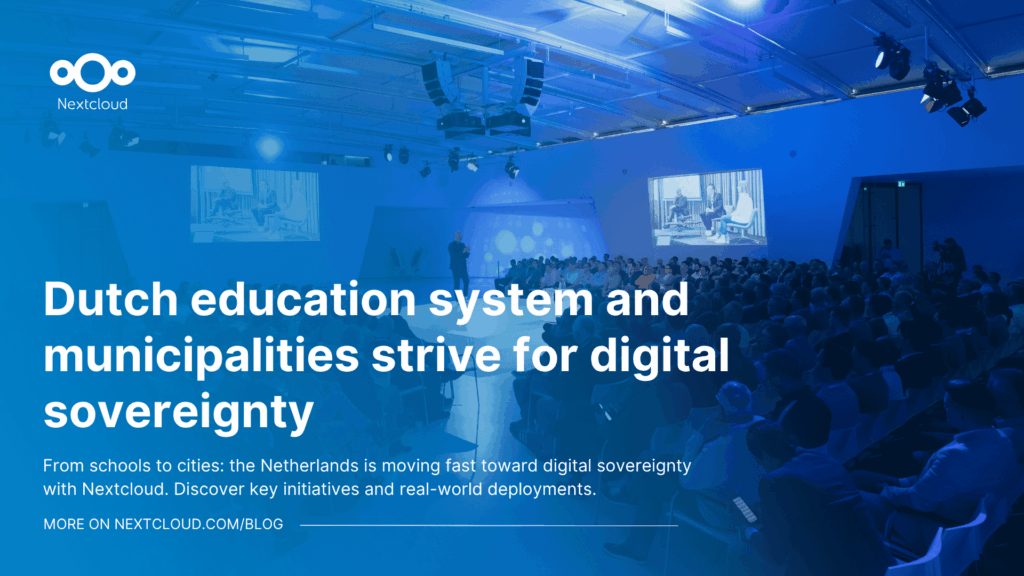
Following two successful Nextcloud Enterprise Days in The Hague in 2025, we brought the event to Utrecht this year, where a massive 750 registrations brought a big crowd to the Jaarbeurs venue. The kickoff in the morning pre-announced the launch of the book “Sovereignty! But how?“ by well-known Dutch IT security journalist and author Brenno […]
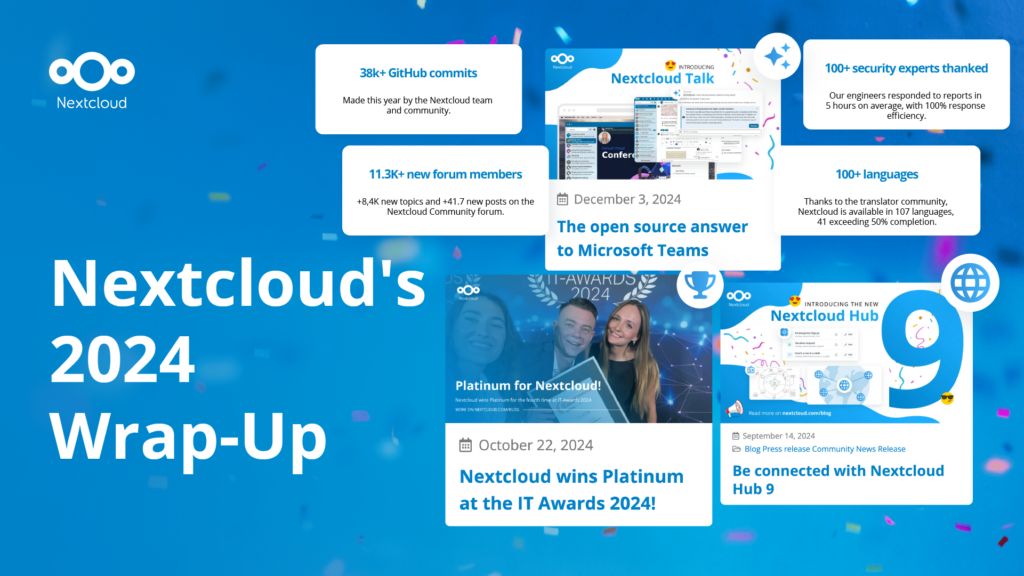
In the Nextcloud 2024 wrap-up, we want to take a moment to celebrate this year's achievements. Join us as we continue to reimagine what’s possible - shaping a world where open source, privacy and connection come together and drive progress for the greater good.
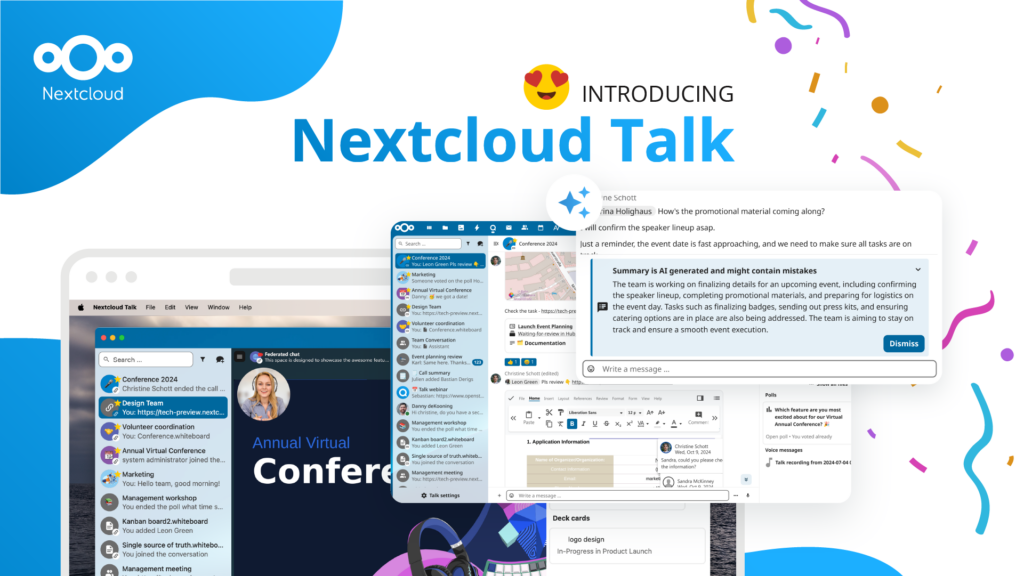
Organisations, small and large, need a way to ensure the resiliency and digital sovereignty of their operations – an open-source, privacy-respecting alternative to Teams. And today, we present that solution - Nextcloud Talk.
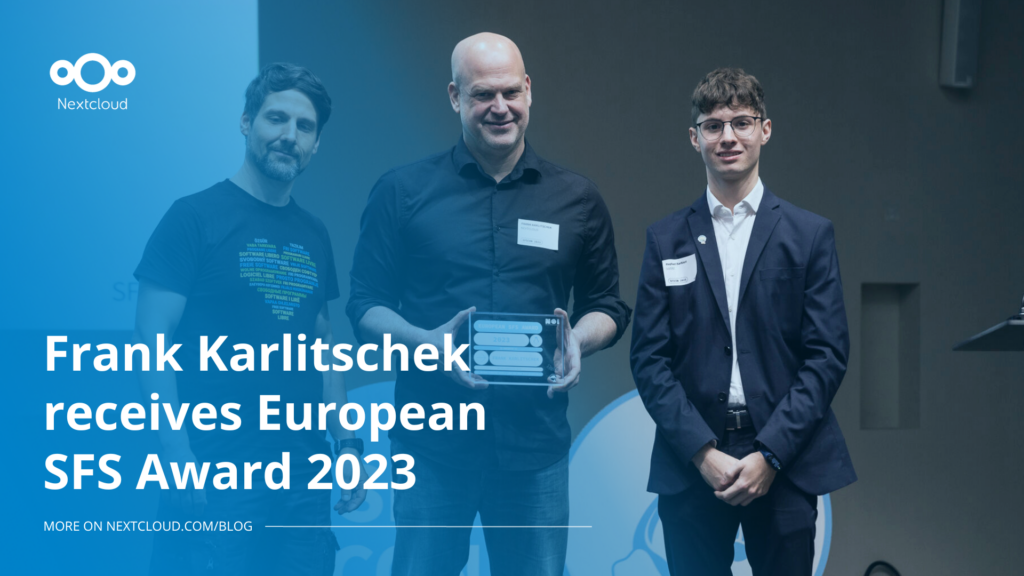
Nextcloud has been recognized with the World Summit Award Germany that selects and promotes local digital innovation improving society, aiming to contribute to the United Nations' agenda of sustainable development goals.
DIE ZEIT, a prominent German outlet, interviewed Nextcloud’s founder Frank Karlitschek for an article on Microsoft’s anti-competitive behaviour on the European office software market. Read for a recap of the article and the key takeaways.
MagentaCLOUD’s migration to Nextcloud in 2021 resulted in a fully equipped Online Storage with an integrated online office suite that further improves the user experience, flexibility and security for customers.
We bring you a major update to the Nextcloud AI Assistant, plus the news we work with several big hosting providers like IONOS and OVHcloud to bring AI-as-a-Service options to you!
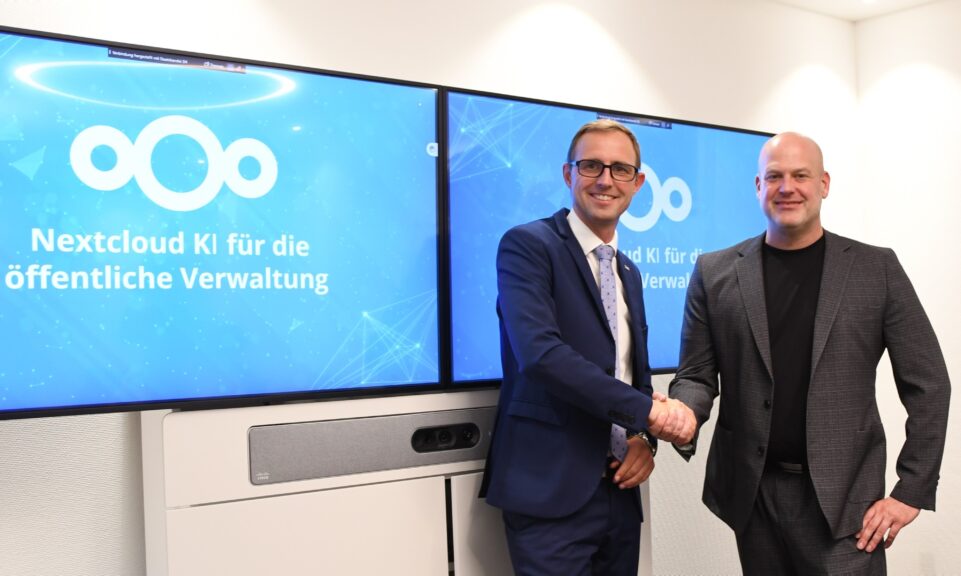
Bechtle and Nextcloud announce today a complete managed collaboration platform for the public sector that requires no tender and can be deployed immediately.
Discover how to make the switch from ownCloud to Nextcloud. Our quick guide provides insights into the migration process, helping you make the transition smoothly.
Today, US-based file sync & share vendor Kiteworks announced their acquisition of ownCloud and Dracoon. Kiteworks points out that their customers now have access to their file-sharing application. It is to be expected they will not maintain 3 similar products, but customers will have to migrate to the US firms’ platform or look for another […]
As part of Schleswig-Holstein's state digitization strategy, the state chancellery has announced they will work with Nextcloud to develop AI for working with government documents. This comes just after we announced the first private AI assistant last weekend with Hub 6. The German state already uses Nextcloud and their AI strategy aligns with our work on ethical, local AI technologies.
Fancy names, same lock-in: here's why Microsoft’s digital sovereignty promises don’t protect European data from US law and why its “sovereign” cloud still leaves you dependent.
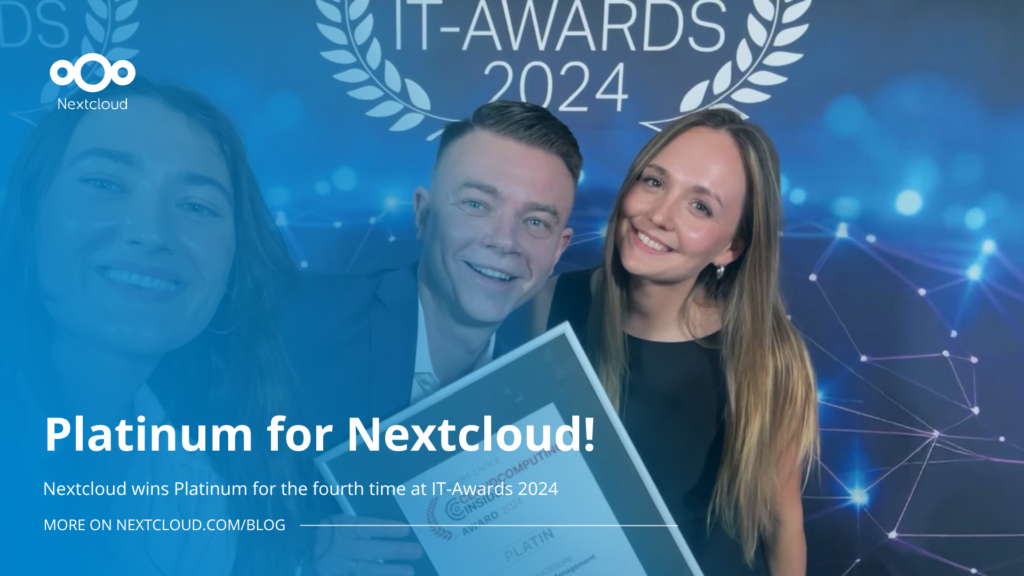
Once again, Nextcloud takes home Platinum at the CloudComputing-Insider IT-Awards. For this award, we want to thank everyone who supported us this year and took a minute to put it into a vote! Read more details about the awards in this post.
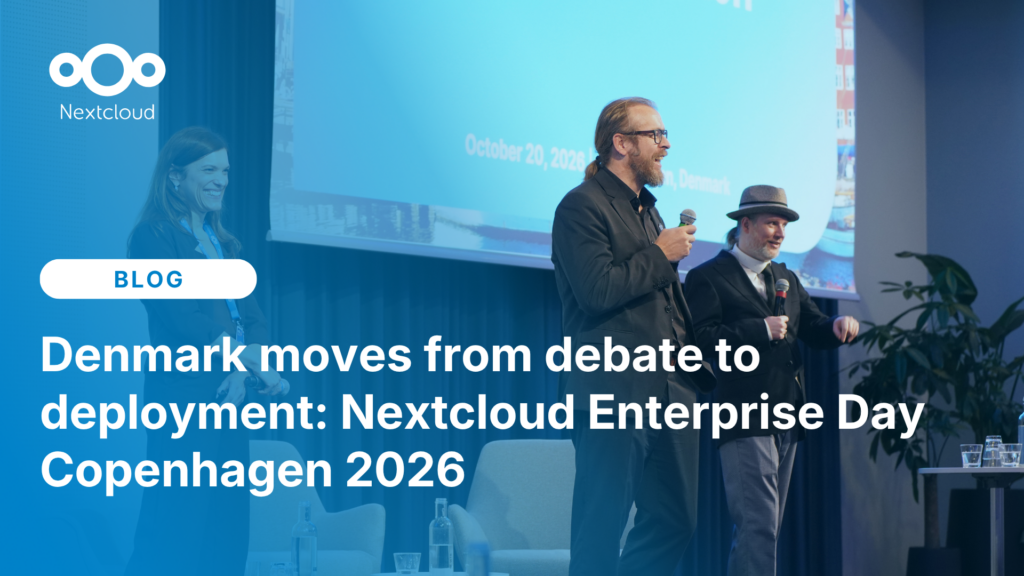
At the second Nextcloud Enterprise Day Copenhagen, municipalities, universities and other public organisations discussed how they can reduce their dependency on US Big Tech. Read our recap of the event.
We save some cookies to count visitors and make the site easier to use. This doesn't leave our server and isn't to track you personally!
See our Privacy Policy for more information. Customize
Statistics cookies collect information anonymously and help us understand how our visitors use our website. We use cloud-hosted Matomo
Service:Matomo
Cookies description:
_pk_ses*: Counts the first visit of the user
_pk_id*: Helps not to double count the visits.
mtm_cookie_consent: Remembers that consent for storing and using cookies was given by the user.
Cookies expiry:_pk_ses*: 30 minutes
_pk_id*: 13 months
mtm_cookie_consent: 30 days