In this episode of the Nextcloud Podcast, our host Ingo meets Aline Blankertz, a German data economist and digital rights campaigner.
Aline is an economist and Tech Economy Lead at Rebalance Now, where she works on strategies to counter concentrated power in digital markets. She combines years of experience in competition economics with a strong commitment to making markets democratically accountable.
In the episode, we tap into Aline’s expertise in digital sovereignty, open source, and Big Tech regulation to answer some burning questions:
Why do some politicians and industries resist stronger enforcement against Big Tech companies? What can be done to overcome this resistance?
What role do open source and open standards play in reducing Europe’s dependency on Big Tech, and how can public procurement and regulations support this effort?
Sovereignty washing: how do hyperscalers leverage local actors to create an illusion of sovereignty?
What we consider extremely relevant is some form of regulatory sovereignty. From a societal perspective, we need to make sure that we can at least have the possibility to regulate companies. If we want to be a democracy, we want to make rules that apply to everyone. We also need to have the credibility that we can enforce these rules.
Aline Blankertz
Tech Economy Lead, Rebalance Now
And, of course, there’s one more thing we are all curious about: what to expect from the Nextcloud Summit panel session “From open source to open ecosystems: Europe’s next digital play”?
Want to be part of the conversation? Meet Aline Blankertz at the Nextcloud Summit 2026
Aline joins us at the Nextcloud Summit 2026 on June 9 in Munich. She is one of the panelists in the hard-hitting discussion “From open source to open ecosystems: Europe’s next digital play”. The session is moderated by Ingo Dachwitz, political journalist at netzpolitik.org, and joined by Prof. Dr. Dennis-Kenji Kipker, Prof. Dr. Johanna Pirker and Holger Pfister.
Join the Nextcloud Summit to attend the panel discussion and ask your questions to the participating panelists.
Join the conversation
Be part of the Nextcloud Summit, our biggest event up until now, and access a full day of learning, sharing, and collaborating on regaining freedom over your data, ensuring data remains in the hands of those who create it.
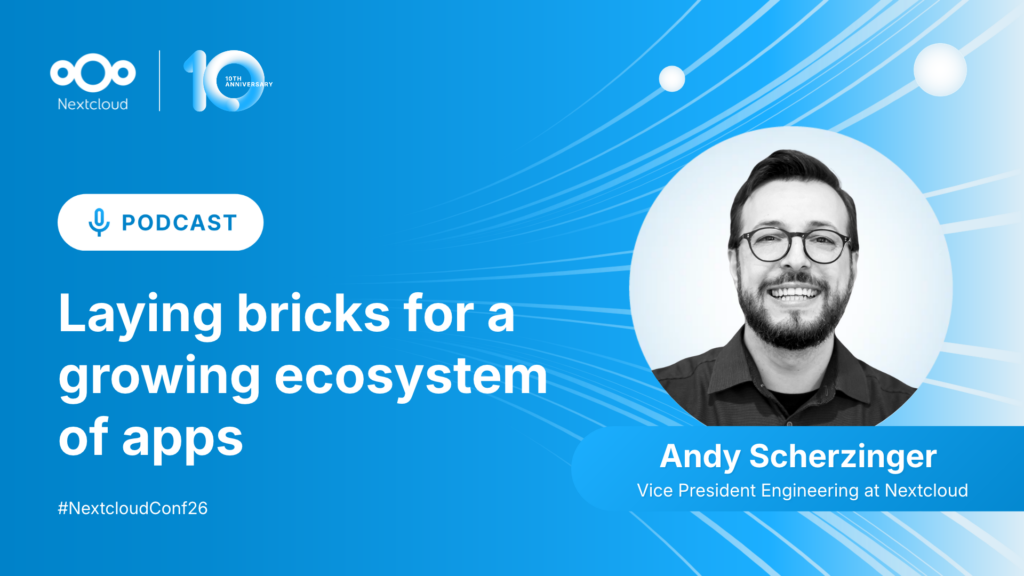
Andy Scherzinger, VP of Engineering at Nextcloud, talks about the goal of growing the Nextcloud App Store from 600 to 6,000 apps, explains when to build an ExApp instead of a classic PHP app, how abandoned apps can find new maintainers, and why AI coding agents can help keep older apps alive but don't replace code review and testing.
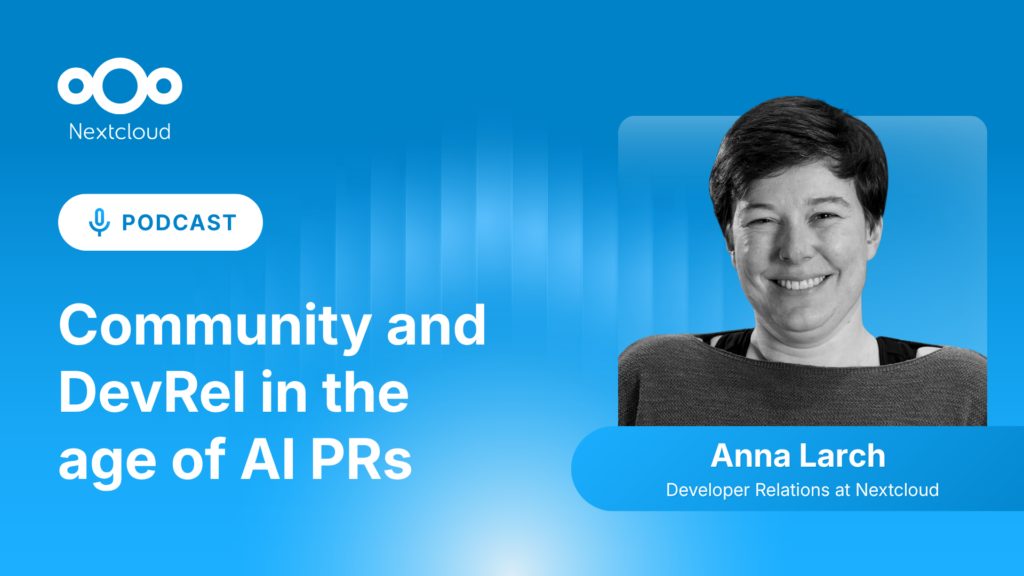
Anna Larch, Developer Relations at Nextcloud, talks about its shift toward more structured community management, shares her views on the growing need for digital sovereignty, Nextcloud's new ISV Partner Program, and why the Nextcloud Community Awards favor small and niche contributors instead of those with the biggest audiences.
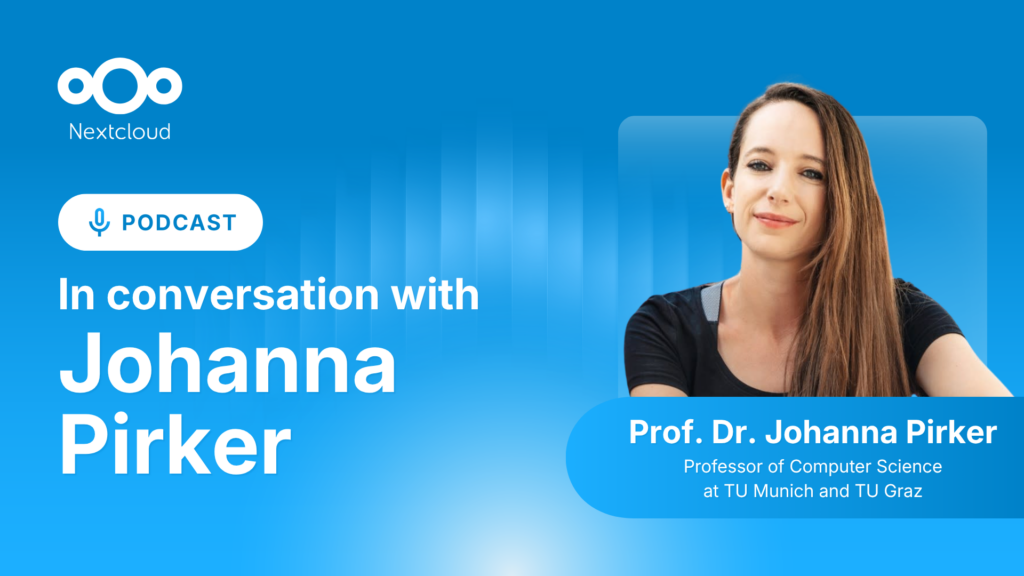
Johanna Pirker is a professor of computer science at TU Munich and TU Graz, founder of the Game Lab Graz, and a member of the UN Independent International Scientific Panel on AI. She works at the intersection of AI, games, virtual and augmented reality, and human-computer interaction. We tap into her perspective on where gaming meets learning, learning meets AI, and where open source tools foster innovation in her fields.
We save some cookies to count visitors and make the site easier to use. This doesn't leave our server and isn't to track you personally!
See our Privacy Policy for more information. Customize
Statistics cookies collect information anonymously and help us understand how our visitors use our website. We use cloud-hosted Matomo
Service:Matomo
Cookies description:
_pk_ses*: Counts the first visit of the user
_pk_id*: Helps not to double count the visits.
mtm_cookie_consent: Remembers that consent for storing and using cookies was given by the user.
Cookies expiry:_pk_ses*: 30 minutes
_pk_id*: 13 months
mtm_cookie_consent: 30 days