Yesterday, June 9th, Munich hosted the Nextcloud Summit 2026, our second global Summit. And the conversation on the floor made one thing clear: digital sovereignty has moved from aspiration to action. With over 600 registrations, decision-makers, IT leaders, government representatives, and open source advocates from across Europe and beyond came together for a full day of keynotes, customer stories, breakout sessions, and a milestone product launch.
The numbers alone tell part of the story. But what struck attendees most was the shift in tone. The question is no longer whether to pursue digital sovereignty. The question is how fast, and what comes next.
Opening: ten years of building the better option
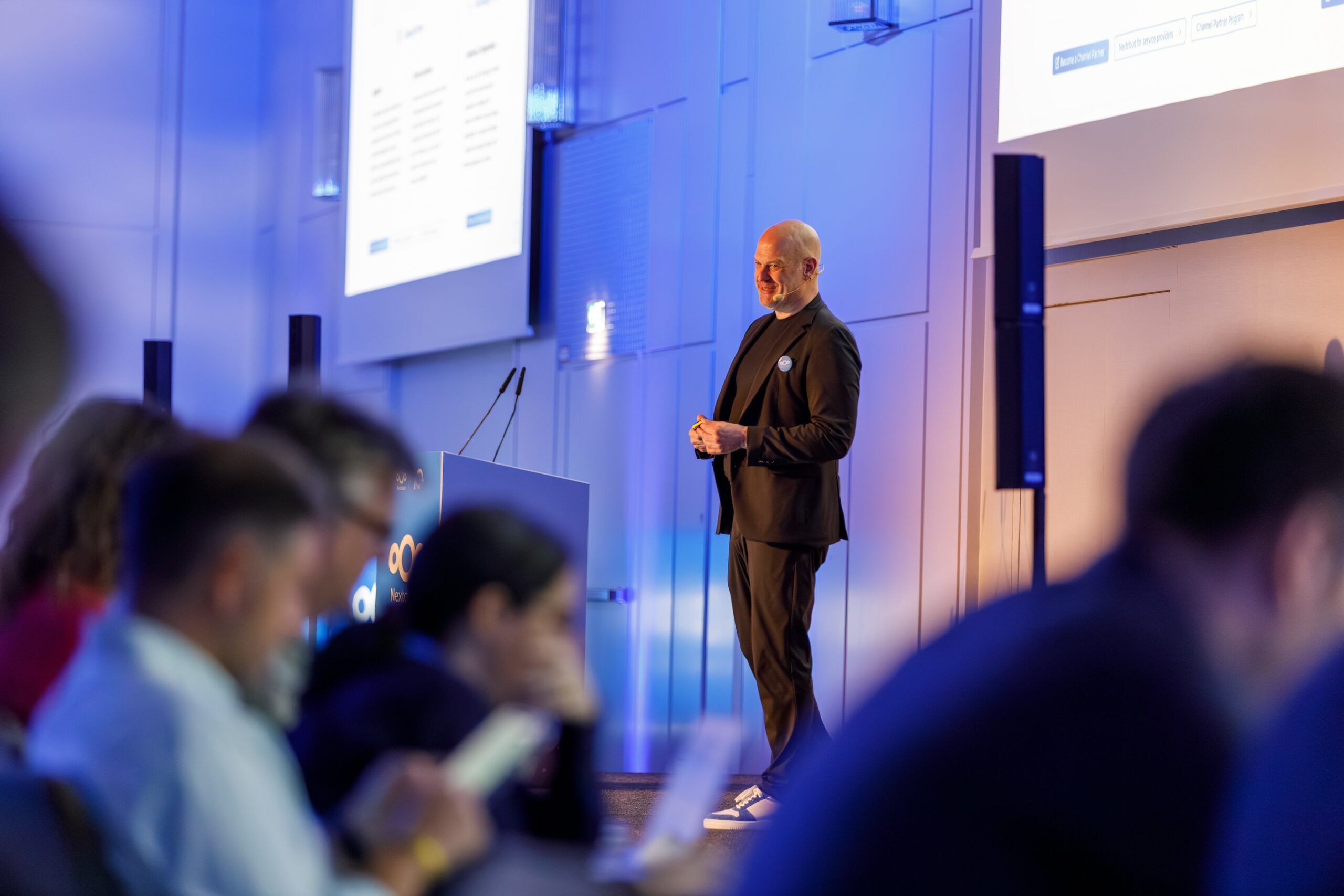
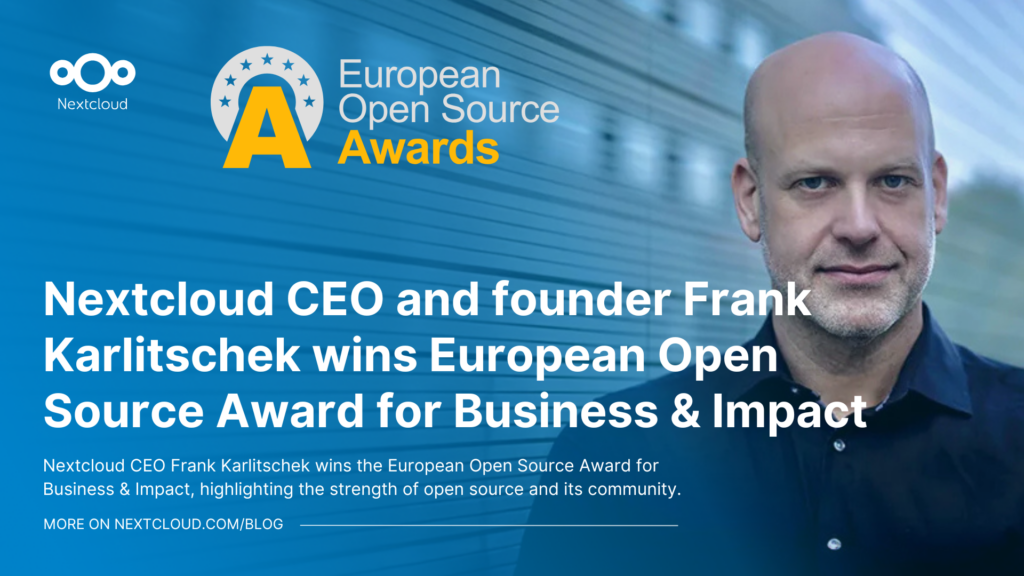
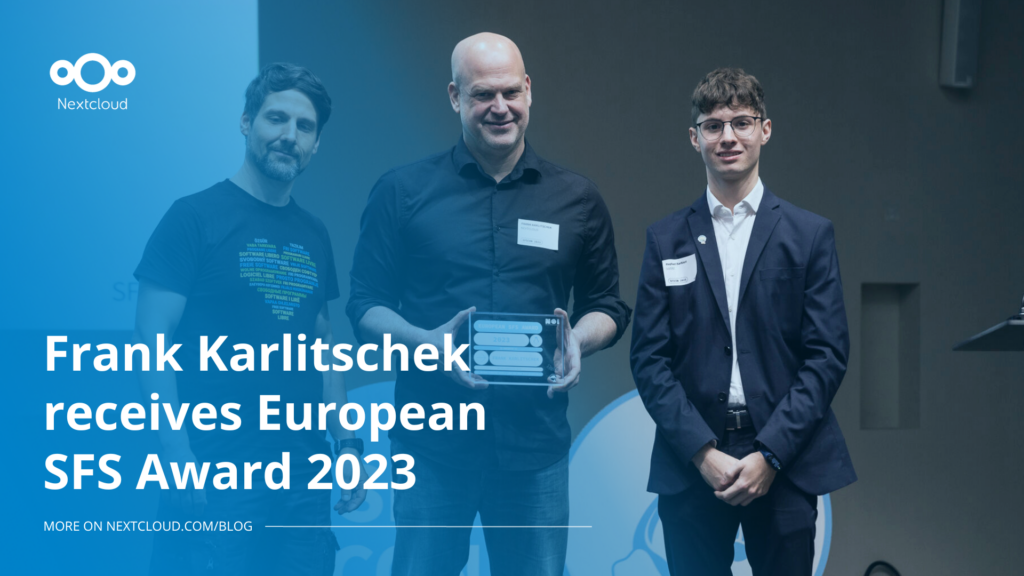
Nextcloud CEO and co-founder Frank Karlitschek opened the day with a keynote on how Nextcloud navigates the complexities of open source, compliance, and political reality. This year carries special weight: 2026 marks ten years since Nextcloud was founded with the explicit goal of giving individuals and organizations full control over their own data. A decade later, with Big Tech under intense political scrutiny across Europe and beyond, that initial mission seems more relevant than ever.
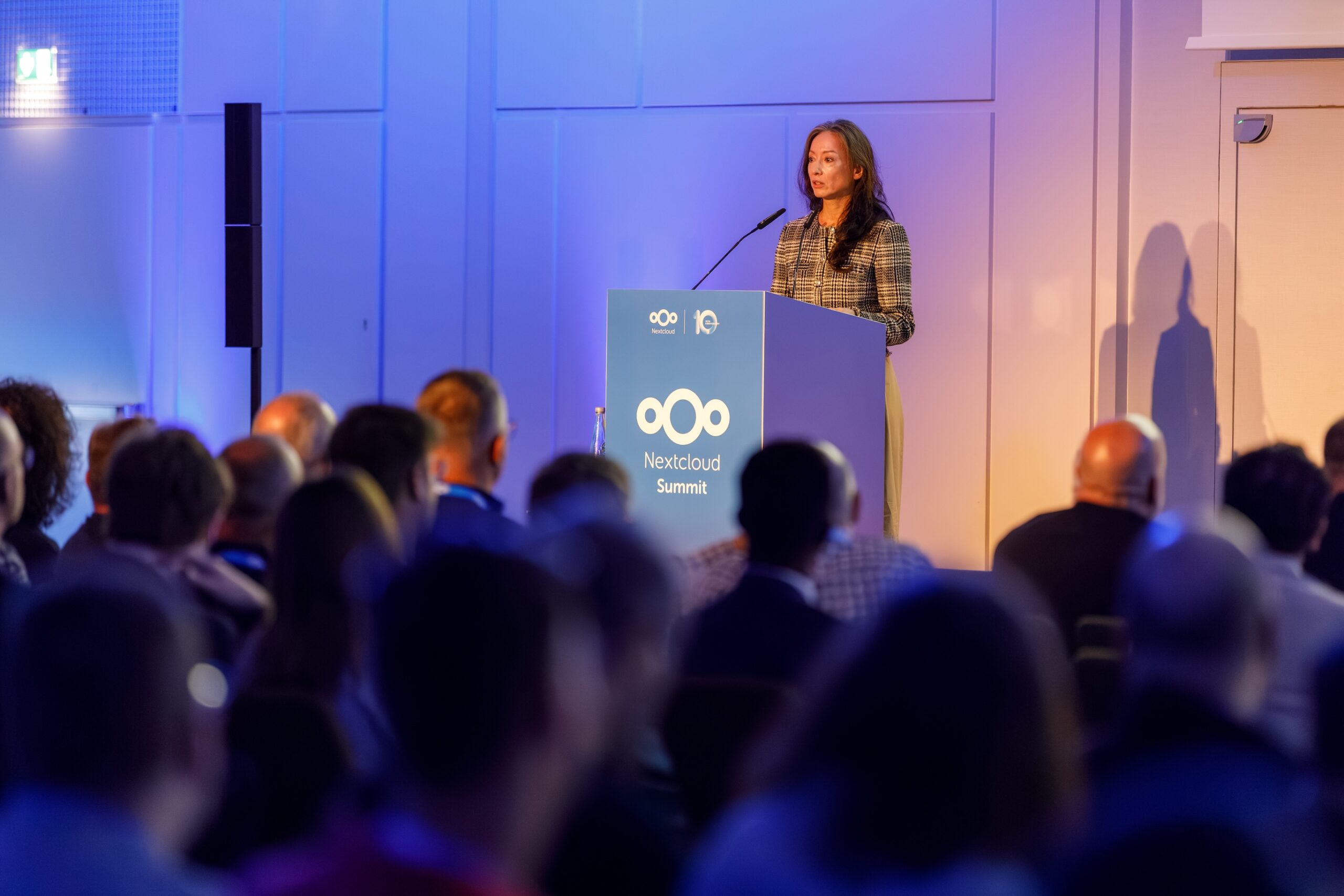
Following Frank, Dr. Sachiko Muto, Chair of OpenForum Europe and senior researcher at the Research Institutes of Sweden (RISE), laid out a strategic framework for open source adoption in the EU. With her background spanning government relations, standardization policy, and European digital policy, she walked us through some earlier moments of excitement followed by disappointment. Her argument was straightforward: the EU has the tools and the mandate to make open source the default in public procurement. What it needs is the political will to follow through. Advocates can’t stop when the right things are said, nor even when laws are updated. Only when change actually happens.
Sovereignty at scale: the French Ministry of Education
Perhaps the most concrete proof of what is possible came from Benoît Piédallu, Project Manager at the French Ministry of National Education and Youth. France’s education system is one of the largest Nextcloud deployments in the world, and Piédallu gave an unvarnished account of what it actually takes to turn a sovereignty policy into working infrastructure, scaling to 1.2 million users. His session set the tone for a recurring theme throughout the day: real deployments require real decisions, real budgets, and real migration paths. Talking sovereignty is easy. Doing it is a different discipline. Why the ministry is moving to Nextcloud? Get more insights in this video.
Amnesty International, Austrian Ministry, Dutch universities and European hosting giants
Further sessions brought customer stories that illustrated just how broad the digital sovereignty movement has become.
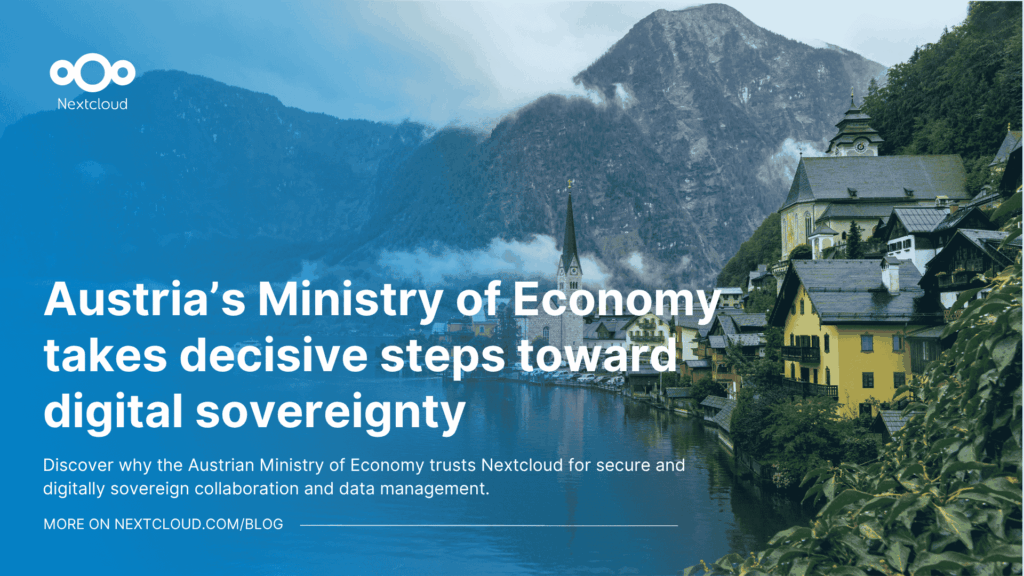
Florian Zinnagl (CISO), Martin Ollrom (CIO) of the Austrian Federal Ministry for Economic Affairs and Energy Technology (BMWET) together with Atos’ digital workplace expert Friso Jankowsky shared a frank view of what it looks like to actually deploy sovereign infrastructure inside a federal ministry – including the user perspective.
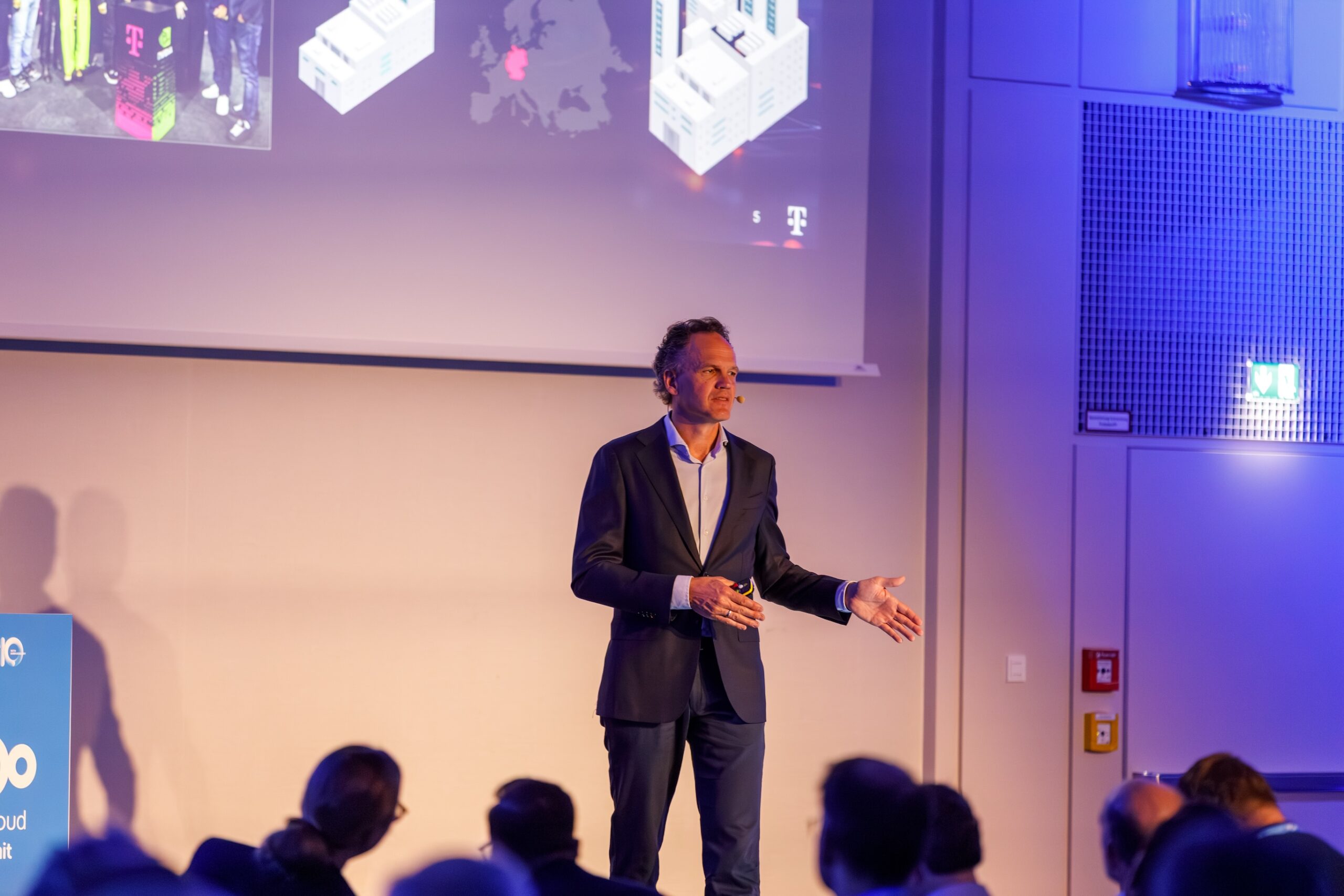
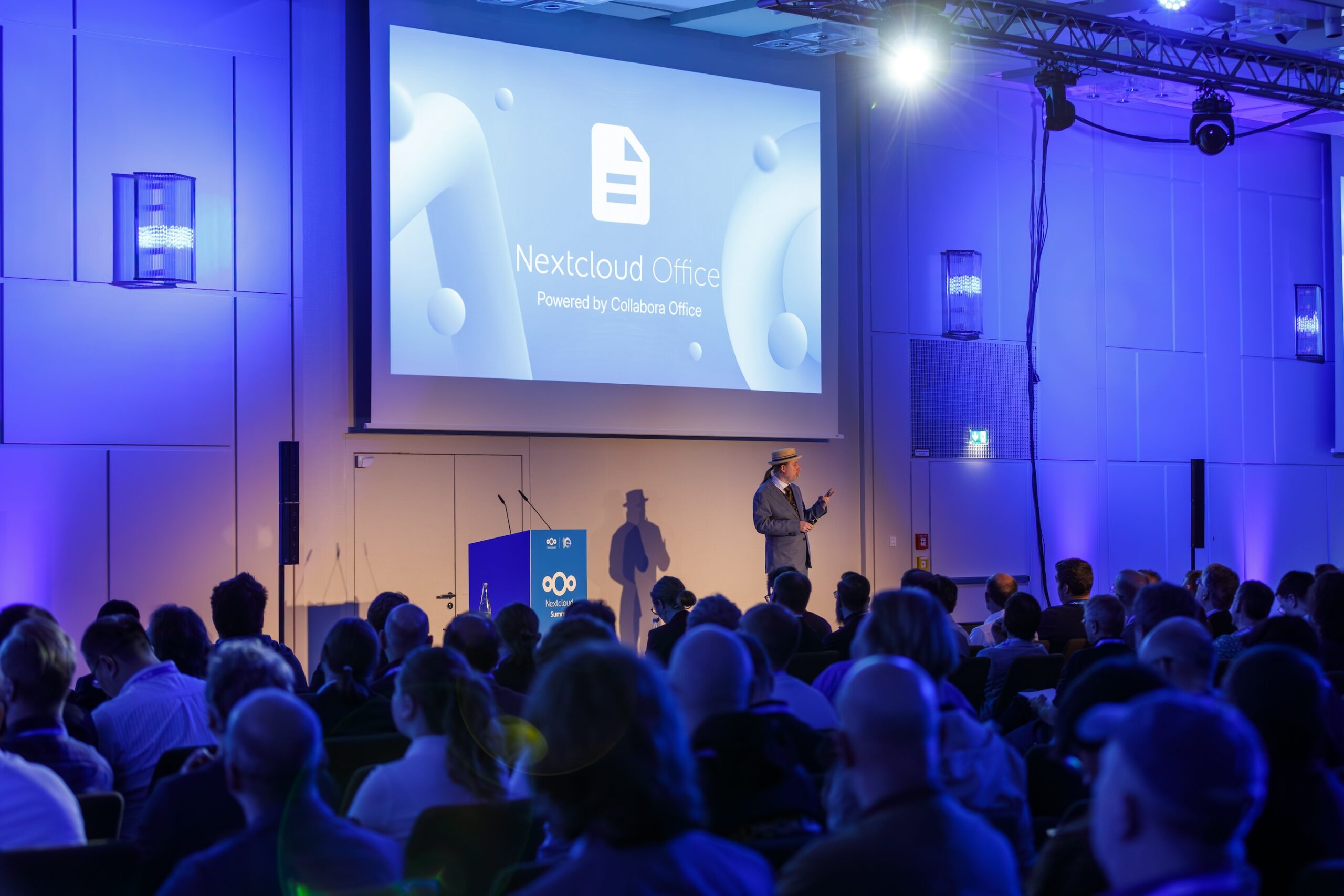
After the first break, co-founder Jos Poortvliet took the stage for the live launch of Nextcloud Hub 26 Spring, a celebration of a decade of secure digital sovereignty.
In brief, the release introduces a new office option and makes the user interface lighter and more intuitive, and introduces Nextcloud Governance, an enterprise compliance and data governance platform built for organizations operating under strict regulatory requirements. Interested to dive deeper? Check out the blog and release video.
Panel: from open source to open ecosystems
After lunch, a series of deep-dive sessions split the audience across multiple tracks, providing insights in technical subjects like migration options, features, deployment options and available platform integrations, as well as more policy focussed sections like achieving compliance wit the AI act and an exploration of the relation between open source and sovereignty.
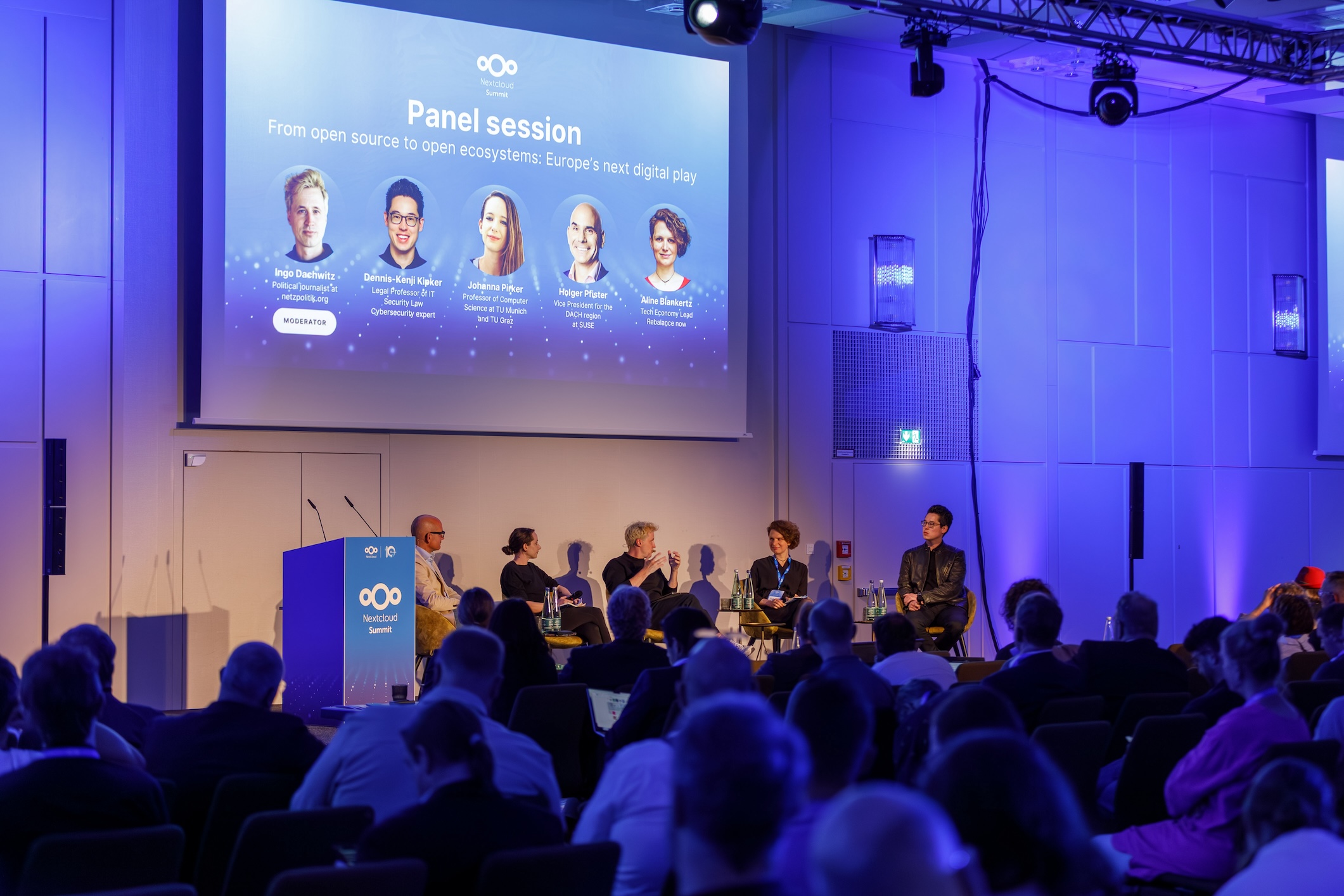
The afternoon closed with panel session moderated by Ingo Dachwitz, political journalist at dedicated to digital civil netzpolitik.org and author of Digital Colonialism. Joining him were Aline Blankertz (Tech Economy Lead at Rebalance Now, the German anti-monopoly organization), Prof. Dr. Dennis-Kenji Kipker (cyberintelligence.institute, advisor to the German federal government and EU Commission), Prof. Dr. Johanna Pirker (TU Munich/TU Graz, recently appointed to the UN’s Independent Scientific Panel on AI), and Holger Pfister (VP DACH at SUSE, board member of the Open Source Business Alliance).
Titled “From open source to open ecosystems: Europe’s next digital play”, the discussion made clear that open source alone does not equal sovereignty. Holger Pfister carried that argument into his closing keynote: Why open source is not enough for digital sovereignty – what to consider to become less dependent.
Nextcloud Awards 2026
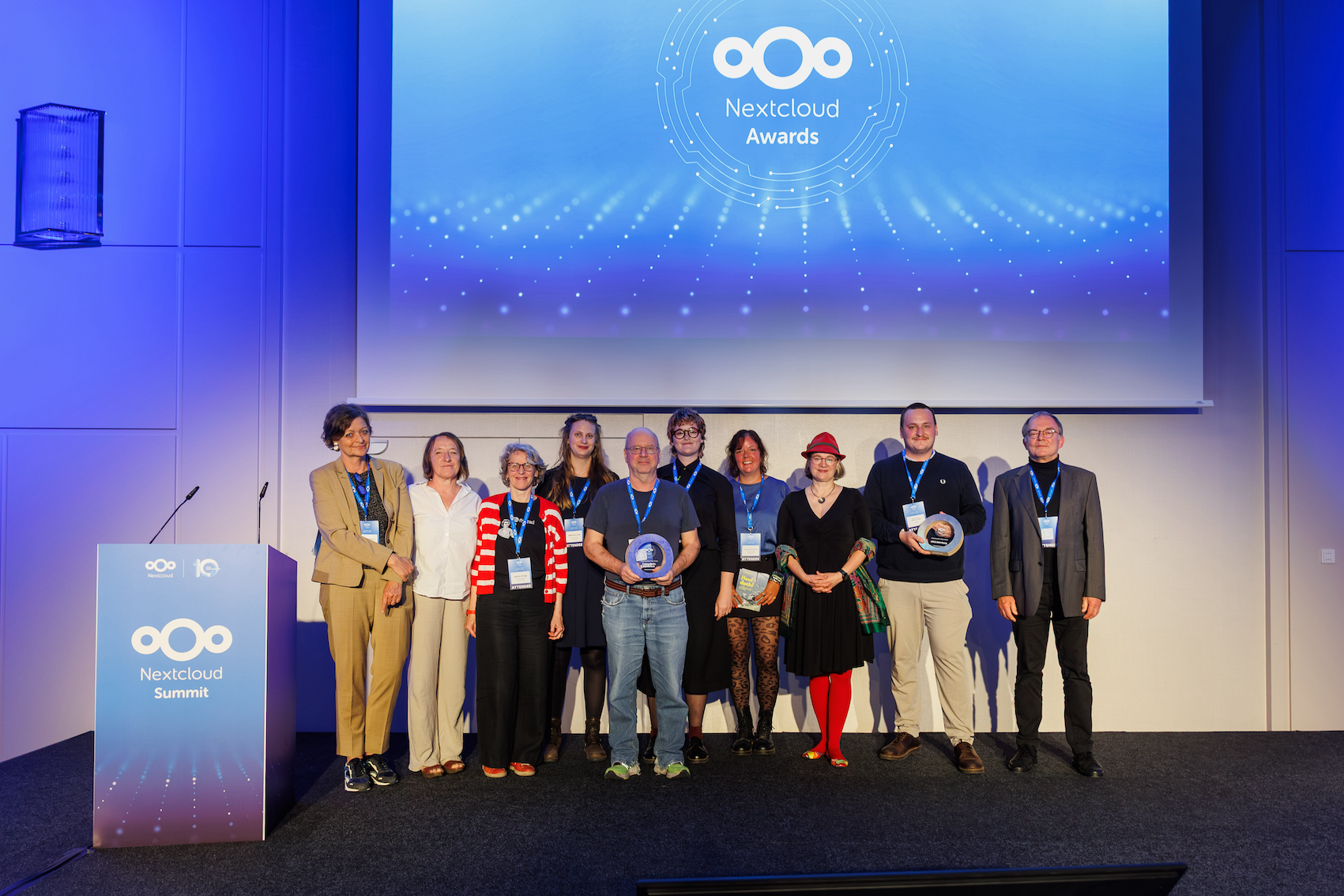
The awards ceremony capped the formal programme. The Nextcloud Awards, presented for the second time, recognize real-world contributors to digital sovereignty, with the Implementation Role Model award for organizations and individuals who have turned sovereignty into working infrastructure.
The jury – including Björn Staschen (co-founder of Save Social), Pernille Tranberg (DataEthics.eu), Anke Domscheit-Berg (former Member of German Parliament), and Frank Karlitschek – selected ISKA Nürnberg and FREIRAD for their long-standing commitment to Open Source, their willingness to take responsibility for their digital infrastructure and their role as practical examples for others.
When attendees were asked at the closing what they took away from the day, the pattern that emerged echoed what has been visible across Nextcloud’s Enterprise Days in Vienna, Bern and Utrecht throughout 2026: the room is no longer debating the principle. It is working through the practice. Migration paths, procurement frameworks, compliance requirements, vendor strategies – these are the conversations that now fill the coffee breaks and the expo floor.
With event partners including Deutsche Telekom, IONOS Cloud, Bechtle, Atos, OpenProject, BlueMind, Collabora, Univention, and others, the summit also demonstrated the depth of the ecosystem that has formed around the digital sovereignty movement. And initiatives to further deepen this ecosystem are in motion.
Concluding: it is time to start moving, too!
The Nextcloud Summit 2026 underlined the massive momentum for digital sovereignty. Our commitment is to continue this growth and help every organization looking to bring back their data under their own control! Contact our team and find out how Nextcloud and our partners can help you.
Coming up: Webinars, Enterprise Days in Paris, Copenhagen and Madrid, and our Community Conference
Or join us at the one of the upcoming events, webinars, our Enterprise Day Paris on December 8, or our enterprise events in Copenhagen and Madrid (no firm dates yet but you can now sign up to be informed when we’ve nailed down dates & locations, coming soon!). We also have the Nextcloud Community Conference in Berlin on September 19-20, where contributors from all backgrounds, users, and open source enthusiasts come together to build, learn, collaborate and shape the future of open source collaboration tools. We hope to see you all again, soon!!!
Nextcloud Hub 26 Spring: Built together, designed for the future
Discover our latest release! Watch the launch of Nextcloud Hub 26 Spring on your favourite platform and read the release blog.
Nextcloud Hub offers several types of integrations for AI, from completely self-hosted options to integrations with external services like Open AI. Here's an overview of what you can use and where, and where it stands on our Ethical AI scale.
How do you modernize digital collaboration in government without losing control over your data?
Austria’s Federal Ministry for Economy, Energy and Tourism (BMWET) faced this challenge in 2024 - and decided to take a clear, pragmatic step toward digital sovereignty.
Nextcloud Hub 25 Autumn makes it easier to get started with powerful collaboration while fully in control of your data. From global design updates to improved usability and performance, discover our latest release in this blog.
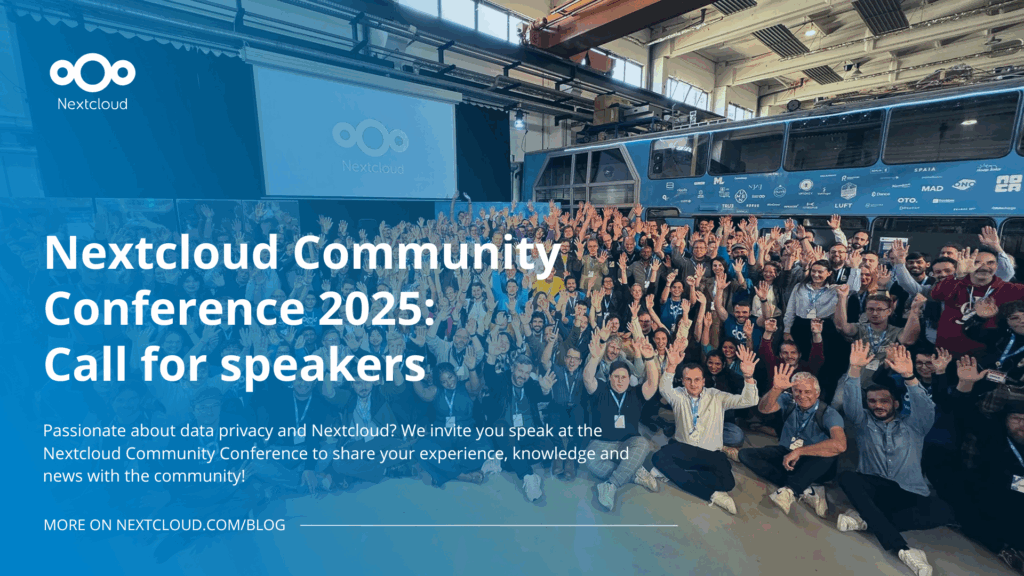
Passionate about data privacy and Nextcloud? We invite you speak at the Nextcloud Community Conference to share your experience, knowledge and news with the community!
For the ninth time, Nextcloud has been nominated for the CloudComputing-Insider Readers’ Choice Award in the category of Cloud Content Management. We’d love to reach the top again! And we’re looking for the support of you and everyone else in our amazing community to get there. Nextcloud as the best Cloud Content Management tool? Only […]
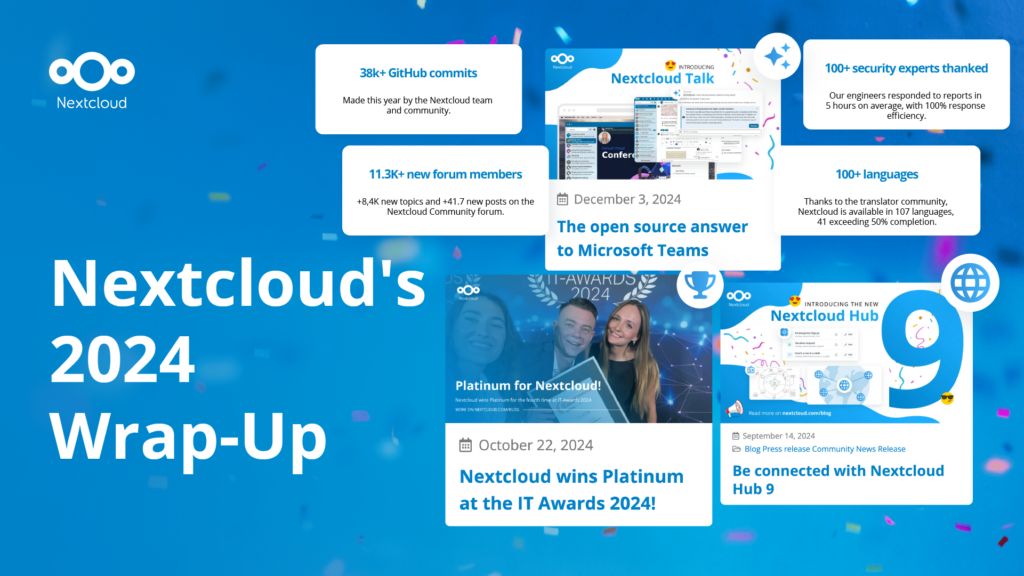
In the Nextcloud 2024 wrap-up, we want to take a moment to celebrate this year's achievements. Join us as we continue to reimagine what’s possible - shaping a world where open source, privacy and connection come together and drive progress for the greater good.
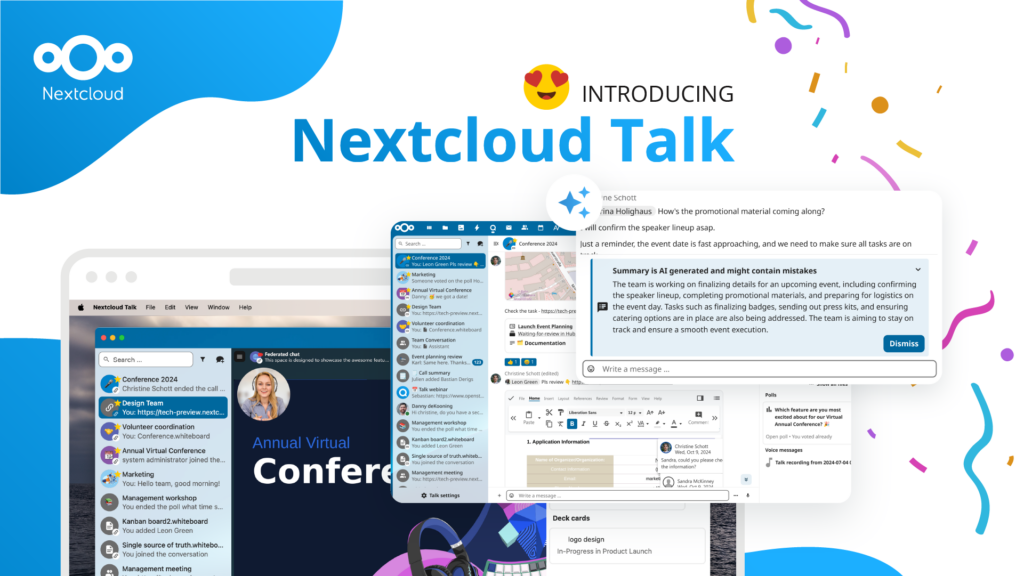
Organisations, small and large, need a way to ensure the resiliency and digital sovereignty of their operations – an open-source, privacy-respecting alternative to Teams. And today, we present that solution - Nextcloud Talk.
Nextcloud has been recognized with the World Summit Award Germany that selects and promotes local digital innovation improving society, aiming to contribute to the United Nations' agenda of sustainable development goals.
DIE ZEIT, a prominent German outlet, interviewed Nextcloud’s founder Frank Karlitschek for an article on Microsoft’s anti-competitive behaviour on the European office software market. Read for a recap of the article and the key takeaways.
MagentaCLOUD’s migration to Nextcloud in 2021 resulted in a fully equipped Online Storage with an integrated online office suite that further improves the user experience, flexibility and security for customers.
We bring you a major update to the Nextcloud AI Assistant, plus the news we work with several big hosting providers like IONOS and OVHcloud to bring AI-as-a-Service options to you!
Bechtle and Nextcloud announce today a complete managed collaboration platform for the public sector that requires no tender and can be deployed immediately.
Discover how to make the switch from ownCloud to Nextcloud. Our quick guide provides insights into the migration process, helping you make the transition smoothly.
Today, US-based file sync & share vendor Kiteworks announced their acquisition of ownCloud and Dracoon. Kiteworks points out that their customers now have access to their file-sharing application. It is to be expected they will not maintain 3 similar products, but customers will have to migrate to the US firms’ platform or look for another […]
As part of Schleswig-Holstein's state digitization strategy, the state chancellery has announced they will work with Nextcloud to develop AI for working with government documents. This comes just after we announced the first private AI assistant last weekend with Hub 6. The German state already uses Nextcloud and their AI strategy aligns with our work on ethical, local AI technologies.
Our mission is to help individuals, businesses and organizations achieve digital sovereignty and regain control over their data. Nextcloud Hub 5 marks a massive step forward towards achieving this mission, putting the power of AI into your hands – in a way that keeps you in control. New release, new possibilities Hub 5 builds on […]
Michigan Tech Aerospace Enterprise migrated from Google Workspace and Microsoft SharePoint to Nextcloud, creating a unified, self-hosted collaboration platform that supports secure engineering workflows, mission coordination, and full control over data and infrastructure.
We save some cookies to count visitors and make the site easier to use. This doesn't leave our server and isn't to track you personally!
See our Privacy Policy for more information. Customize
Statistics cookies collect information anonymously and help us understand how our visitors use our website. We use cloud-hosted Matomo
Service:Matomo
Cookies description:
_pk_ses*: Counts the first visit of the user
_pk_id*: Helps not to double count the visits.
mtm_cookie_consent: Remembers that consent for storing and using cookies was given by the user.
Cookies expiry:_pk_ses*: 30 Minuten
_pk_id*: 13 months
mtm_cookie_consent: 30 Dagen