Yesterday, June 9th, Munich hosted the Nextcloud Summit 2026, our second global Summit. And the conversation on the floor made one thing clear: digital sovereignty has moved from aspiration to action. With over 600 registrations, decision-makers, IT leaders, government representatives, and open source advocates from across Europe and beyond came together for a full day of keynotes, customer stories, breakout sessions, and a milestone product launch.
The numbers alone tell part of the story. But what struck attendees most was the shift in tone. The question is no longer whether to pursue digital sovereignty. The question is how fast, and what comes next.
Opening: ten years of building the better option
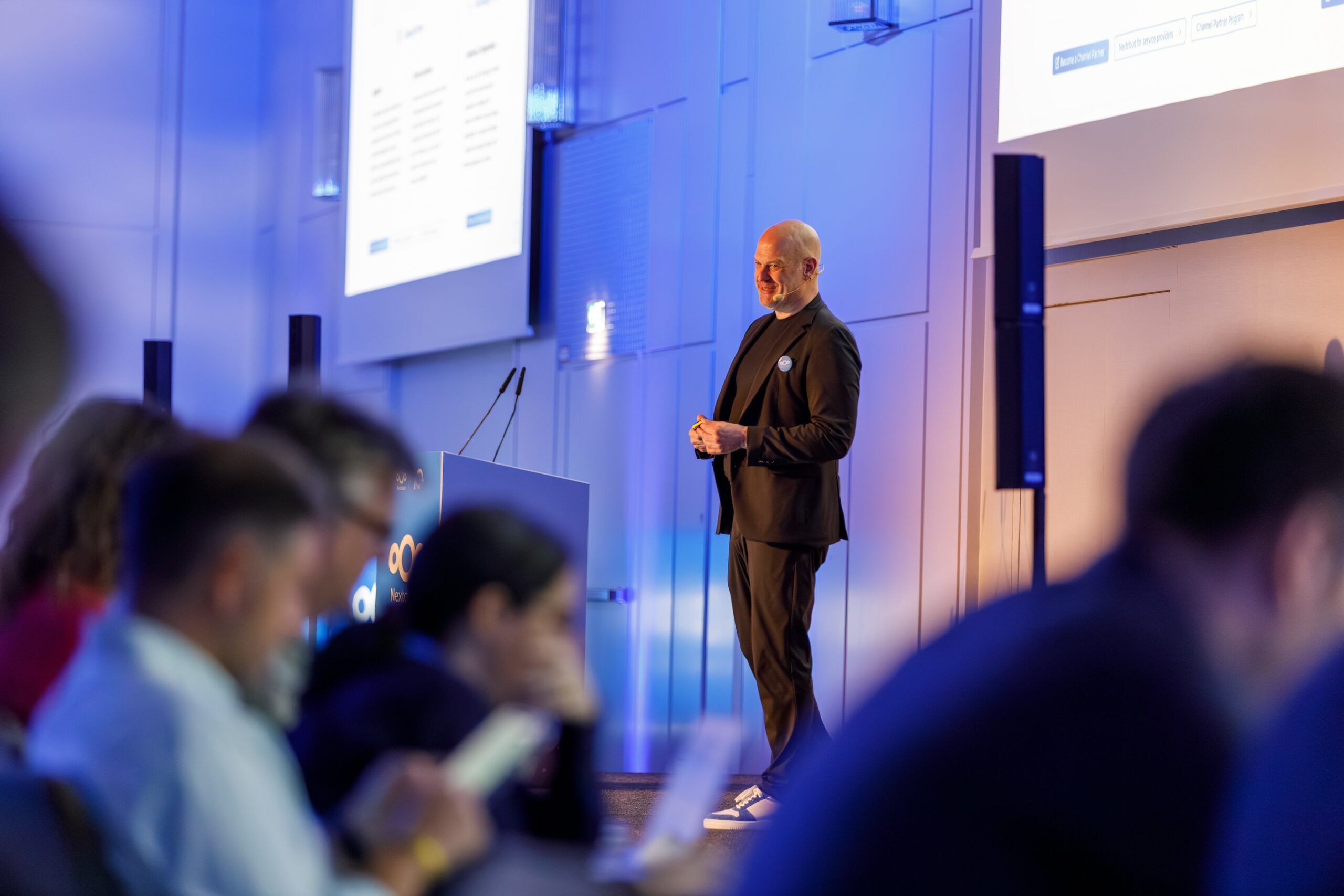
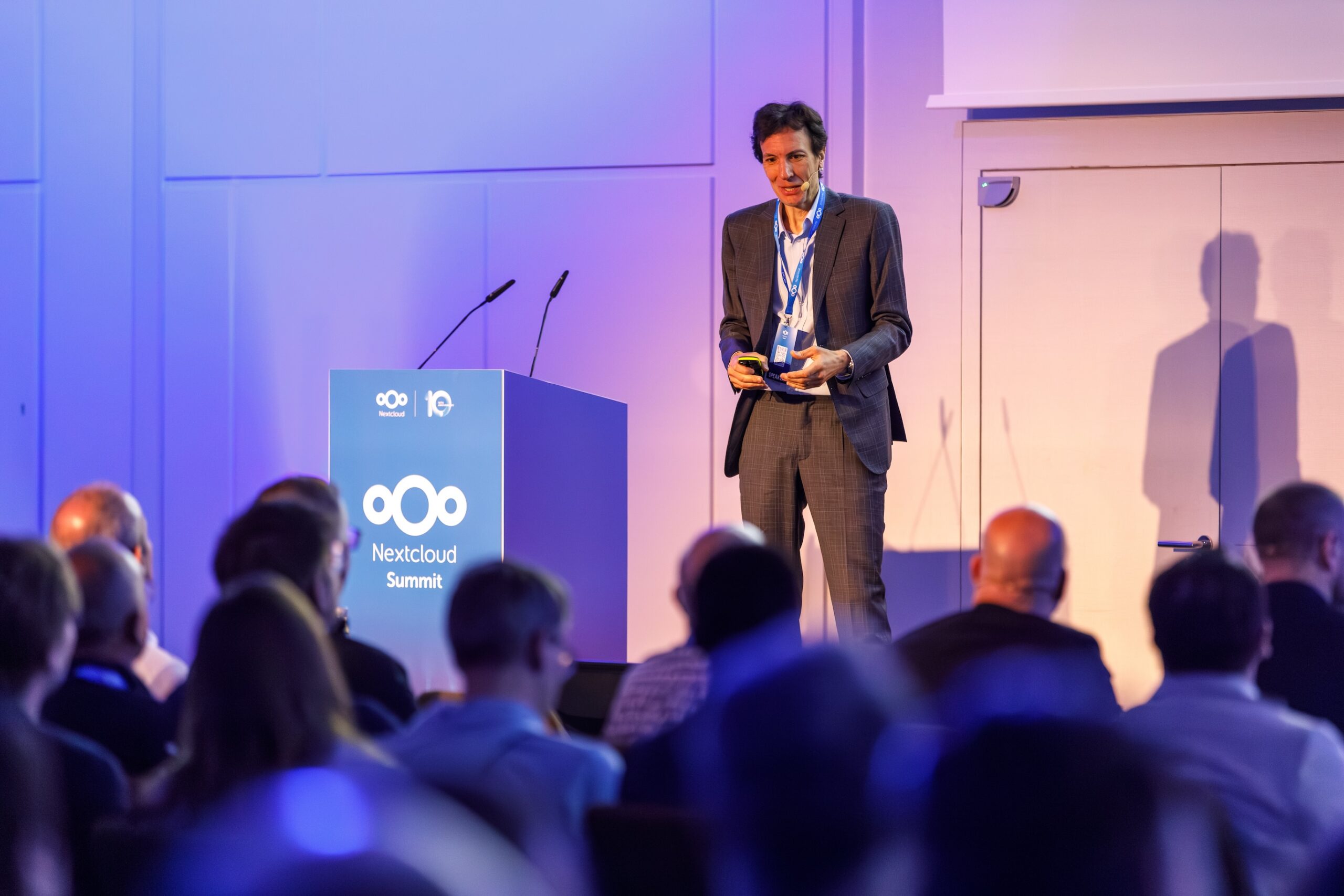
Nextcloud CEO and co-founder Frank Karlitschek opened the day with a keynote on how Nextcloud navigates the complexities of open source, compliance, and political reality. This year carries special weight: 2026 marks ten years since Nextcloud was founded with the explicit goal of giving individuals and organizations full control over their own data. A decade later, with Big Tech under intense political scrutiny across Europe and beyond, that initial mission seems more relevant than ever.
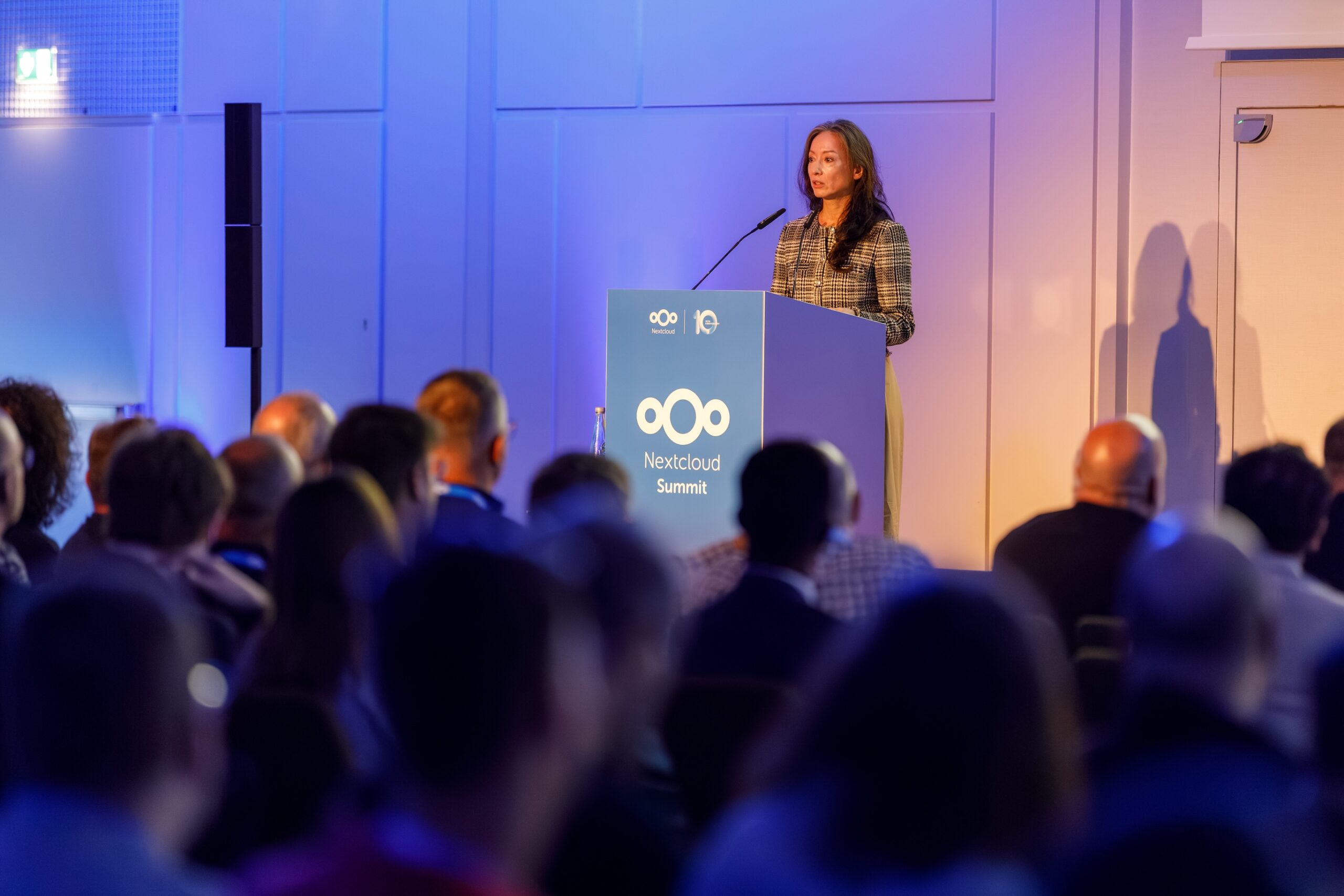
Following Frank, Dr. Sachiko Muto, Chair of OpenForum Europe and senior researcher at the Research Institutes of Sweden (RISE), laid out a strategic framework for open source adoption in the EU. With her background spanning government relations, standardization policy, and European digital policy, she walked us through some earlier moments of excitement followed by disappointment. Her argument was straightforward: the EU has the tools and the mandate to make open source the default in public procurement. What it needs is the political will to follow through. Advocates can’t stop when the right things are said, nor even when laws are updated. Only when change actually happens.
Sovereignty at scale: the French Ministry of Education
Perhaps the most concrete proof of what is possible came from Benoît Piédallu, Project Manager at the French Ministry of National Education and Youth. France’s education system is one of the largest Nextcloud deployments in the world, and Piédallu gave an unvarnished account of what it actually takes to turn a sovereignty policy into working infrastructure, scaling to 1.2 million users. His session set the tone for a recurring theme throughout the day: real deployments require real decisions, real budgets, and real migration paths. Talking sovereignty is easy. Doing it is a different discipline. Why the ministry is moving to Nextcloud? Get more insights in this video.
Amnesty International, Austrian Ministry, Dutch universities and European hosting giants
Further sessions brought customer stories that illustrated just how broad the digital sovereignty movement has become.
Florian Zinnagl (CISO), Martin Ollrom (CIO) of the Austrian Federal Ministry for Economic Affairs and Energy Technology (BMWET) together with Atos‘ digital workplace expert Friso Jankowsky shared a frank view of what it looks like to actually deploy sovereign infrastructure inside a federal ministry – including the user perspective.
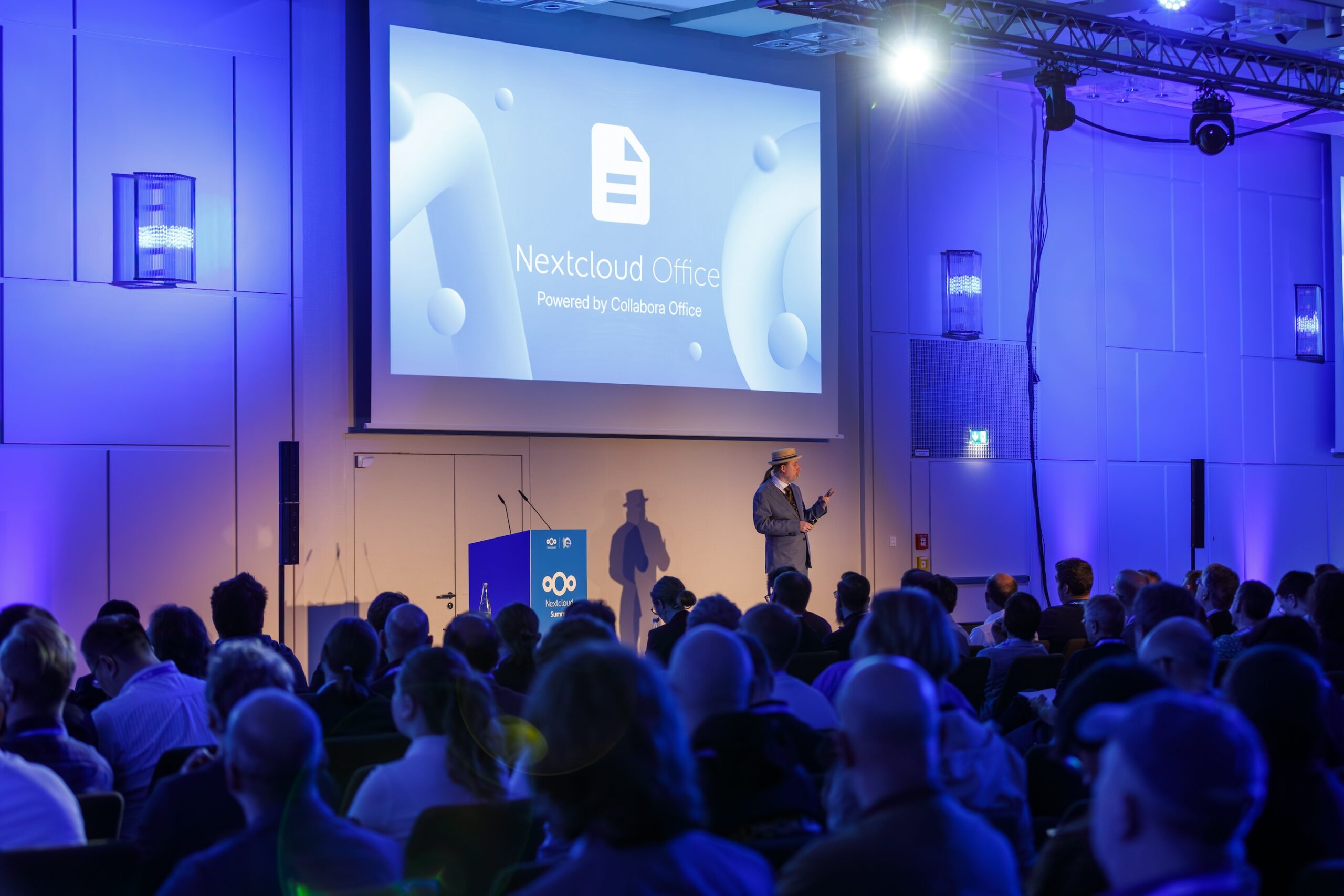
After the first break, co-founder Jos Poortvliet took the stage for the live launch of Nextcloud Hub 26 Spring, a celebration of a decade of secure digital sovereignty.
In brief, the release introduces a new office option and makes the user interface lighter and more intuitive, and introduces Nextcloud Governance, an enterprise compliance and data governance platform built for organizations operating under strict regulatory requirements. Interested to dive deeper? Check out the blog and release video.
Panel: from open source to open ecosystems
After lunch, a series of deep-dive sessions split the audience across multiple tracks, providing insights in technical subjects like migration options, features, deployment options and available platform integrations, as well as more policy focussed sections like achieving compliance wit the AI act and an exploration of the relation between open source and sovereignty.
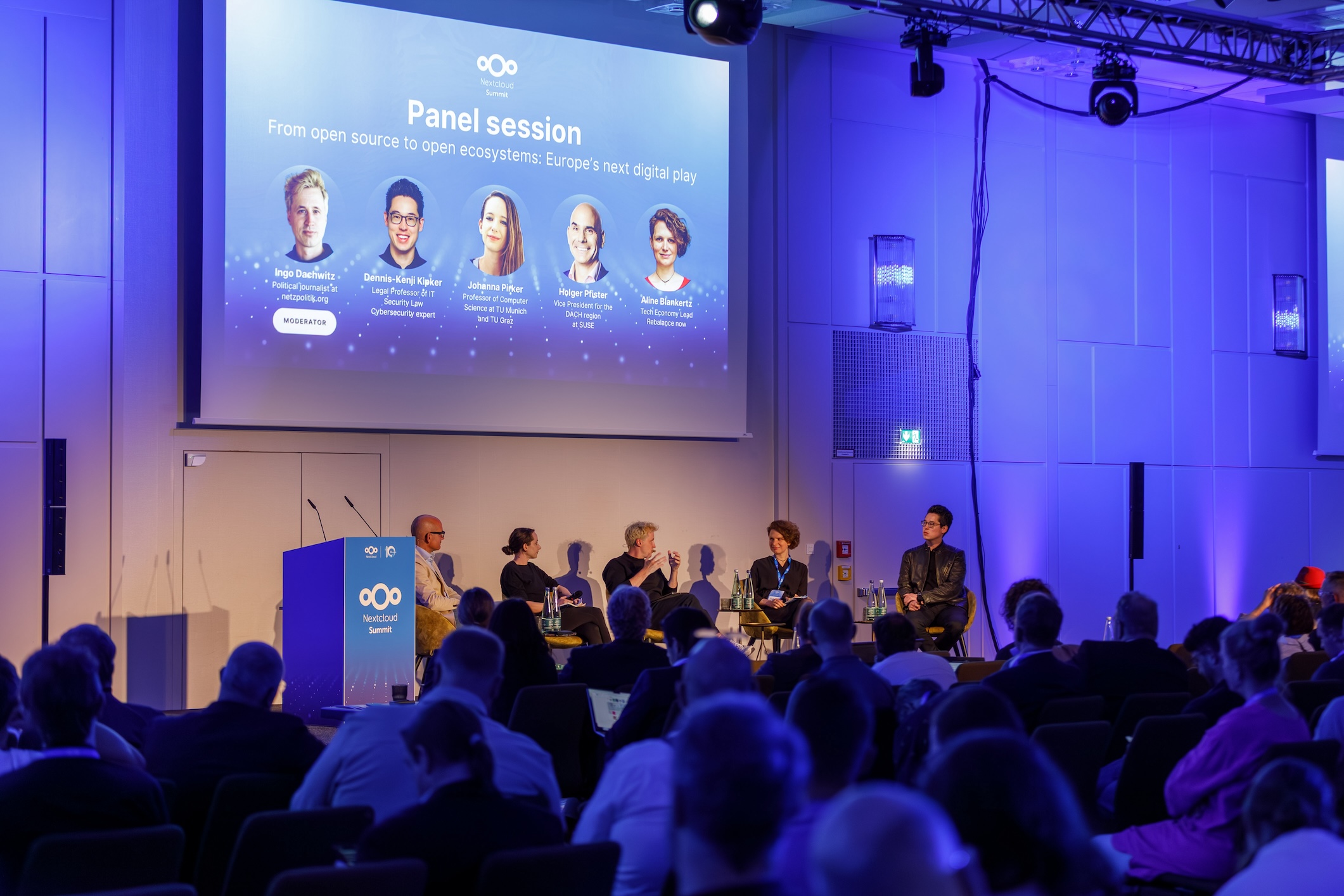
The afternoon closed with panel session moderated by Ingo Dachwitz, political journalist at dedicated to digital civil netzpolitik.org and author of Digital Colonialism. Joining him were Aline Blankertz (Tech Economy Lead at Rebalance Now, the German anti-monopoly organization), Prof. Dr. Dennis-Kenji Kipker (cyberintelligence.institute, advisor to the German federal government and EU Commission), Prof. Dr. Johanna Pirker (TU Munich/TU Graz, recently appointed to the UN’s Independent Scientific Panel on AI), and Holger Pfister (VP DACH at SUSE, board member of the Open Source Business Alliance).
Titled „From open source to open ecosystems: Europe’s next digital play“, the discussion made clear that open source alone does not equal sovereignty. Holger Pfister carried that argument into his closing keynote: Why open source is not enough for digital sovereignty – what to consider to become less dependent.
Nextcloud Awards 2026
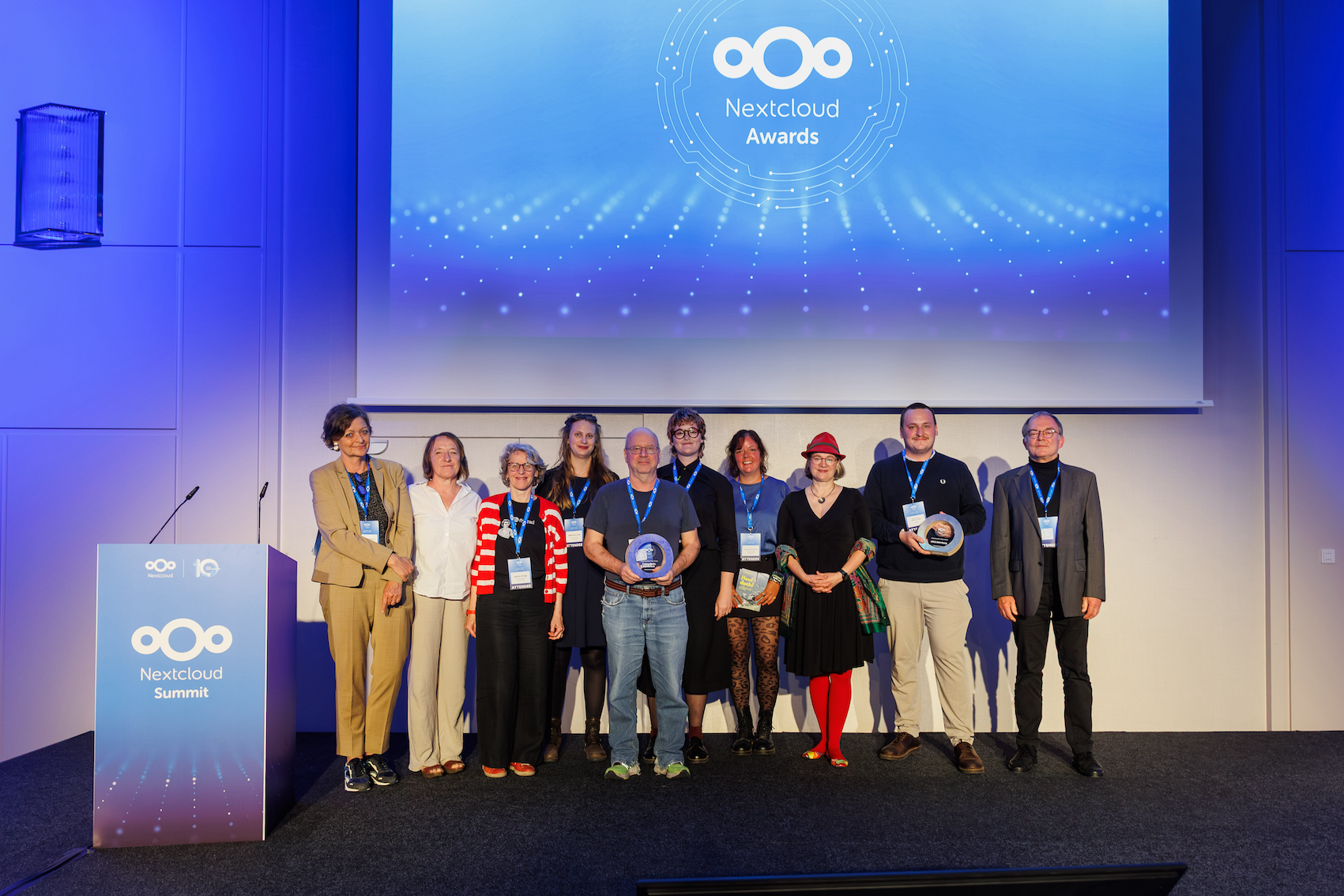
The awards ceremony capped the formal programme. The Nextcloud Awards, presented for the second time, recognize real-world contributors to digital sovereignty, with the Implementation Role Model award for organizations and individuals who have turned sovereignty into working infrastructure.
The jury – including Björn Staschen (co-founder of Save Social), Pernille Tranberg (DataEthics.eu), Anke Domscheit-Berg (former Member of German Parliament), and Frank Karlitschek – selected ISKA Nürnberg and FREIRAD for their long-standing commitment to Open Source, their willingness to take responsibility for their digital infrastructure and their role as practical examples for others.
When attendees were asked at the closing what they took away from the day, the pattern that emerged echoed what has been visible across Nextcloud’s Enterprise Days in Vienna, Bern and Utrecht throughout 2026: the room is no longer debating the principle. It is working through the practice. Migration paths, procurement frameworks, compliance requirements, vendor strategies – these are the conversations that now fill the coffee breaks and the expo floor.
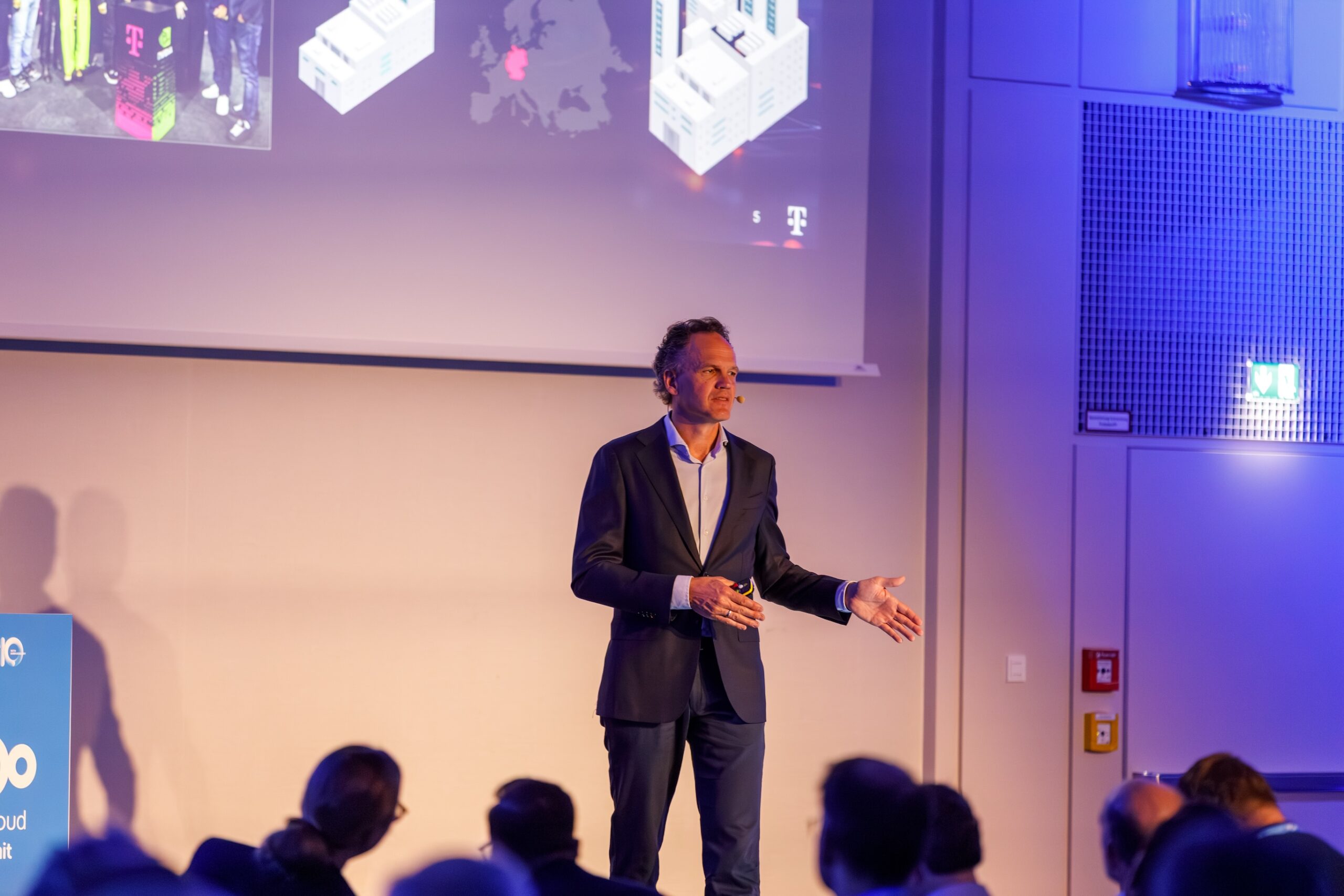
With event partners including Deutsche Telekom, IONOS Cloud, Bechtle, Atos, OpenProject, BlueMind, Collabora, Univention, and others, the summit also demonstrated the depth of the ecosystem that has formed around the digital sovereignty movement. And initiatives to further deepen this ecosystem are in motion.
Concluding: it is time to start moving, too!
The Nextcloud Summit 2026 underlined the massive momentum for digital sovereignty. Our commitment is to continue this growth and help every organization looking to bring back their data under their own control! Contact our team and find out how Nextcloud and our partners can help you.
Coming up: Webinars, Enterprise Days in Paris, Copenhagen and Madrid, and our Community Conference
Or join us at the one of the upcoming events, webinars, our Enterprise Day Paris on December 8, or our enterprise events in Copenhagen and Madrid (no firm dates yet but you can now sign up to be informed when we’ve nailed down dates & locations, coming soon!). We also have the Nextcloud Community Conference in Berlin on September 19-20, where contributors from all backgrounds, users, and open source enthusiasts come together to build, learn, collaborate and shape the future of open source collaboration tools. We hope to see you all again, soon!!!
Nextcloud Hub 26 Spring: Built together, designed for the future
Discover our latest release! Watch the launch of Nextcloud Hub 26 Spring on your favourite platform and read the release blog.
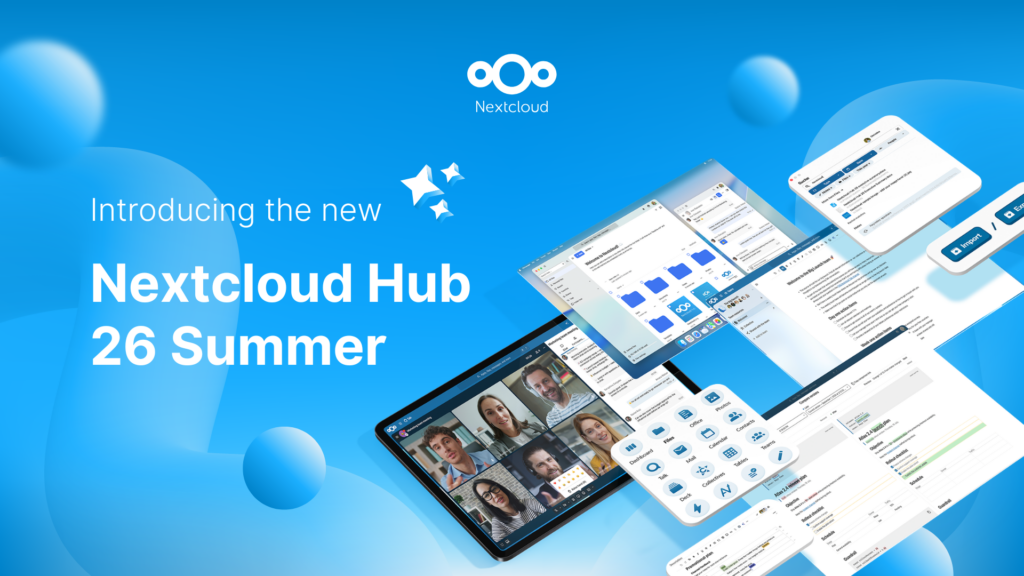
Nextcloud Hub 26 Summer ist eine Gemeinschaftsleistung des Nextcloud-Teams, unserer Community und unserer Partner und wird auf Grundlage davon weiterentwickelt, wie es tagtäglich genutzt wird. Erstellen Sie mit Nextcloud Teams einen eigenen Bereich für Ihr Team, organisieren Sie Ihre Erinnerungen mit der neuen Nextcloud Photos-App und nutzen Sie die von Ihnen gewünschten Features in allen Apps. Lesen Sie weiter, um einen vollständigen Überblick über den neuesten Release zu erhalten.
Nextcloud Hub 25 Autumn erleichtert Ihnen den Einstieg in eine leistungsstarke Zusammenarbeit, während Sie die vollständige Kontrolle über Ihre Daten behalten. Von globalen Design-Updates bis hin zu verbesserter Benutzerfreundlichkeit und Leistung – entdecken Sie unsere neueste Version in diesem Blog.
Nextcloud ist die erste Cloud-Plattform, die mit dem Umweltzeichen „Blauer Engel“ ausgezeichnet wurde und damit beweist, dass eine digital souveräne und grüne IT möglich ist.
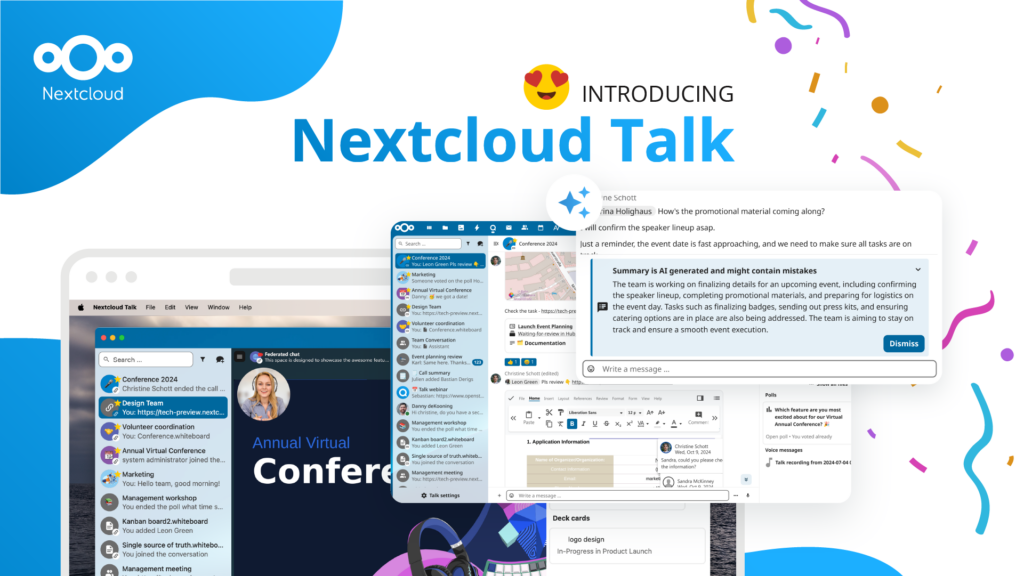
Unternehmen, ob klein oder groß, brauchen eine Möglichkeit, die Ausfallsicherheit und digitale Souveränität ihrer Abläufe zu gewährleisten - eine Open-Source-Alternative zu Teams, die die Privatsphäre respektiert. Und heute stellen wir diese Lösung vor - Nextcloud Talk.
Bechtle und Nextcloud kündigen heute eine vollständig verwaltete Kollaborationsplattform für den öffentlichen Sektor an, die keiner Ausschreibung bedarf und sofort bereitgestellt werden kann.
Our mission is to help individuals, businesses and organizations achieve digital sovereignty and regain control over their data. Nextcloud Hub 5 marks a massive step forward towards achieving this mission, putting the power of AI into your hands – in a way that keeps you in control. New release, new possibilities Hub 5 builds on […]
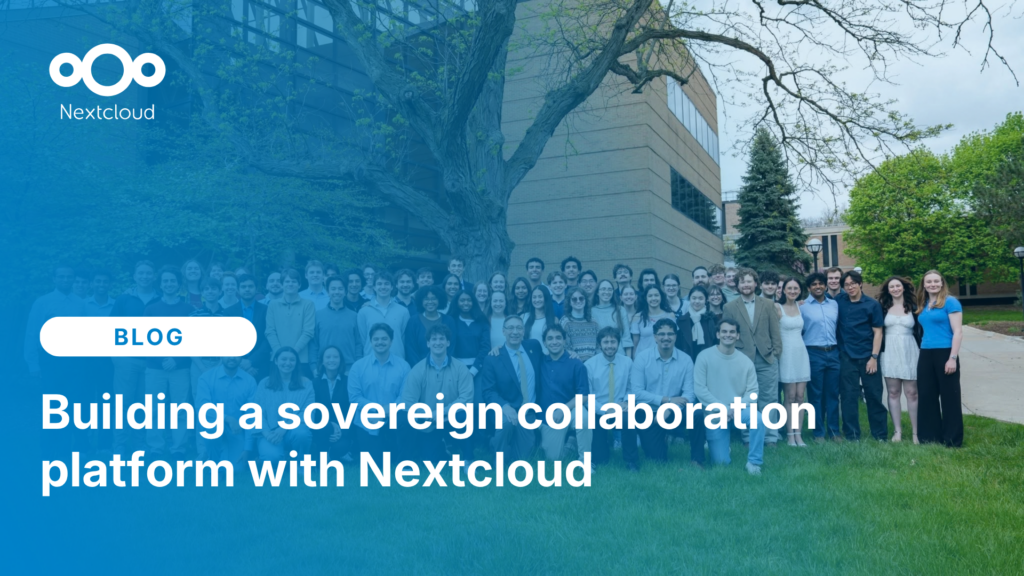
Michigan Tech Aerospace Enterprise migrated from Google Workspace and Microsoft SharePoint to Nextcloud, creating a unified, self-hosted collaboration platform that supports secure engineering workflows, mission coordination, and full control over data and infrastructure.
Wir speichern einige Cookies, um Besucher zu zählen und die Nutzung der Website zu erleichtern. Diese verlassen unseren Server nicht und dienen nicht der Verfolgung Ihrer online-Aktivitäten.
Weitere Informationen hierzu finden Sie in unserer Datenschutzrichtlinie. Anpassen
Statistik-Cookies sammeln anonym Informationen und helfen uns zu verstehen, wie unsere Besucher unsere Website nutzen. Wir verwenden cloud-gehostetes Matomo
Dienst:Matomo
Cookie-Beschreibung:
_pk_ses*: Zählt den ersten Besuch des Benutzers
_pk_id*: Hilft, die Besuche nicht doppelt zu zählen.
mtm_cookie_consent: Erinnert daran, dass der Nutzer seine Zustimmung zur Speicherung und Verwendung von Cookies gegeben hat.
Cookie-Ablauf:_pk_ses*: 30 Minuten
_pk_id*: 13 Monate
mtm_cookie_consent: 30 Tage