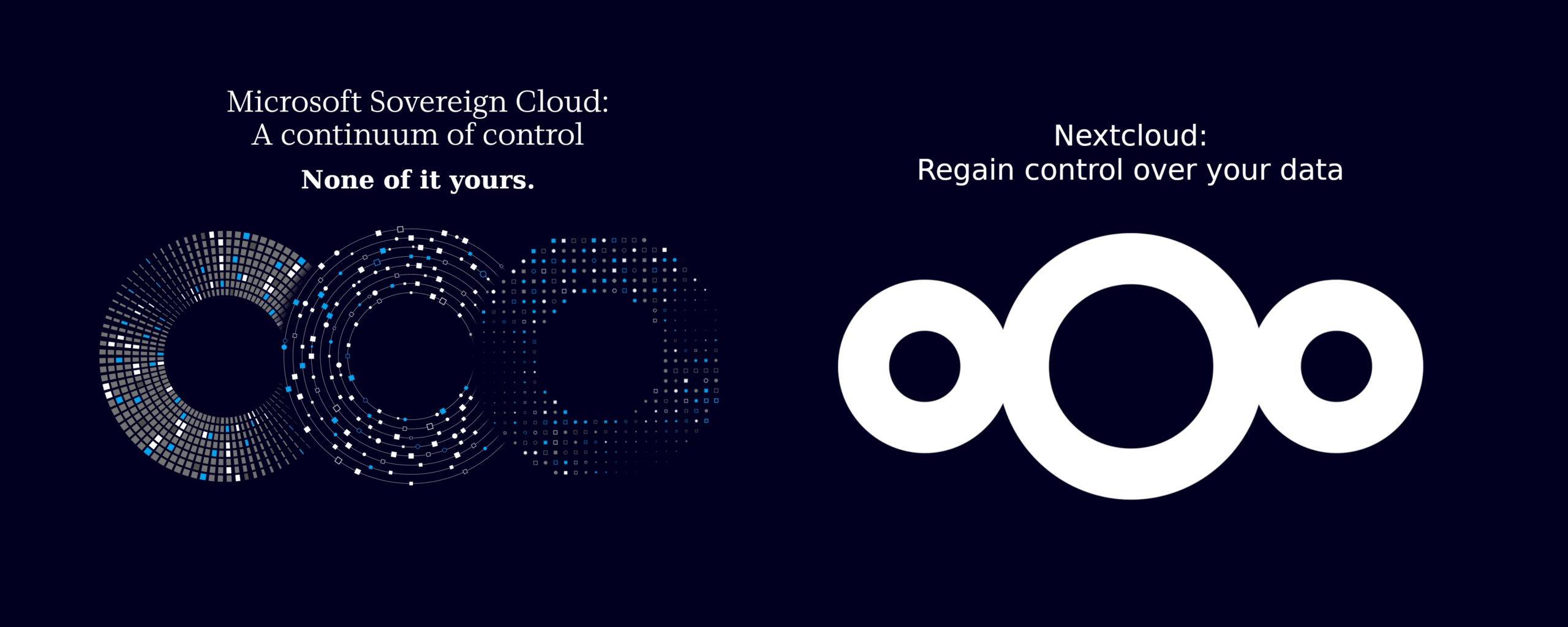
We were rather surprised to see an image resembling the Nextcloud logo being used by Microsoft to sovereign-wash their platform. Certainly, tens of thousands of public and private organizations look to Nextcloud for genuine sovereignty and control. Ministries in France and Austria are moving away from Microsoft, in Germany several states have canceled tens of thousands of licenses for their civil servants and the trend is not limited to Europe.
Microsoft claims that the growing importance of digital sovereignty is driven by the fact that “advanced cloud and AI capabilities move into public service”. But there’s a far more pressing concern: the US government is using Europe’s dependency on US tech companies as a bludgeoning tool to advance its political and economic interests. Whether it’s pressuring European governments in trade negotiations, challenging Europe’s position on Ukraine or pursuing other political or personal demands, the message is clear: technological dependence creates political leverage. And for our concerned customers that’s the kind of vulnerability digital sovereignty should address.
What these customers are certainly not asking for is more dashboards with ambitious names like Sovereign Control Panel that merely give the impression of control. They would like the ability to actually make meaningful decisions without having to color within the lines drawn by a single, monopolistic IT provider.
The chosen approach: daze and confuse
Microsoft’s approach to digital sovereignty is to confuse and complicate rather than address the underlying dependencies. Not under oath – then, suddenly, the firm has to admit they’d hand over European data in a heartbeat to the US government. But outside court, the company makes reassuring promises about customers keeping the keys, conveniently ignoring the limits of those safeguards. Holding the keys isn’t the same as owning the lock. The idea that External Key Management with Azure Managed HSM protects customer data against a lawful disclosure demand under US legislation is highly questionable. Names like Just-in-Time Access and Customer Lockbox are as meaningless as they are confusing.
So clearly the approach to address sovereignty concerns is to create more fancy product names and confusing terms. Data Guardian promises “oversight” by a trusted EU partner. Ownership doesn’t change, so that oversight can be shut the moment a US court demands it. Production Touch Ledger promises that you’d know about it – unless the usual gag order forbids that, in which case there surely is a way to disable the ledger.
Of course, a riff on our logo for a new round of sovereign-washing in a Microsoft blog certainly adds confusion.
Copilot the culprit?
Fancy a little experiment? Ask Microsoft Copilot to generate a header image for a blog about digital sovereignty and data control. Spoiler alert: there’s a chance you’ll end up with something that looks surprisingly like the Nextcloud logo.
We can see why. At Nextcloud, we’ve been taking digital sovereignty seriously for years. And while the term has become a popular marketing phrase, its meaning is actually pretty clear: Full control over your data and the technology behind it. But control means nothing if you don’t decide who holds it.
So perhaps AI is to blame? We can only speculate at the prompt used to generate much of the blog:
“Create a convincing statement about digital sovereignty for a major US tech company. Make it sound like we’re giving customers more control, without actually addressing their concerns about vendor lock-in and technological dependency.”
The result might sound remarkably similar to what was published.
The assumption seems to be that procurement departments won’t realize that contractual promises aren’t worth the paper they’re written on when the Whitehouse orders their accounts to be shut down or their data be handed over. Not that there is even an attempt to promise that all administrative access, every operational activity or every legal exposure is transferred to European control…
Who believes it?
One wonders who falls for it. The Sovereign Private Cloud allows customers to further increase their dependency on Microsoft Azure by letting it infiltrate their data center (“Azure Local”) so even an on-prem setup is completely dependent on Microsoft. It is truly…
Your servers. Your building. Microsoft’s stack, licensing and rules.
Ultimately, Microsoft says sovereignty is about control over data, operations, technology dependencies and continuity. Yet its proposed solution is largely a collection of Microsoft products, including Azure, Microsoft 365, GitHub, Azure Local and Microsoft’s AI tooling.
Who controls the technology roadmap, licensing, updates, product availability and terms of service? Customers may control more settings – they certainly won’t get any control over the platform itself.
Those who fall for it could of course be ignorant of all the technological details. More likely, they would like to change but have not yet found an easy way, and they feel the risk of NIS2, CADA and other legislation that will force a move off of Microsoft at some point is still far enough to not require urgent action. It might end up being an expensive decision.
Nextcloud Hub offers several types of integrations for AI, from completely self-hosted options to integrations with external services like Open AI. Here's an overview of what you can use and where, and where it stands on our Ethical AI scale.
How do you modernize digital collaboration in government without losing control over your data?
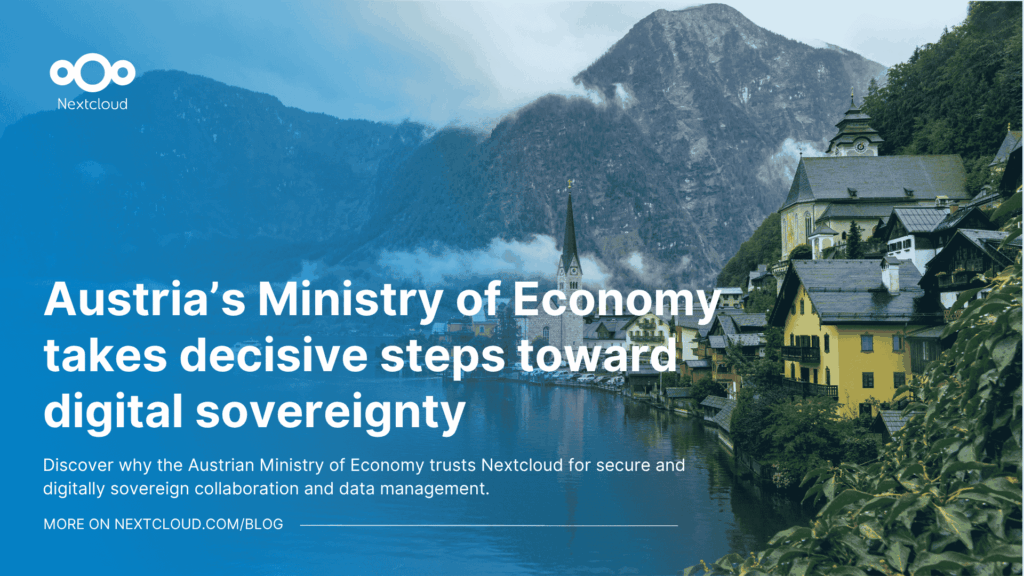
Austria’s Federal Ministry for Economy, Energy and Tourism (BMWET) faced this challenge in 2024 - and decided to take a clear, pragmatic step toward digital sovereignty.
Nextcloud Hub 25 Autumn makes it easier to get started with powerful collaboration while fully in control of your data. From global design updates to improved usability and performance, discover our latest release in this blog.
Passionate about data privacy and Nextcloud? We invite you speak at the Nextcloud Community Conference to share your experience, knowledge and news with the community!
For the ninth time, Nextcloud has been nominated for the CloudComputing-Insider Readers’ Choice Award in the category of Cloud Content Management. We’d love to reach the top again! And we’re looking for the support of you and everyone else in our amazing community to get there. Nextcloud as the best Cloud Content Management tool? Only […]
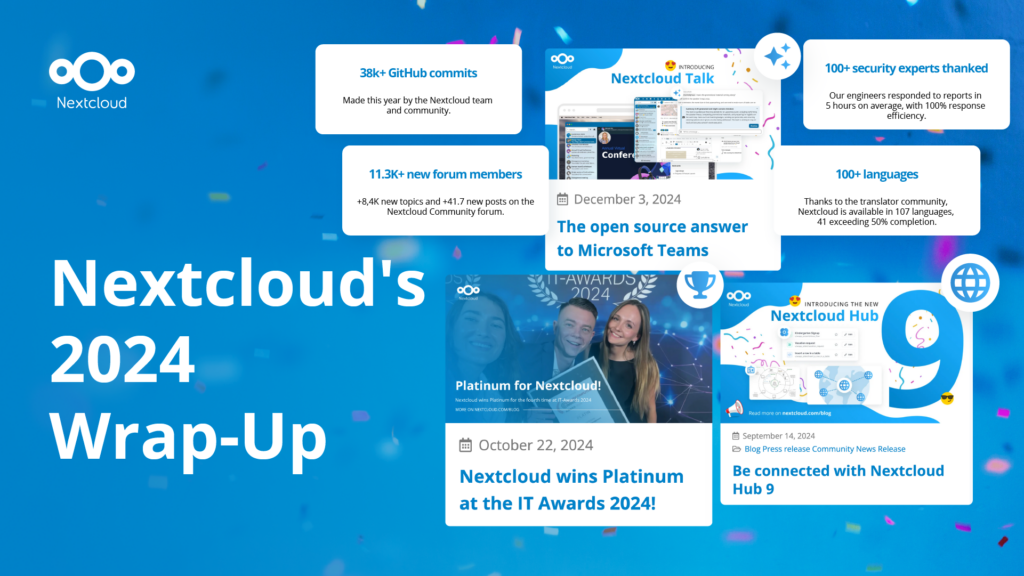
In the Nextcloud 2024 wrap-up, we want to take a moment to celebrate this year's achievements. Join us as we continue to reimagine what’s possible - shaping a world where open source, privacy and connection come together and drive progress for the greater good.
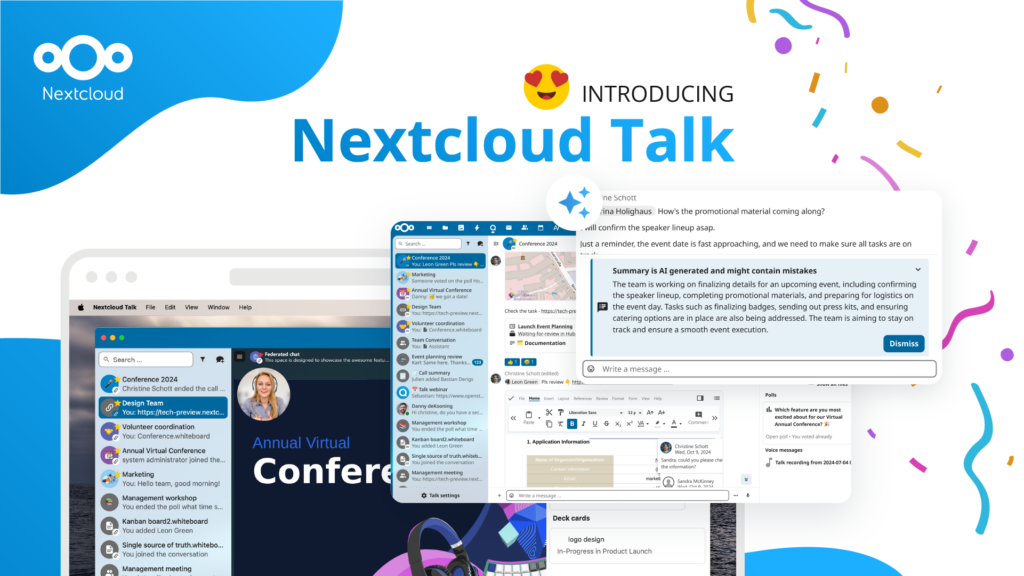
Organisations, small and large, need a way to ensure the resiliency and digital sovereignty of their operations – an open-source, privacy-respecting alternative to Teams. And today, we present that solution - Nextcloud Talk.
Nextcloud has been recognized with the World Summit Award Germany that selects and promotes local digital innovation improving society, aiming to contribute to the United Nations' agenda of sustainable development goals.
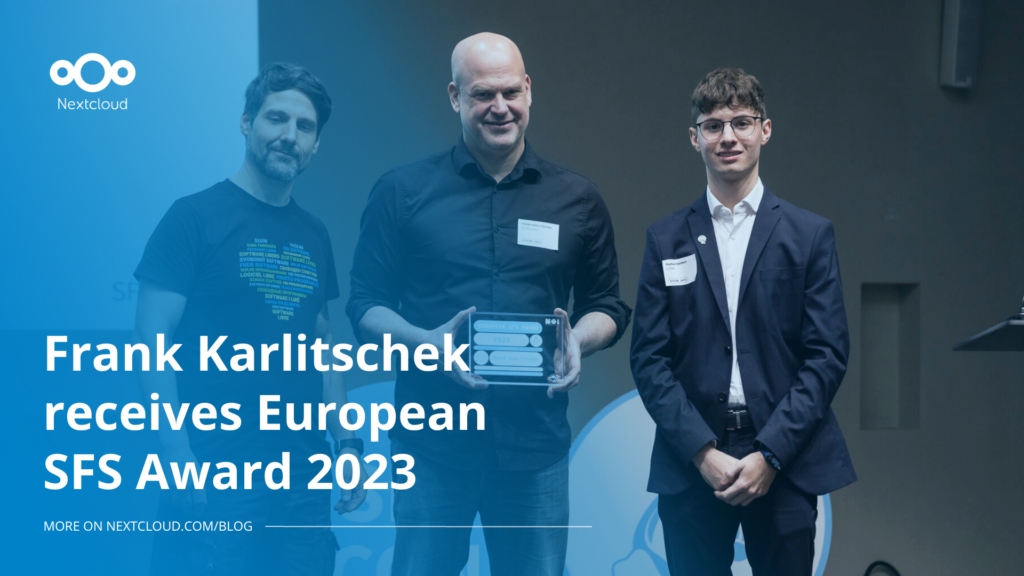
DIE ZEIT, a prominent German outlet, interviewed Nextcloud’s founder Frank Karlitschek for an article on Microsoft’s anti-competitive behaviour on the European office software market. Read for a recap of the article and the key takeaways.
MagentaCLOUD’s migration to Nextcloud in 2021 resulted in a fully equipped Online Storage with an integrated online office suite that further improves the user experience, flexibility and security for customers.
We bring you a major update to the Nextcloud AI Assistant, plus the news we work with several big hosting providers like IONOS and OVHcloud to bring AI-as-a-Service options to you!
Bechtle and Nextcloud announce today a complete managed collaboration platform for the public sector that requires no tender and can be deployed immediately.
Discover how to make the switch from ownCloud to Nextcloud. Our quick guide provides insights into the migration process, helping you make the transition smoothly.
Today, US-based file sync & share vendor Kiteworks announced their acquisition of ownCloud and Dracoon. Kiteworks points out that their customers now have access to their file-sharing application. It is to be expected they will not maintain 3 similar products, but customers will have to migrate to the US firms’ platform or look for another […]
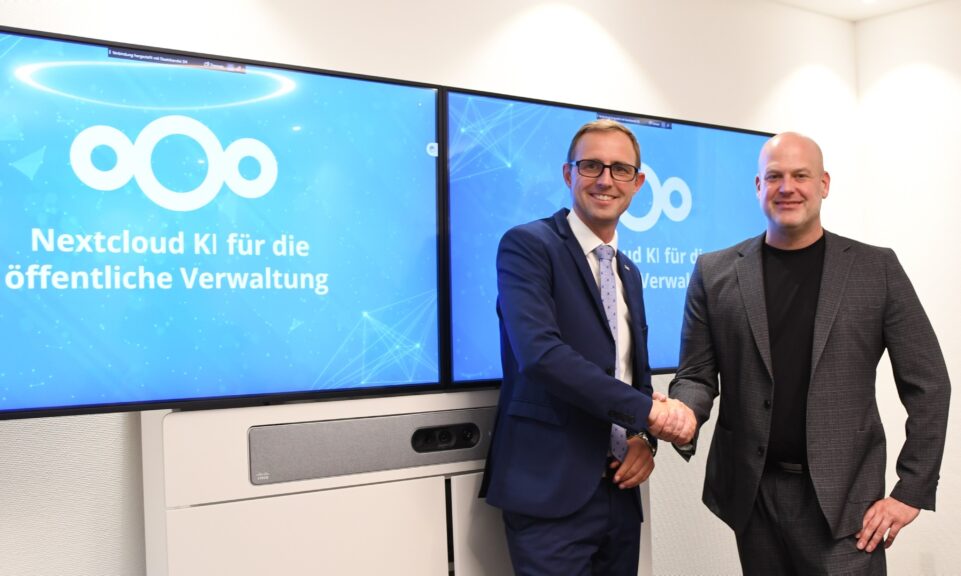
As part of Schleswig-Holstein's state digitization strategy, the state chancellery has announced they will work with Nextcloud to develop AI for working with government documents. This comes just after we announced the first private AI assistant last weekend with Hub 6. The German state already uses Nextcloud and their AI strategy aligns with our work on ethical, local AI technologies.
Our mission is to help individuals, businesses and organizations achieve digital sovereignty and regain control over their data. Nextcloud Hub 5 marks a massive step forward towards achieving this mission, putting the power of AI into your hands – in a way that keeps you in control. New release, new possibilities Hub 5 builds on […]
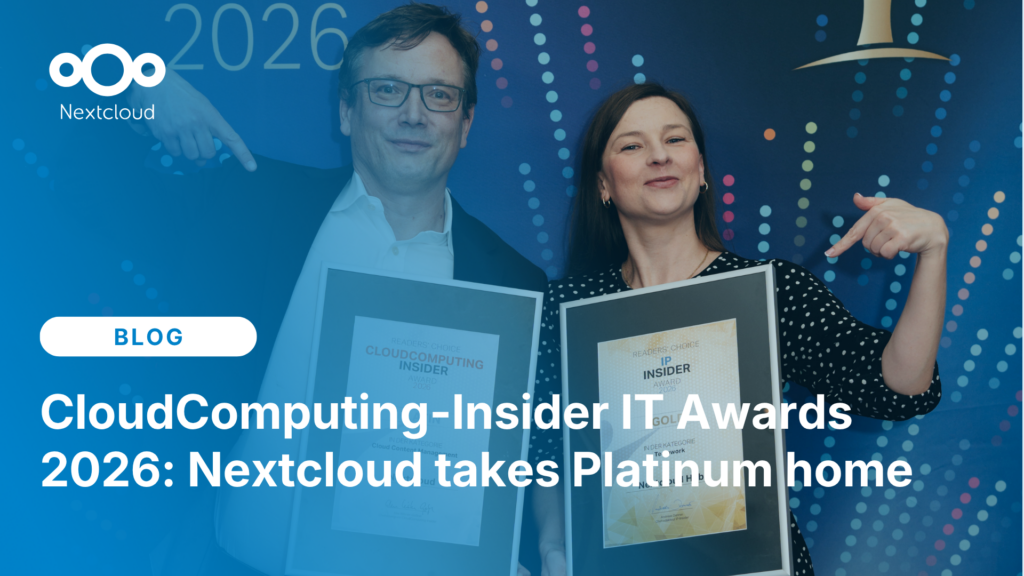
Once again, Nextcloud takes home Platinum at the CloudComputing-Insider IT-Awards. For this award, we want to thank everyone who supported us this year and took a minute to put it into a vote! Read more details about the awards in this post.
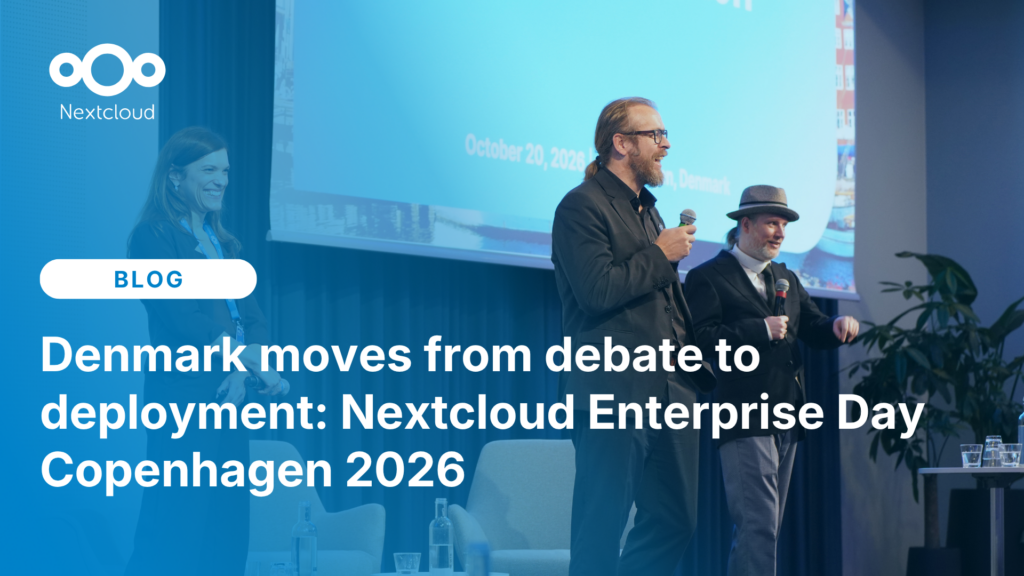
At the second Nextcloud Enterprise Day Copenhagen, municipalities, universities and other public organisations discussed how they can reduce their dependency on US Big Tech. Read our recap of the event.
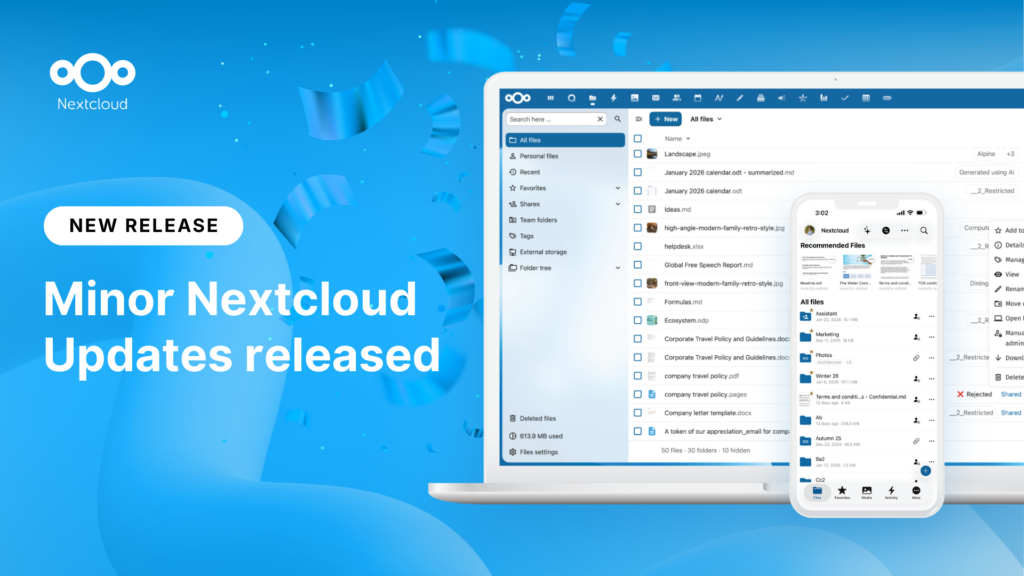
New maintenance updates are available for Nextcloud Hub. Nextcloud Hub 25 Autumn reaches End of Life. Read more in this post or access the full changelog on our website. Keep your server up-to-date!
We save some cookies to count visitors and make the site easier to use. This doesn't leave our server and isn't to track you personally!
See our Privacy Policy for more information. Customize
Statistics cookies collect information anonymously and help us understand how our visitors use our website. We use cloud-hosted Matomo
Service:Matomo
Cookies description:
_pk_ses*: Counts the first visit of the user
_pk_id*: Helps not to double count the visits.
mtm_cookie_consent: Remembers that consent for storing and using cookies was given by the user.
Cookies expiry:_pk_ses*: 30 Minuten
_pk_id*: 13 months
mtm_cookie_consent: 30 Dagen