Open standards, transparent governance and an absence of gatekeepers are fundamental principles to ensure the internet remains accessible, safe, and under the control of citizens rather than government or corporations. In recent months, this debate on the importance of digital sovereignty has moved from niche policy discussions to front-page headlines in major European newspapers.
However, while awareness is growing, Big Tech platforms continue to seek control over our devices and online choices, taking away our control over our own data.
This includes the new policy Google has announced, requiring all Android app developers to register centrally with the company if they want to distribute apps outside the Google Play Store.
The usual, tired arguments around security that Google uses to justify this power grab hold no water. Centralized, intransparant security architectures certainly help secure monetization and the market by locking out competitors, but they do little to protect users.
This registration will involve:
- Paying a fee to Google
- Agreeing to Google’s Terms and Conditions
- Providing government identification
- Uploading evidence of the developer’s private signing key
- Listing all current and future application identifiers
The policy is expected to take effect globally in the coming months.
Google’s latest attempt to strengthen its control over Android and its users’ devices raises significant concerns around data privacy, innovation, and fair competition for developers. In response, Nextcloud has joined 30+ organizations in signing an open letter to Google opposing the new Android developer verification program.
You can read the full text below as well as at Keep Android Open, which also lists initiatives for developers, consumers, website owners, and others to oppose the proposal.
Nextcloud’s commitment to open standards
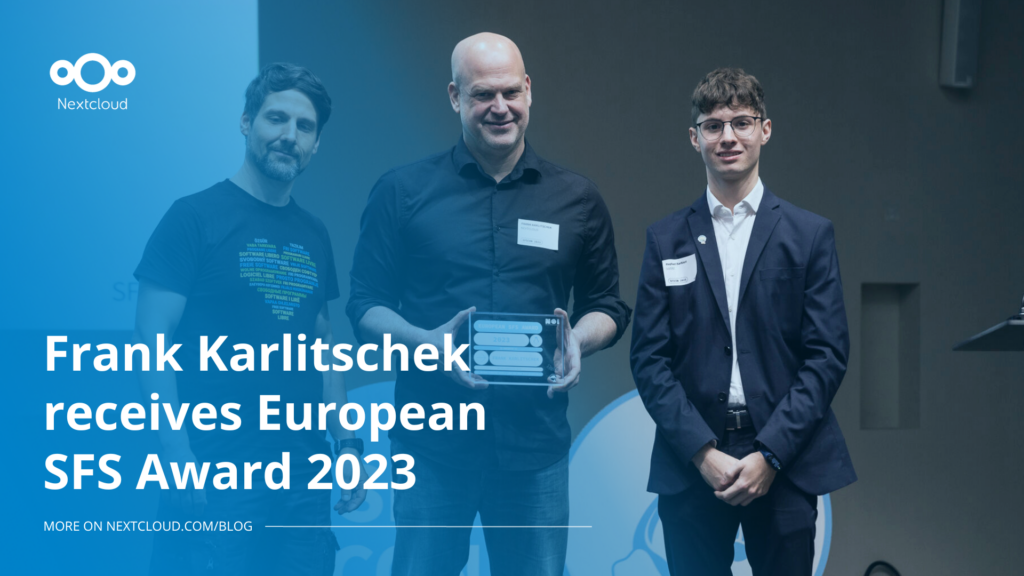
Our long-standing commitment to open standards and open source has been widely recognized.
These recognitions underscore our continued dedication to open source, interoperability, and the protection of digital rights.
An open letter opposing Android developer verification
Date: February 24, 2026
To: Sundar Pichai, Chief Executive Officer, Google
To: Sergey Brin, Founder and Board Member, Google
To: Larry Page, Founder and Board Member, Google
To: Vijaya Kaza, General Manager for App & Ecosystem Trust, Google
CC: Regulatory authorities, policymakers, and the Android developer community
Re: Mandatory Developer Registration for Android App Distribution
We, the undersigned organizations representing civil society, nonprofit institutions, and technology companies, write to express our strong opposition to Google’s announced policy requiring all Android app developers to register centrally with Google themselves in order to distribute applications outside of the Google Play Store, set to take effect worldwide in the coming months.
While we do recognize the importance of platform security and user safety, the Android platform already includes multiple security mechanisms that do not require central registration. Forcibly injecting an alien security model that runs counter to Android’s historic open nature threatens innovation, competition, privacy, and user freedom. We urge Google to withdraw this policy and work with the open-source and security communities on less restrictive alternatives.
Our concerns
1. Gatekeeping beyond Google’s own store
Android has historically been characterized as an open platform where users and developers can operate independently of Google’s services. The proposed developer registration policy fundamentally alters that relationship by requiring developers who wish to distribute apps through alternative channels — their own websites, third-party app stores, enterprise distribution systems, or direct transfers — to first seek permission from Google through a mandatory verification process, which involves the agreement to Google’s terms and conditions, the payment of a fee, and the uploading of government-issued identification.
This extends Google’s gatekeeping authority beyond its own marketplace into distribution channels where it has no legitimate operational role. Developers who choose not to use Google’s services should not be forced to register with, and submit to the judgement of, Google. Centralizing the registration of all applications worldwide also gives Google newfound powers to completely disable any app it wants to, for any reason, for the entire Android ecosystem.
2. Barriers to entry and innovation
Mandatory registration creates friction and barriers to entry, particularly for:
- Individual developers and small teams with limited resources
- Open-source projects that rely on volunteer contributors
- Developers in regions with limited access to Google’s registration infrastructure
- Privacy-focused developers who avoid surveillance ecosystems
- Emergency response and humanitarian organizations requiring rapid deployment
- Activists working on internet freedom in countries that unjustly criminalize that work
- Developers in countries or regions where Google cannot allow them to sign up due to sanctions
- Researchers and academics developing experimental applications
- Internal enterprise and government applications never intended for broad public distribution
Every additional bureaucratic hurdle reduces diversity in the software ecosystem and concentrates power in the hands of large established players who can more easily absorb such compliance costs.
3. Privacy and surveillance concerns
Requiring registration with Google creates a comprehensive database of all Android developers, regardless of whether or not they use Google’s services. This raises serious questions about:
- What personal information developers must provide
- How this information will be stored, secured, and used
- Whether this data could be subject to government requests or legal processes
- To what extent developer activity is tracked across the ecosystem
- What this means for developers working on privacy-preserving or politically sensitive applications
Developers should have the right to create and distribute software without submitting to unnecessary surveillance or scrutiny.
4. Arbitrary enforcement and account termination risks
Google’s existing app review processes have been criticized for opaque decision-making, inconsistent enforcement, and limited appeal mechanisms. Extending this system to all Android certified devices creates risks of:
- Arbitrary rejection or suspension without clear justification
- Automated systems making consequential decisions with insufficient human oversight
- Developers losing their ability to distribute apps across all channels due to a single un-reviewable corporate decision
- Political or competitive considerations influencing registration approvals
- Disproportionate impact on marginalized communities and controversial but legal applications
A single point of failure controlled by one corporation is antithetical to a healthy, competitive software ecosystem.
5. Anticompetitive implications
This requirement allows Google to collect intelligence on all Android development activity, including:
- Which apps are being developed and by whom
- Alternative distribution strategies and business models
- Competitive threats to Google’s own services
- Market trends and user preferences outside of Google’s ecosystem
This information asymmetry provides Google with significant competitive advantages, allows it to preempt, copy, and undermine competing products and services, and may open many questions about antitrust.
6. Regulatory concerns
Regulatory authorities worldwide, including the European Commission, the U.S. Department of Justice, and competition authorities in multiple jurisdictions, have increasingly scrutinized dominant platforms’ ability to preference their own services and restrict competition, demanding more openness and interoperability. We additionally note growing concerns around regulatory intervention increasing mass surveillance, impeding software freedom, open internet and device neutrality.
We urge Google to find alternative ways to comply with regulatory obligations by promoting models that respect Android’s open nature without increasing gatekeeper control over the platform.
Existing measures are sufficient
The Android platform already includes multiple security mechanisms that do not require central registration:
- Operating system-level security features, application sandboxing, and permission systems
- User warnings for applications that are directly installed (or “sideloaded”)
- Google Play Protect (which users can choose to enable or disable)
- Developer signing certificates that establish software provenance
No evidence has been presented that these safeguards are insufficient to continue to protect Android users as they have for the entire seventeen years of Android’s existence. If Google’s concern is genuinely about security rather than control, it should invest in improving these existing mechanisms rather than creating new bottlenecks and centralizing control.
Our petition
We call upon Google to:
- Immediately rescind the mandatory developer registration requirement for third-party distribution.
- Engage in transparent dialogue with civil society, developers, and regulators about Android security improvements that respect openness and competition.
- Commit to platform neutrality by ensuring that Android remains a genuinely open platform where Google’s role as platform provider does not conflict with its commercial interests.
Over the years, Android has evolved into a critical piece of technological infrastructure that serves hundreds of governments, millions of businesses, and billions of citizens around the world. Unilaterally consolidating and centralizing the power to approve software into the hands of a single unaccountable corporation is antithetical to the principles of free speech, an affront to free software, an insurmountable barrier to competition, and a threat to digital sovereignty everywhere.
We implore Google to reverse course, end the developer verification program, and to begin working collaboratively with the broader community to advance security objectives without sacrificing the open principles upon which Android was built. The strength of the Android ecosystem has historically been its openness, and Google must work towards restoring its role as a faithful steward of that trust.
Signatories (as of February 26, 2026)
AdGuard
The App Fair Project
ARTICLE 19
Associação Nacional para o Software Livre (ANSOL)
Aurora Store
The Center for Digital Progress (D64)
The Chaos Computer Club (CCC)
Codeberg e.V.
Cryptee
Data Rights
Digitale Gesellschaft
The Digital Rights Foundation
Digital Rights Watch
epicenter.works – for digital rights
/e/ Foundation
European Digital Rights (EDRi)
The Electronic Frontier Foundation (EFF)
Fastmail
FUTO
Ghostery
F-Droid
The Free Software Foundation (FSF)
The Free Software Foundation Europe (FSFE)
The Guardian Project
IzzyOnDroid
JMP.chat
KDE e.V.
microG
Molly
Nextcloud
Obtainium
The OpenStreetMap Foundation (OSMF)
Open Rights Group (ORG)
Osservatorio Nessuno OdV
Proton AG
Rossmann Group
Software Freedom Conservancy
Techlore
The Tor Project
Tuta Mail
Vivaldi Technologies AS