If your organization handles personal information about Canadians in the course of commercial activity, the Personal Information Protection and Electronic Documents Act (PIPEDA) sets the rules for how you collect, use, store and protect it. This also holds true for files such as contracts, HR records, customer files, chat logs stored on a collaboration platform like Nextcloud, so configuring it to ensure PIPEDA compliance is crucial.
PIPEDA places obligations not on tools but on organizations, and Nextcloud gives you everything you to need to meet them. You get to decide where your data lives, who can access it, how long you keep it, and what leaves your servers.
This article gives you an overview of what a PIPEDA-ready Nextcloud deployment involves: what works out of the box, what you configure once, and what remains your organization’s job. Links to the documentation help you get more information if needed.
💡 The current state of PIPEDA (and its possible successor PPCDA)
As Canada’s federal private-sector privacy law, PIPEDA covers organizations that handle personal information in commercial activities, as well as employee data in federally regulated industries such as banking and telecommunications. Quebec, British Columbia and Alberta have their own private-sector privacy laws that apply instead within those provinces, but PIPEDA still applies whenever personal information crosses provincial or national borders.
The law is built on ten fair information principles, from accountability and consent to security safeguards and individual access. Since 2018, organizations must also report breaches that create a «real risk of significant harm» to the Office of the Privacy Commissioner of Canada, notify the people affected, and keep a record of every breach for 24 months.
On June 15, 2026, the federal government introduced Bill C-36, which would replace PIPEDA’s privacy rules with a new Protecting Privacy and Consumer Data Act (PPCDA), require a privacy impact assessment before personal data leaves Canada, and allow fines of up to C$10 million or 3% of global revenue. At the time of this writing, the bill is still awaiting second reading in the House of Commons, and its rules only take effect once it has passed both houses and a new regulator has been set up. Until then, PIPEDA remains the law.
For cloud storage, the most relevant change is about transfers abroad: organizations would need to assess and mitigate privacy risks before transferring personal information outside Canada. Keeping your data in Canada from the start avoids this assessment for your core platform.
1. Determine data location
Before you install Nextcloud, decide where your instance and everything connected to it will run. You have three main options:
Self-hosting on your own infrastructure, in your own data center or office
A Canadian hosting provider, running Nextcloud on servers you rent
A Nextcloud partner that hosts and manages Nextcloud for you. You can filter the partner directory by location.
PIPEDA doesn’t require you to keep data in Canada. However, you remain accountable for personal information you hand to a provider, and transfers abroad bring extra obligations. Choosing Canadian hosting keeps things simple.
Pay attention to who owns the provider, not just where its servers are. A provider headquartered outside Canada may be subject to its home country’s laws on government access to data, even for data stored in a Canadian data center. The Privacy Commissioner’s guidelines on processing personal data across borders expect you to tell people plainly when their information may be processed in another country.
Make sure your storage backends, database, backups and logs are located in Canada too. If a provider hosts or manages your instance, sign a contract that covers security measures, breach notification, subcontractors and what happens to your data when the contract ends. The Privacy Commissioner’s guidance on working with third-party service providers helps you assess a provider before you sign.
2. Secure the platform
PIPEDA requires security safeguards that match the sensitivity of the information you hold. Health, financial, or HR records need stronger protection than marketing materials.
Every connection to your instance should use HTTPS. For data at rest, Nextcloud works with three layers of encryption. Disk encryption on your servers is the baseline. Server-side encryption adds protection when files sit on external or object storage you don’t fully control, though it doesn’t protect against a compromised Nextcloud server and adds some storage and performance overhead. End-to-end encryption protects selected folders so that not even server administrators can read them. The trade-off is convenience: encrypted folders are set up in the desktop or mobile apps and are read-only in the browser.
For logins, you can connect your existing identity system through LDAP, SAML or OpenID Connect, so access ends automatically when someone leaves your organization. You can also enforce two-factor authentication for everyone or for specific groups. Brute-force protection is enabled by default.
Beyond that, keeping a Nextcloud server secure is the same routine work as for any server: install updates promptly and disable apps you don’t use. The free Nextcloud Security Scan checks your instance for common configuration problems.
3. Control sharing and data flows
PIPEDA says personal information should only be used and disclosed for the purposes it was collected for. On a collaboration platform, the biggest risk is usually not an attacker but an overly generous share link.
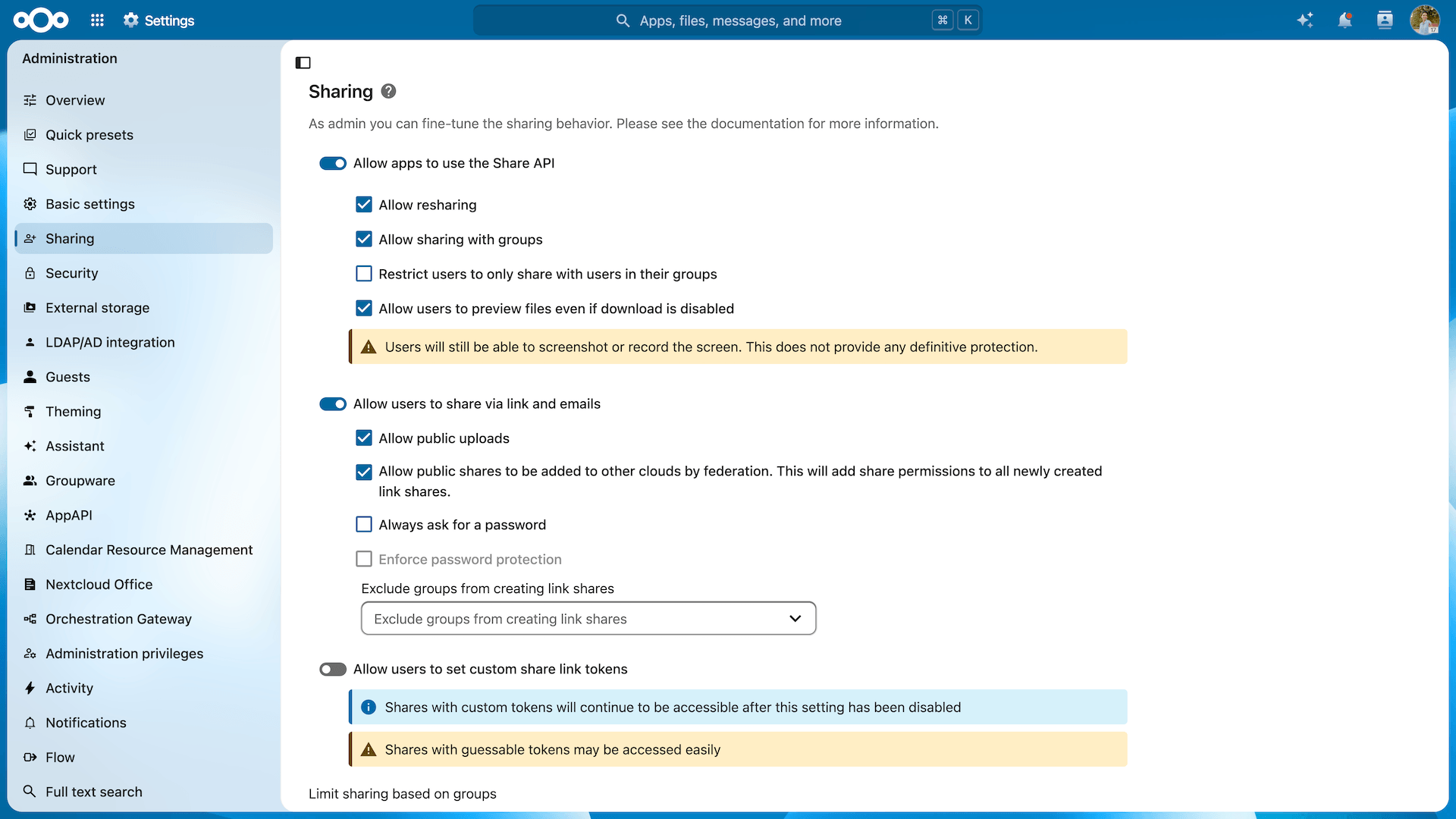
Nextcloud lets you set clear rules for sharing. You can require passwords and expiration dates on public links, limit public links to the groups that need them, and keep teams from sharing outside their own group.
For your most sensitive files, file access control adds conditions on top of sharing permissions. For example, an accounting firm could tag all client tax files as «Client confidential» and allow access to them only from the office network or company VPN. Even if a file is shared by mistake, it can’t be opened from anywhere else.
You also decide which outside services your instance connects to. You can switch off connections you don’t need, such as federation with other Nextcloud servers, which may be located outside Canada. Nextcloud’s AI features are optional, and you can run them on local models so documents never leave your servers.
4. Set up retention and data request handling
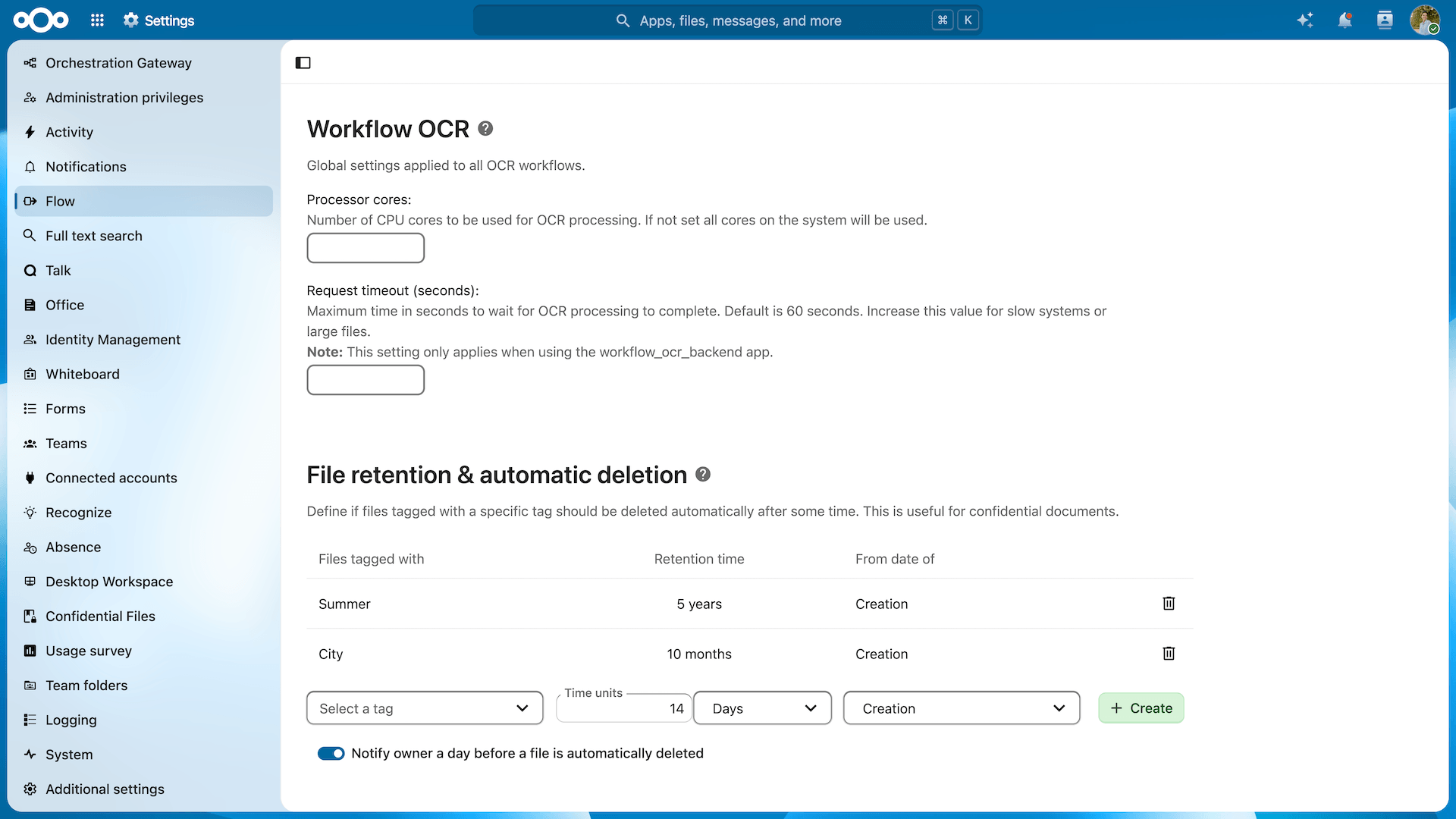
PIPEDA requires you to keep personal information only as long as you need it. Once you have a retention schedule, the Retention app can enforce it automatically. For example, files tagged «Job application» could be deleted one year after they were created. You can also limit how long deleted files and older versions are kept. Remember to align your backups with the same schedule, or you’ll keep the data anyway.
People also have the right to ask what personal information you hold about them, and you have 30 days to respond. Users can export their own account data with the User Migration app, and Nextcloud’s search helps you find information stored in other people’s files.
5. Set up logging and monitoring
If something goes wrong, you need to be able to show what happened and whose data was affected. The built-in logging feature writes security-relevant events, such as logins, to a separate audit log, which you can also send to syslog and on to your central logging system. Store that log where regular administrators can’t change it and give it a retention period, since it contains personal information itself.
Completing the organizational side of PIPEDA compliance
Nextcloud gives you the technical controls to keep data private, but whether you comply with PIPEDA depends in large part on your organization’s own policies and processes.
Start by appointing someone to be responsible for privacy. PIPEDA requires a designated person who is accountable for compliance, and in a small organization this can be an existing employee. That person should make sure your policies are written down, covering why you collect personal information, how long you keep it, and how you handle requests and complaints. Nextcloud helps make those policies visible: you can link your privacy policy on the login page and ask users to accept your terms with the Terms of Service app.
Before you go live, a privacy impact assessment helps you find risks early. It’s good practice under PIPEDA and required in some cases under Quebec’s Law 25. You should also have a plan for breaches, covering how you contain one, assess the risk, report it, and notify the people affected, as well as how you keep your 24-month breach record. Finally, train your staff, because even the best sharing settings won’t help if people don’t understand why they exist.
For more guidance, see the Office of the Privacy Commissioner of Canada’s PIPEDA compliance help. This article isn’t legal advice, so if your deployment handles sensitive information, ask a Canadian privacy lawyer to review your approach.
What to expect after deployment
Some of what you need comes with every Nextcloud installation: full control over where your data is stored, brute-force protection, and a fine-grained permission system. Most of the rest is one-time configuration. Encryption, single sign-on, two-factor authentication, sharing and file access rules, retention rules, audit logging, and links to your privacy policy are all things an experienced administrator sets up as part of a normal deployment.
After that, the ongoing work is routine: installing updates, reviewing logs, answering access requests, and keeping your policies, training, and breach plan up to date.
Get support for your deployment
Setting up Nextcloud for PIPEDA is easier with expert help. With Nextcloud Enterprise, you get direct support from our engineers and help with secure, scalable deployments. If you’d rather not run it yourself, our partners can host and manage Nextcloud for you.
Many of the same controls help with Europe’s GDPR. To learn more, have a look at our GDPR Compliance Kit. If you have specific questions about your deployment, get in touch with our team.
Fruto del trabajo conjunto de nuestro equipo, la comunidad y nuestros partners, Nextcloud Hub 26 Summer aprende de personas reales que utilizan nuestras herramientas a diario. Crea un espacio propio para tu equipo con Nextcloud Teams, organiza tus recuerdos en el nuevo Nextcloud Photos y disfruta de las actualizaciones que pediste en todas las aplicaciones. ¡Sigue leyendo para conocer todos los detalles de nuestra última versión!
Nextcloud Hub offers several types of integrations for AI, from completely self-hosted options to integrations with external services like Open AI. Here's an overview of what you can use and where, and where it stands on our Ethical AI scale.
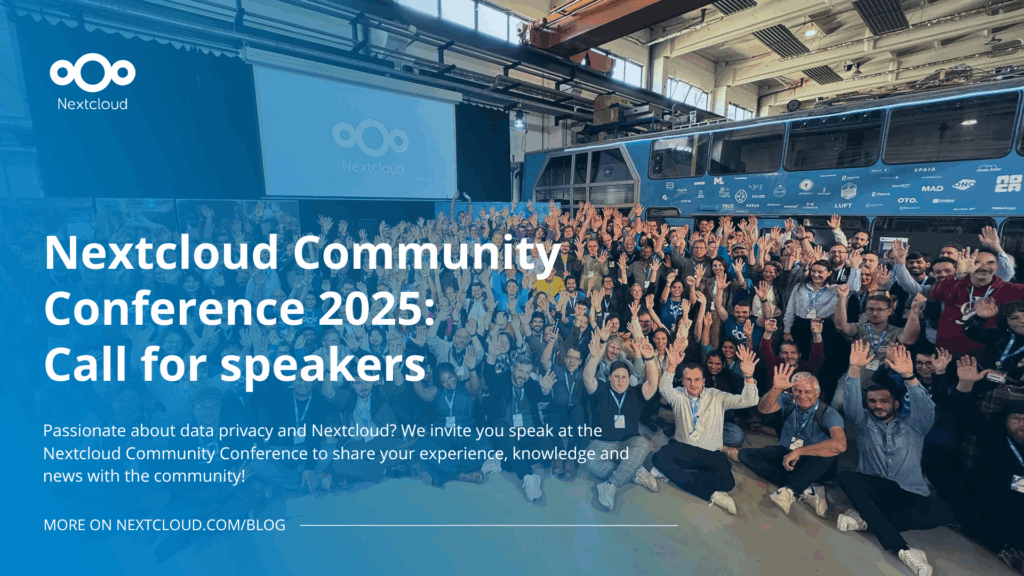
Passionate about data privacy and Nextcloud? We invite you speak at the Nextcloud Community Conference to share your experience, knowledge and news with the community!
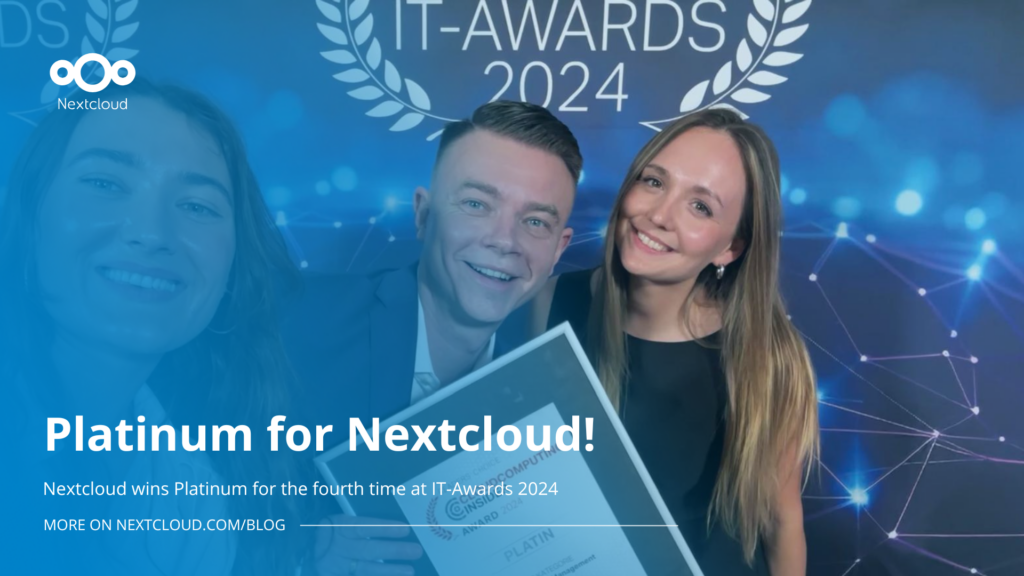
For the ninth time, Nextcloud has been nominated for the CloudComputing-Insider Readers’ Choice Award in the category of Cloud Content Management. We’d love to reach the top again! And we’re looking for the support of you and everyone else in our amazing community to get there. Nextcloud as the best Cloud Content Management tool? Only […]
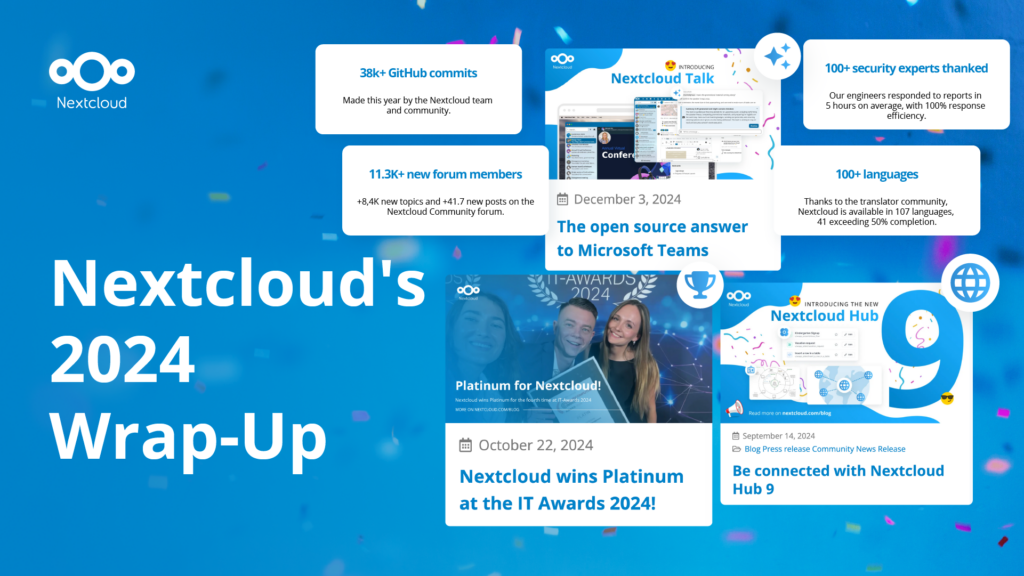
In the Nextcloud 2024 wrap-up, we want to take a moment to celebrate this year's achievements. Join us as we continue to reimagine what’s possible - shaping a world where open source, privacy and connection come together and drive progress for the greater good.
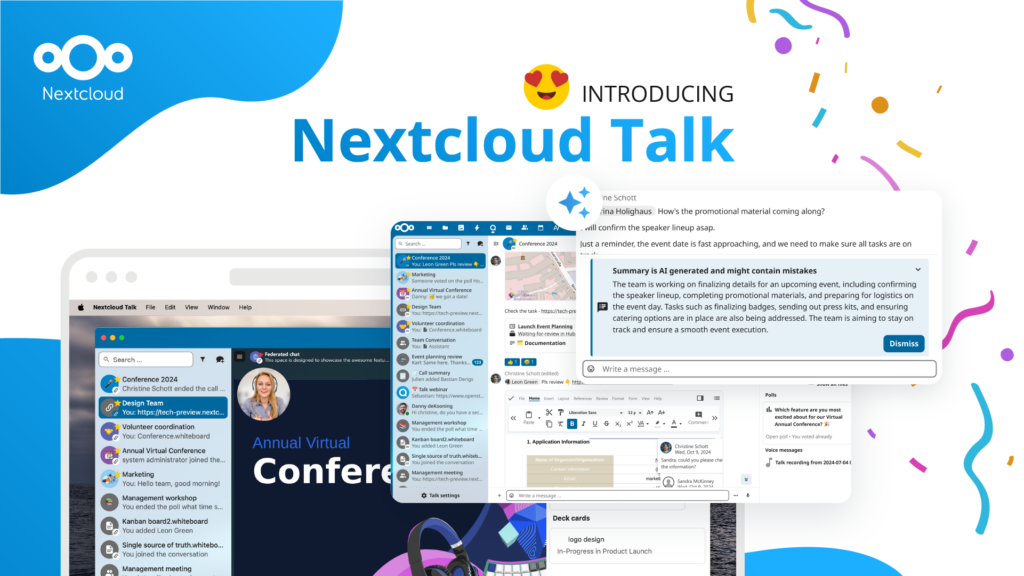
Las organizaciones, grandes y pequeñas, necesitan una forma de garantizar la resiliencia y la soberanía digital de sus operaciones: una alternativa de código abierto que respete la privacidad frente a Teams. Y hoy, presentamos esa solución: Nextcloud Talk.
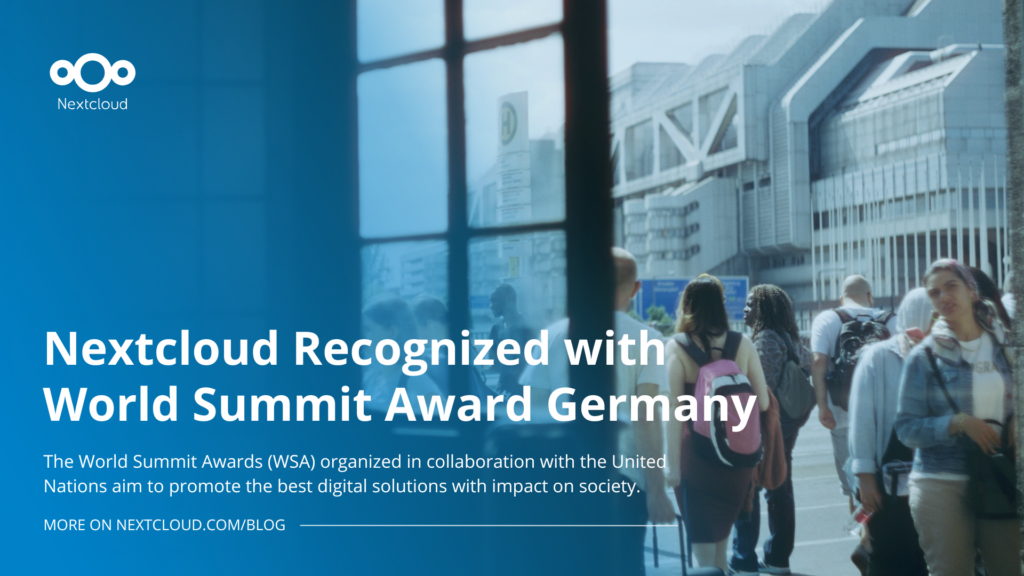
Nextcloud has been recognized with the World Summit Award Germany that selects and promotes local digital innovation improving society, aiming to contribute to the United Nations' agenda of sustainable development goals.
DIE ZEIT, a prominent German outlet, interviewed Nextcloud’s founder Frank Karlitschek for an article on Microsoft’s anti-competitive behaviour on the European office software market. Read for a recap of the article and the key takeaways.
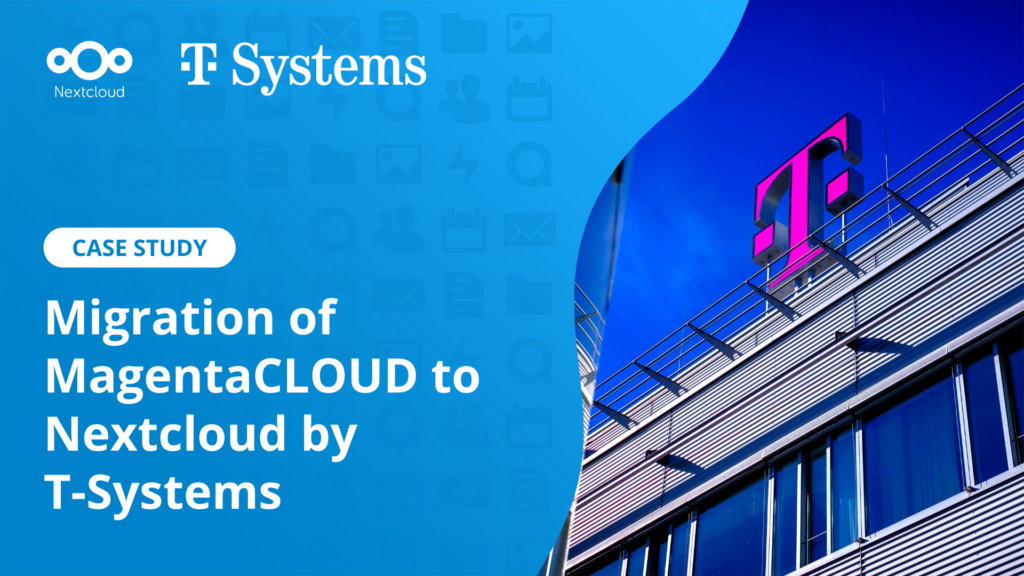
MagentaCLOUD’s migration to Nextcloud in 2021 resulted in a fully equipped Online Storage with an integrated online office suite that further improves the user experience, flexibility and security for customers.
We bring you a major update to the Nextcloud AI Assistant, plus the news we work with several big hosting providers like IONOS and OVHcloud to bring AI-as-a-Service options to you!
Bechtle and Nextcloud announce today a complete managed collaboration platform for the public sector that requires no tender and can be deployed immediately.
Discover how to make the switch from ownCloud to Nextcloud. Our quick guide provides insights into the migration process, helping you make the transition smoothly.
Today, US-based file sync & share vendor Kiteworks announced their acquisition of ownCloud and Dracoon. Kiteworks points out that their customers now have access to their file-sharing application. It is to be expected they will not maintain 3 similar products, but customers will have to migrate to the US firms’ platform or look for another […]
As part of Schleswig-Holstein's state digitization strategy, the state chancellery has announced they will work with Nextcloud to develop AI for working with government documents. This comes just after we announced the first private AI assistant last weekend with Hub 6. The German state already uses Nextcloud and their AI strategy aligns with our work on ethical, local AI technologies.
Nuestra misión es ayudar a particulares, empresas y organizaciones a alcanzar la soberanía digital y recuperar el control sobre sus datos. Nextcloud Hub 5 supone un enorme paso adelante en la consecución de esta misión, poniendo el poder de la IA en tus manos, de forma que mantengas el control. Nueva versión, nuevas posibilidades Hub […]
One year ago, the European Commission proposed the Digital Omnibus, a package to “simplify” EU digital rules. Its most important part is still being negotiated: a GDPR change that would make it easier for companies to train AI on your personal data, while EU governments want to weaken your right to say no. Here’s where things stand, who’s lobbying, and how to keep your data out of someone else’s AI.
What does the dependency on U.S. Big Tech put at risk and what can Canadian organizations learn from Europe’s digital sovereignty movement? In this article, we try to find the answers.
Guardamos algunas cookies para contar los visitantes y facilitar el uso del sitio. Esto no sale de nuestro servidor y no es para rastrearte personalmente. Consulta nuestra política de privacidad para obtener más información. Personalización
Cookies utilizadas para guardar los datos introducidos en los formularios, como nombre, correo electrónico, número de teléfono e idioma preferido.
Nombre de la cookie:nc_form_fields
Descripción de la cookie:Recuerda los datos introducidos en los formularios para la próxima vez (nombre, correo electrónico, teléfono e idioma preferido)
Caducidad de la cookie:30 días
Consentir
Nombre de la cookie:nc_utm_parameters
Descripción de la cookie:We use cookies to store UTM parameters from your visit so we can understand how you arrived at our website.
Las cookies estadísticas recopilan información de forma anónima y nos ayudan a comprender cómo utilizan nuestro sitio web nuestros visitantes. Utilizamos Matomo alojado en la nube.
Servicio:Matomo
Descripción de la cookie:
_pk_ses*: Cuenta la primera visita del usuario
_pk_id*: Ayuda a no contar dos veces las visitas.
mtm_cookie_consent: Recuerda que el usuario ha dado su consentimiento para almacenar y utilizar cookies.
Caducidad de la cookie:_pk_ses*: 30 minutos
_pk_id*: 13 meses
mtm_cookie_consent: 30 días