What happens when, in times of geopolitical uncertainty, our most sensitive data is not under our own control? When critical infrastructure relies on a handful of corporations and legal systems abroad? Digital sovereignty has become one of the most widely discussed issues in technology and policy during the last year.
But the term also became vulnerable to misuse. More and more initiatives began to market themselves as “sovereign” while they are clearly not. A trend described as “sovereignty washing”.
With the Nextcloud Awards, we want to highlight projects and individuals who are not simply adopting the language of sovereignty, but who are actually making a difference: by implementing real alternatives, building trustworthy infrastructure, and driving systemic change. Like last year, there will be two categories:
Implementation Role Model Award: Nextcloud Award for digital self-determination
This award is for the doers. The ones who turn political ideals into working infrastructure. It honors people and institutions who don’t just talk about independence from Big Tech – but build it.
Whether it’s a public administration switching to open source, a school creating self-hosted learning tools, or a civil society project that refuses to compromise on privacy, this category highlights individuals or organizations who lead by example and show that sovereignty can be implemented.
Through bold decisions, long-term strategies, and a clear commitment to open source. It honors those who turn digital sovereignty into action. An award for pioneers who lead by example and shape a more sovereign digital future.
Digital Sovereignty Awareness Award: For those who raise their voices
This award highlights those who defend privacy, promote resilience, and raise awareness about digital sovereignty in challenging times. Whether through advocacy, education, journalism, or public policy, this category recognizes the power of voice, values, and visibility in a shifting global landscape.
In times of geopolitical uncertainty, this award honors those who advocate for resilient digital infrastructure and sovereign decision-making. Not only by informing and educating, but by taking a stand, shaping discourse, and contributing to political and institutional change.
Policy, journalism, education, or foundation work: this category celebrates organizations or individuals who move the idea of digital sovereignty to public attention.
Nominate a changemaker for the Nextcloud Awards 2026
Now it’s your turn!
Do you know a project, organization, or person who’s shaping the future of digital sovereignty?
Are you working on an initiative that deserves to be in the spotlight?
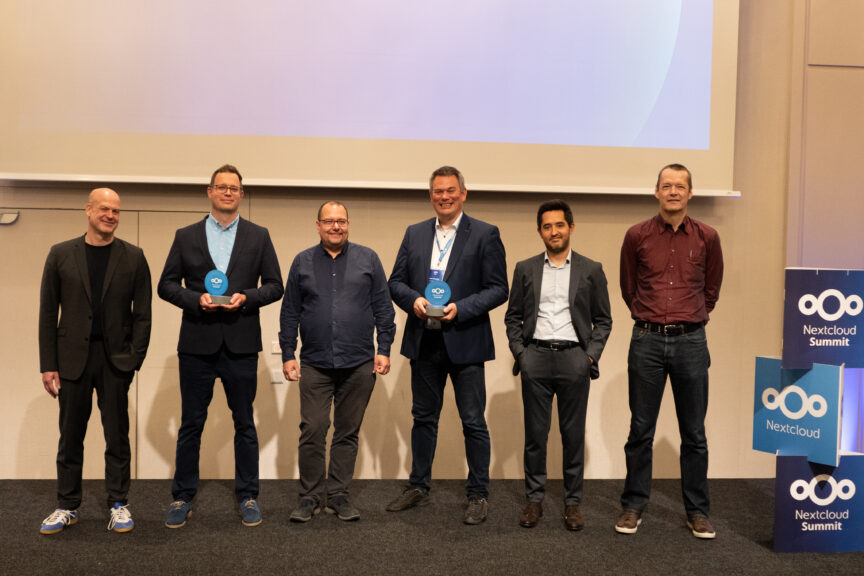
In 2025, we recognized the German state of Schleswig-Holstein with the Implementation Role Model Award for its consistent and concrete steps towards digital sovereignty, including the migration of its public administration to open source tools.
The Digital Sovereignty Awareness went to the Signal Foundation for providing a secure, ethical, and open communication infrastructure, and to CódigoSur, a Latin American collective supporting civil society actors with privacy-respecting, open-source infrastructure.
Meet the jury
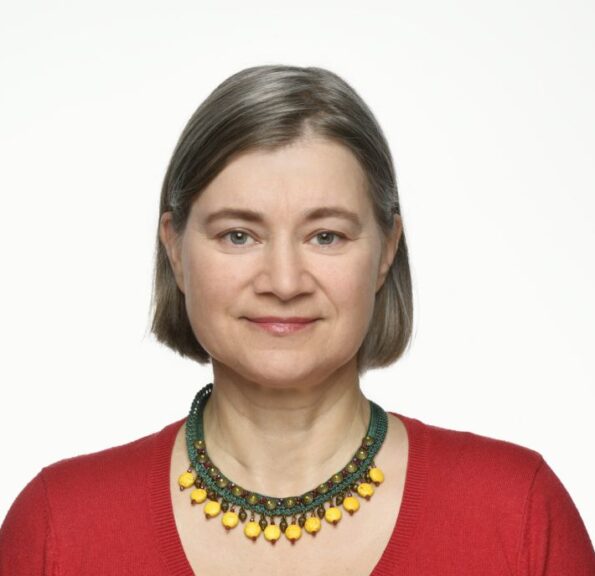
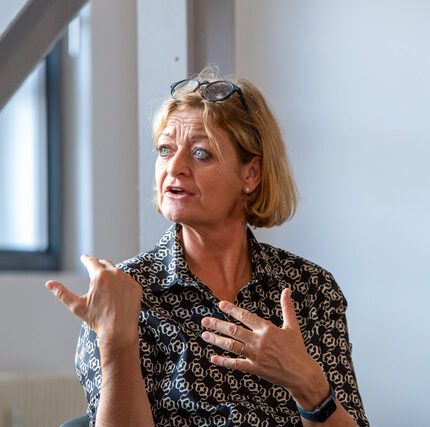
Anke Domscheit-Berg, former digital policy MP at the Bundestag (2017-2025), is an independent publicist and digital policy advisor as well as an activist for basic rights in the digital society. She promotes digital democracy and independence from the Tech Bro oligarchy e.g. by platform regulation, grassroot initiatives, open everything strategies and public procurement policy. She also works on climate impact of digitalisation, ethical AI and cyber security.
Pernille Tranberg is a journalist an independent speaker and advisor in data and AI ethics and digital sovereignty. She speaks to school kids, teachers, politicians, officials, NGOs, business leaders, and multinationals. She is the co-founder of the European thinkdotank DataEthics.eu.
Björn Staschen is co-founder of Save Social – Networks For Democracy. The initiative grew out of a petition signed by a quarter of a million people calling for the democratic power of social media to be preserved. Save Social also coordinates Digital Independence Day (DID), a call to switch to privacy-friendly, transparent digital services on the first Sunday of every month. Björn Staschen is a media scientist, journalist, and author (“In der Social Media Falle”) and lives with his family in Hamburg.
Maddalena Falzoni (Maddish) is a founding member and Head of Technology of Xnet, a network that undertakes initiatives and proposes advanced solutions in various fields related to digital rights. She is also the founder and director of MaadiX, a technology project dedicated to promoting and facilitating privacy, confidentiality, and autonomy in the digital sphere.
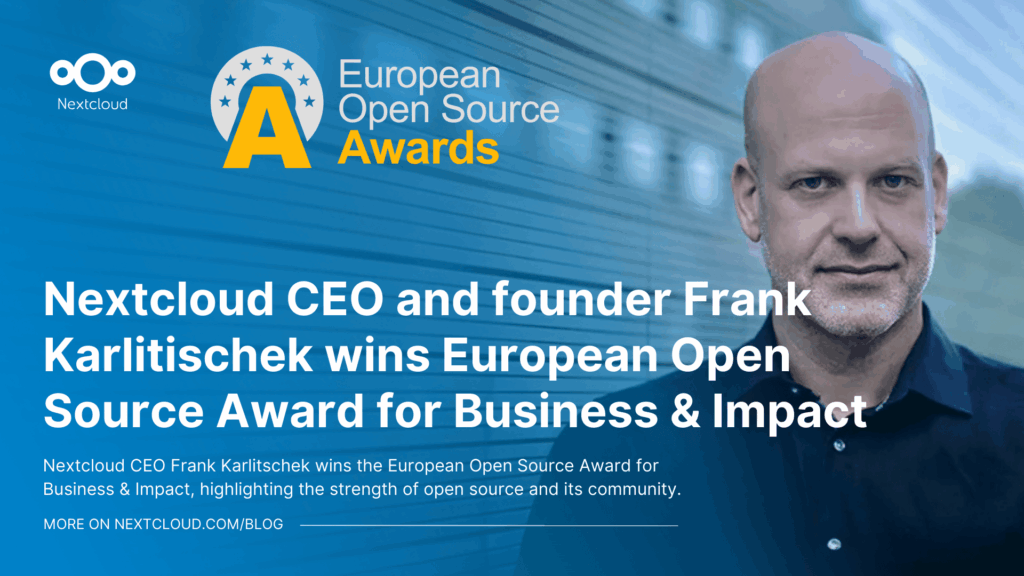
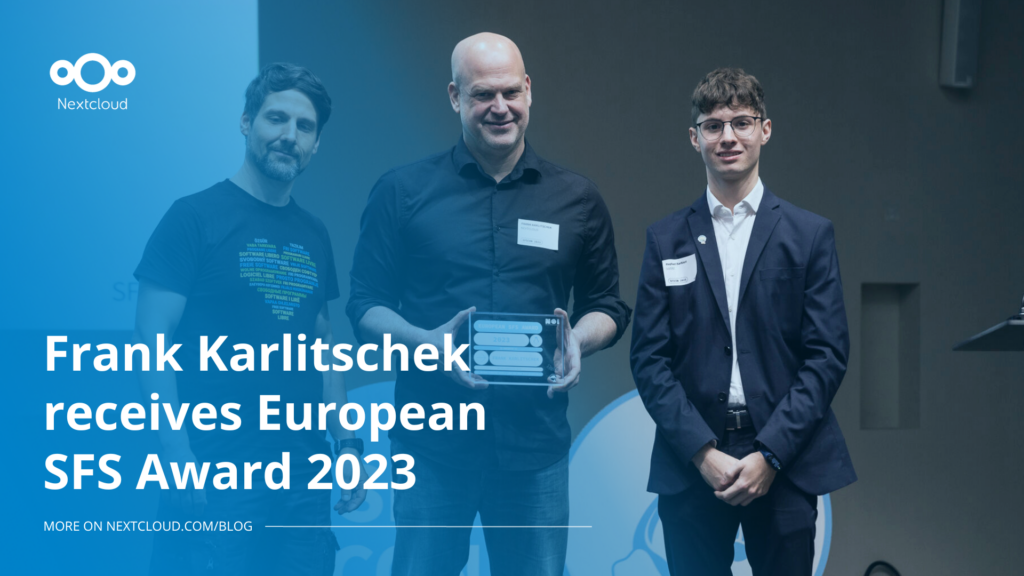
Frank Karlitschek is the founder and CEO of Nextcloud GmbH. He studied computer science at the University of Tübingen and has worked as a head of unit and managing director for various IT companies. Frank has been developing open source software for over 25 years and is involved in various projects such as KDE. He founded Nextcloud to create a decentralized, open source, and European alternative to the large cloud services from the US and China. He is a fellow of Open Forum Europe, an invited expert at W3C, and advises the United Nations on open source.
About Nextcloud
Nextcloud is the world’s most popular privacy-focused collaboration platform. It is used by tens of thousands of private and public organizations and tens of millions of private individuals to stay in control of their sensitive data and ensure privacy compliance.
With Nextcloud, users can edit and share documents, chat and hold videoconferences, and manage emails, contacts, and calendars via easy web and mobile apps. The open-source software has a modular design and can be extended with hundreds of apps. It runs on premises in a private cloud or with a trusted provider.
Founded in 2016, Nextcloud is fully employee-owned and has grown organically ever since. Learn more at www.nextcloud.com.
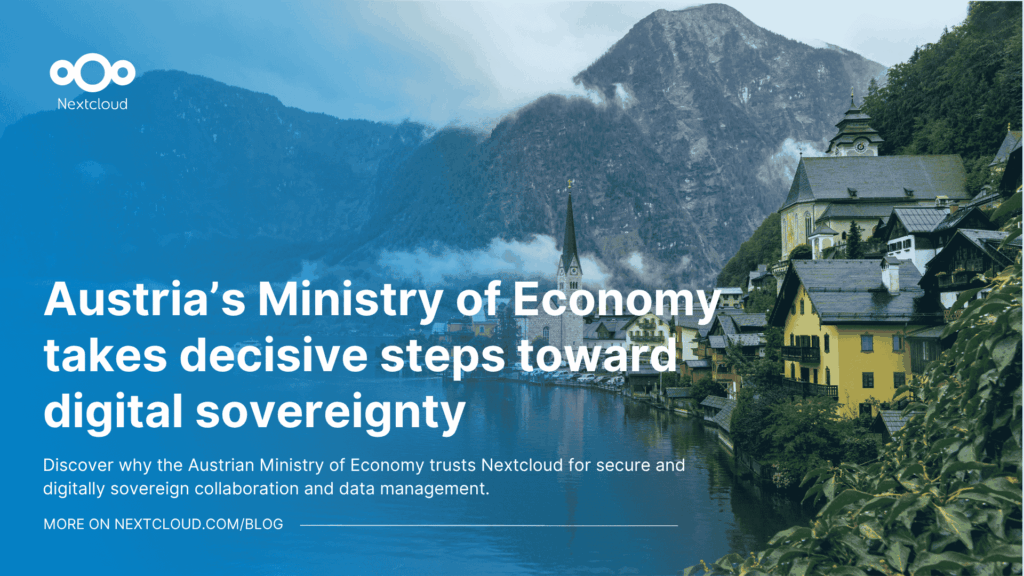
How do you modernize digital collaboration in government without losing control over your data?
Austria’s Federal Ministry for Economy, Energy and Tourism (BMWET) faced this challenge in 2024 - and decided to take a clear, pragmatic step toward digital sovereignty.
Nextcloud Hub 25 Autumn makes it easier to get started with powerful collaboration while fully in control of your data. From global design updates to improved usability and performance, discover our latest release in this blog.
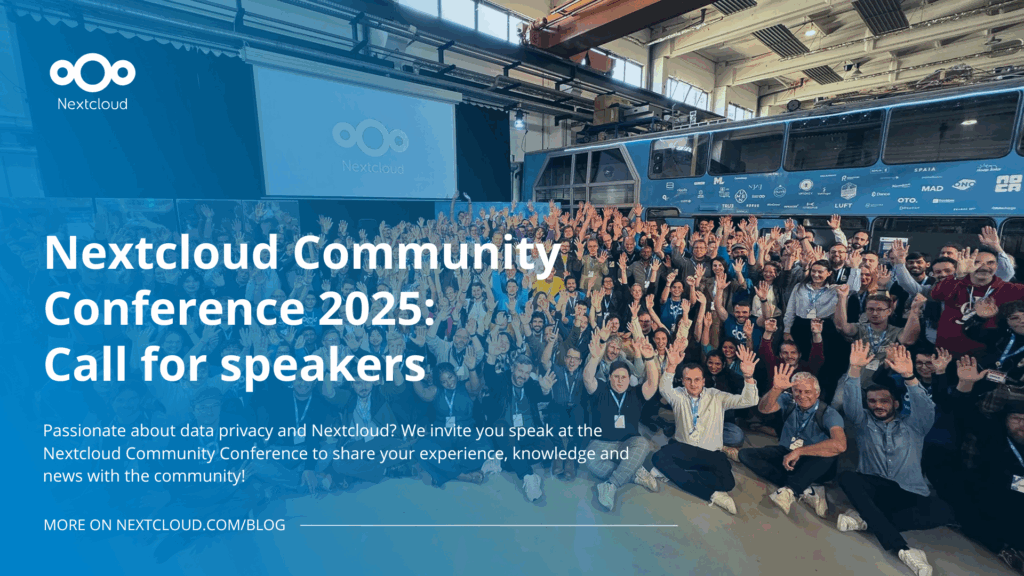
Passionate about data privacy and Nextcloud? We invite you speak at the Nextcloud Community Conference to share your experience, knowledge and news with the community!
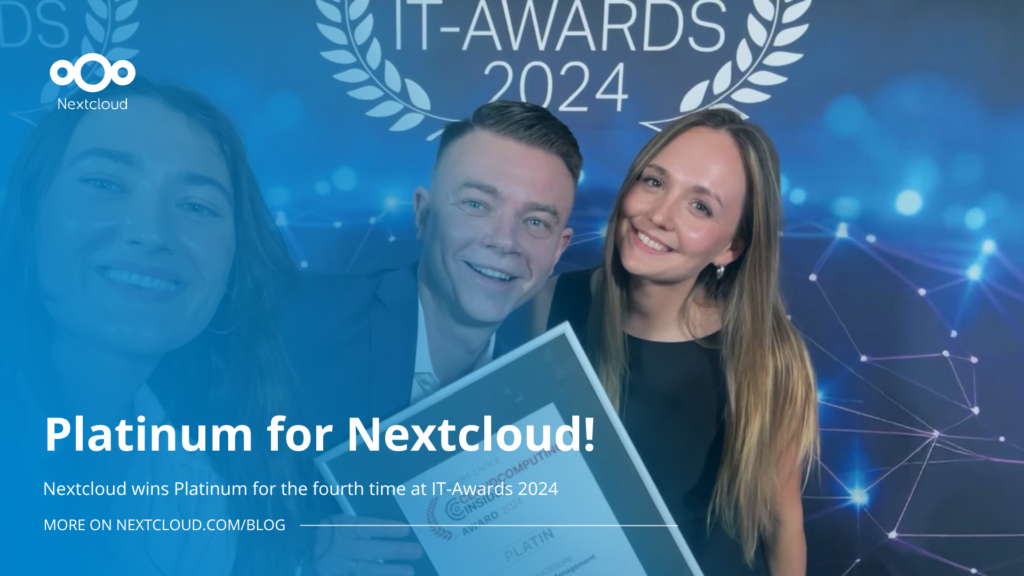
For the ninth time, Nextcloud has been nominated for the CloudComputing-Insider Readers’ Choice Award in the category of Cloud Content Management. We’d love to reach the top again! And we’re looking for the support of you and everyone else in our amazing community to get there. Nextcloud as the best Cloud Content Management tool? Only […]
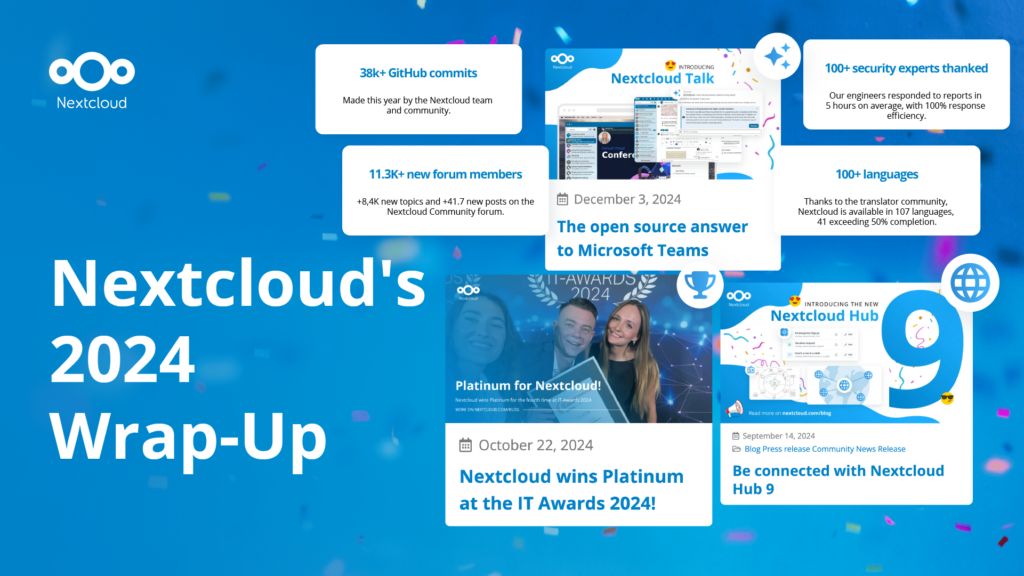
In the Nextcloud 2024 wrap-up, we want to take a moment to celebrate this year's achievements. Join us as we continue to reimagine what’s possible - shaping a world where open source, privacy and connection come together and drive progress for the greater good.
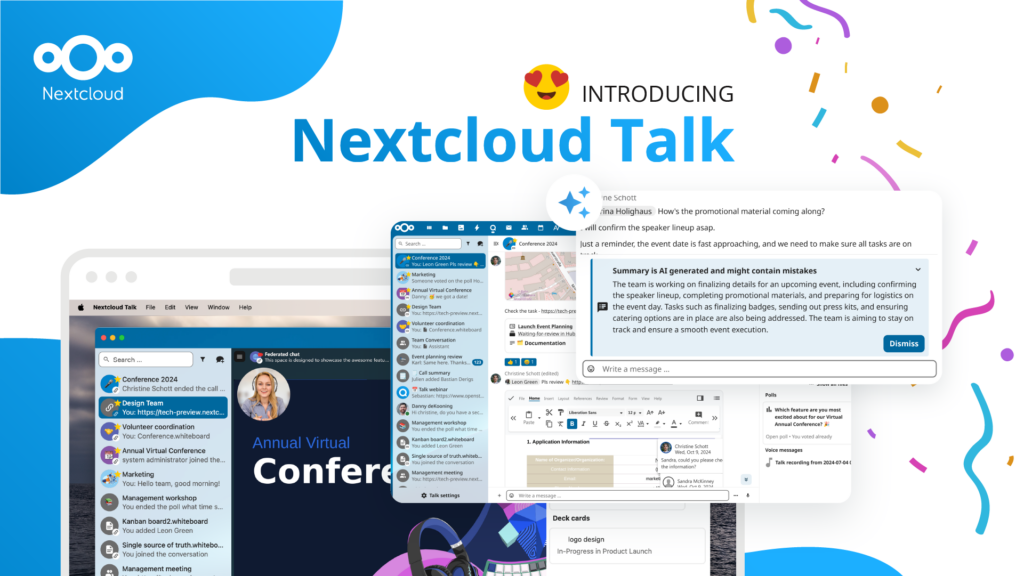
Organisations, small and large, need a way to ensure the resiliency and digital sovereignty of their operations – an open-source, privacy-respecting alternative to Teams. And today, we present that solution - Nextcloud Talk.
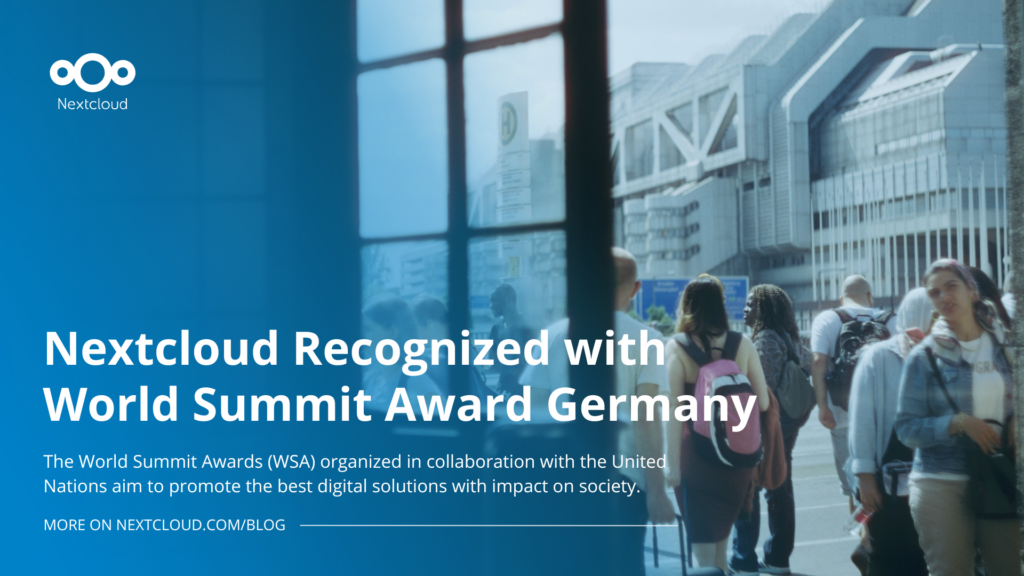
Nextcloud has been recognized with the World Summit Award Germany that selects and promotes local digital innovation improving society, aiming to contribute to the United Nations' agenda of sustainable development goals.
DIE ZEIT, a prominent German outlet, interviewed Nextcloud’s founder Frank Karlitschek for an article on Microsoft’s anti-competitive behaviour on the European office software market. Read for a recap of the article and the key takeaways.
MagentaCLOUD’s migration to Nextcloud in 2021 resulted in a fully equipped Online Storage with an integrated online office suite that further improves the user experience, flexibility and security for customers.
We bring you a major update to the Nextcloud AI Assistant, plus the news we work with several big hosting providers like IONOS and OVHcloud to bring AI-as-a-Service options to you!
Bechtle and Nextcloud announce today a complete managed collaboration platform for the public sector that requires no tender and can be deployed immediately.
Discover how to make the switch from ownCloud to Nextcloud. Our quick guide provides insights into the migration process, helping you make the transition smoothly.
Today, US-based file sync & share vendor Kiteworks announced their acquisition of ownCloud and Dracoon. Kiteworks points out that their customers now have access to their file-sharing application. It is to be expected they will not maintain 3 similar products, but customers will have to migrate to the US firms’ platform or look for another […]
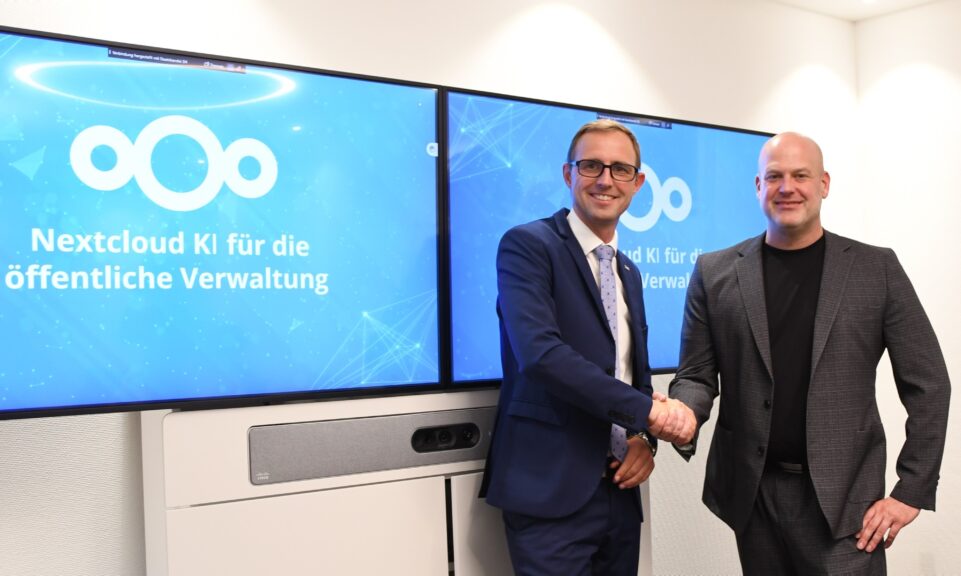
As part of Schleswig-Holstein's state digitization strategy, the state chancellery has announced they will work with Nextcloud to develop AI for working with government documents. This comes just after we announced the first private AI assistant last weekend with Hub 6. The German state already uses Nextcloud and their AI strategy aligns with our work on ethical, local AI technologies.
Since its mass adoption, AI has become, and still is, a popular and sometimes contraversial topic. Some of it is hype, some is substance. Some is good, some, of course, is bad. We want to give you the good, not the bad, and ignore the hype. In Nextcloud Hub we’ve focused on providing you the […]
Our mission is to help individuals, businesses and organizations achieve digital sovereignty and regain control over their data. Nextcloud Hub 5 marks a massive step forward towards achieving this mission, putting the power of AI into your hands – in a way that keeps you in control. New release, new possibilities Hub 5 builds on […]
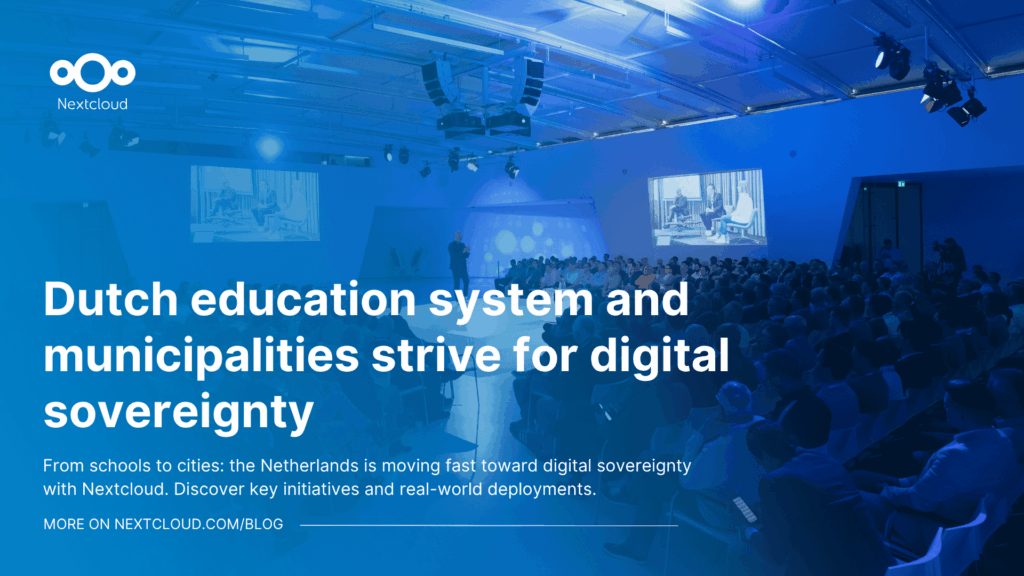
Following two successful Nextcloud Enterprise Days in The Hague in 2025, we brought the event to Utrecht this year, where a massive 750 registrations brought a big crowd to the Jaarbeurs venue. The kickoff in the morning pre-announced the launch of the book “Sovereignty! But how?“ by well-known Dutch IT security journalist and author Brenno […]
We save some cookies to count visitors and make the site easier to use. This doesn't leave our server and isn't to track you personally!
See our Privacy Policy for more information. Customize
Statistics cookies collect information anonymously and help us understand how our visitors use our website. We use cloud-hosted Matomo
Service:Matomo
Cookies description:
_pk_ses*: Counts the first visit of the user
_pk_id*: Helps not to double count the visits.
mtm_cookie_consent: Remembers that consent for storing and using cookies was given by the user.
Cookies expiry:_pk_ses*: 30 Minuten
_pk_id*: 13 months
mtm_cookie_consent: 30 Dagen