With Nextcloud 18, we introduced the Flow app. It makes it easy for users to automate some common tasks through an easy, graphical user interface. Read on to understand how it works and how to begin automating your routine already today.
Discover how our four Nextcloud Flow components ensure maximum productivity
Nextcloud Flow consists of four different components: the built-in workflow app, the Open Collaboration Service (OCS) API, Windmill, and Nextcloud Tables.
This article focuses on the capabilities of the built-in workflow app.
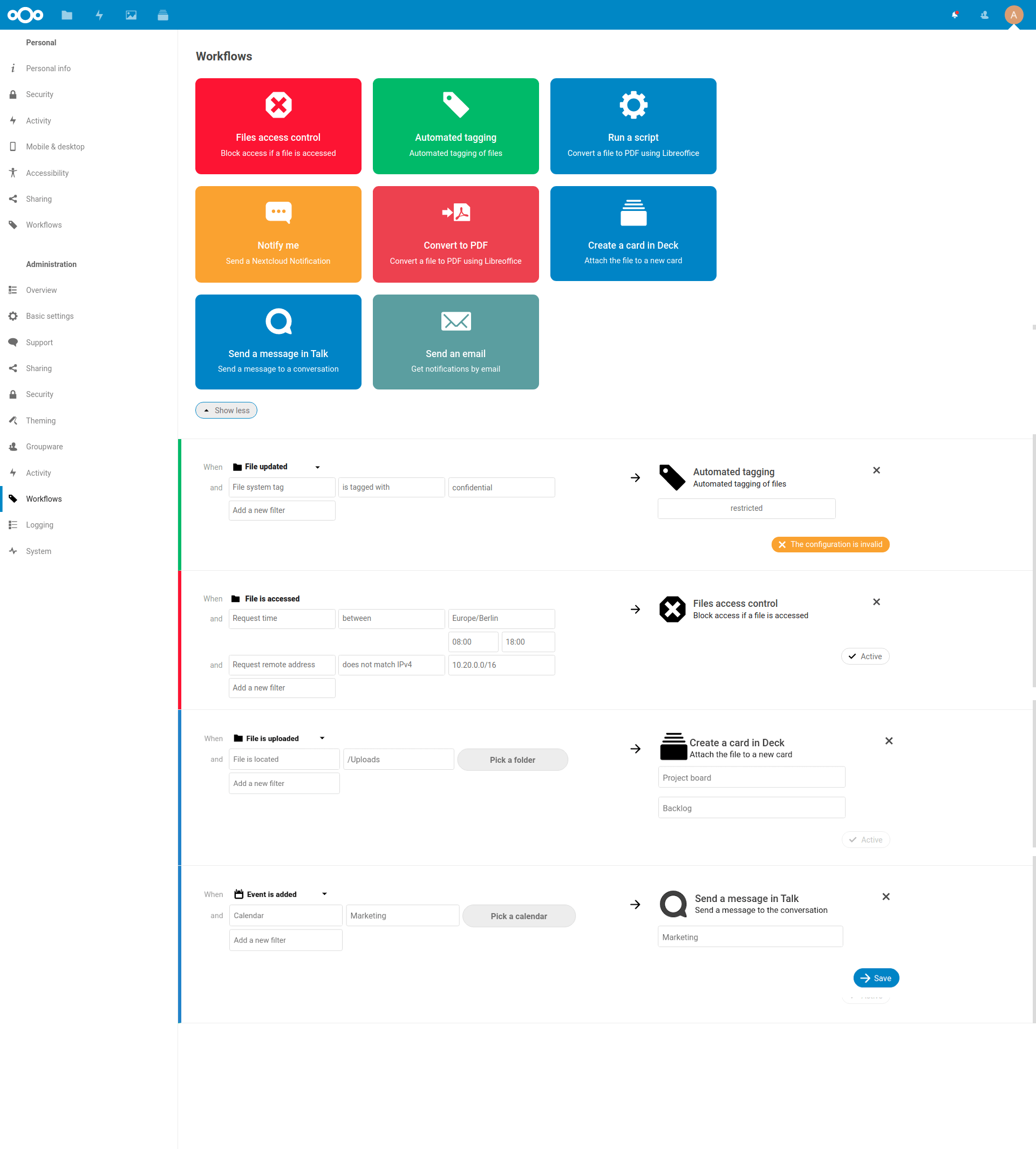
Nextcloud Flow is designed to help you automate tasks. For example, when a file is added to a specific folder, a shared link to the file could be created and sent through Nextcloud Talk into a specified chat room. Or, when a new element (like a file, a chat, or a Deck board) is added to a certain project, you get a notification.
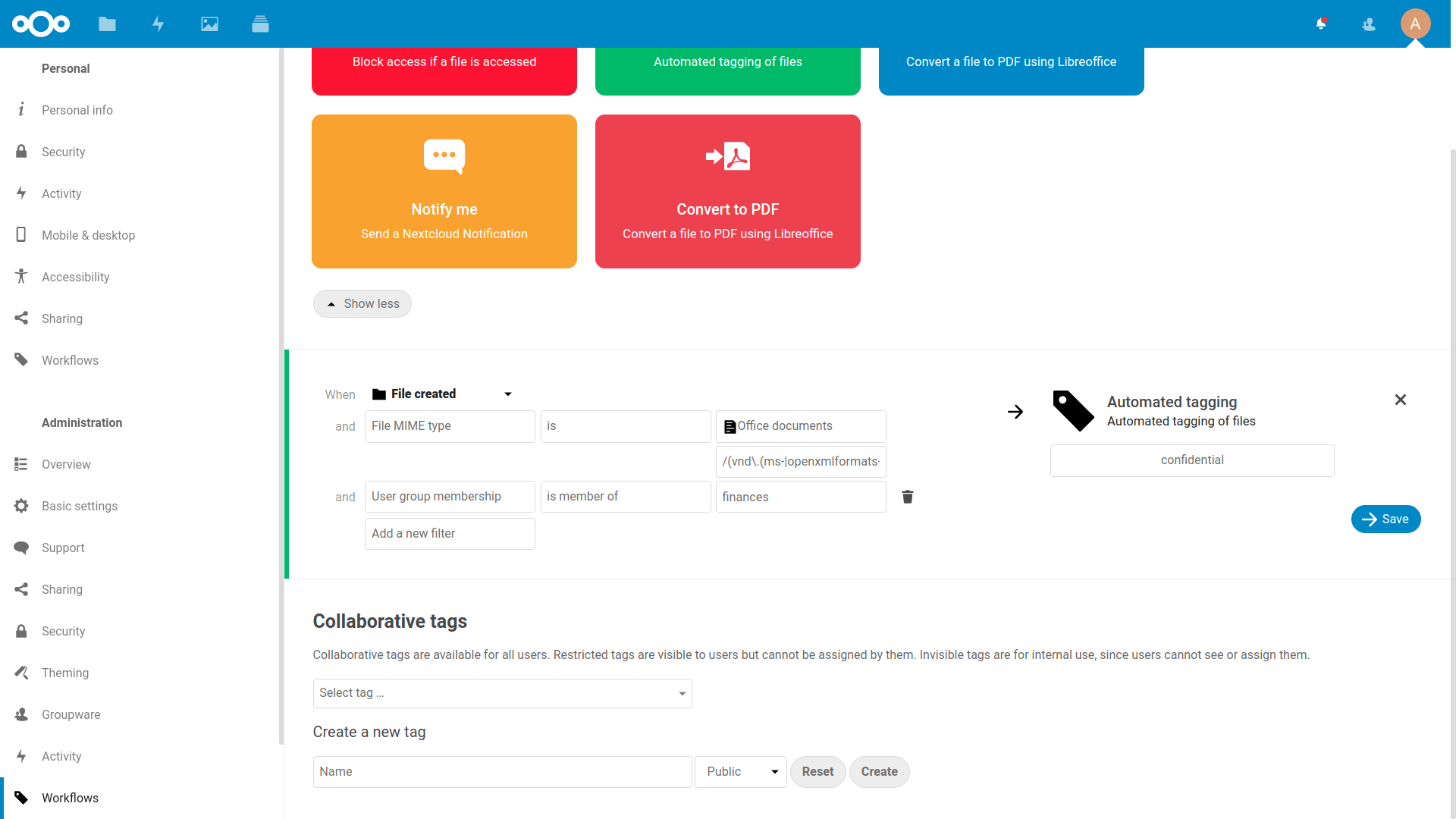
Here is a mockup (based on the current state) of what Nextcloud Flow should look like by release time:
One thing Flow can do is help the workflow of teams collaborating on documents. Think of the approval and review processes, as in this example:
An partner sends a customer order form by mail to a special inbox. The attachments get uploaded to Nextcloud and, because they end in a special folder, are given a specific tag. This tag results in the file getting added as a task card in a Deck board for Team X to process. The chat from Team X notifies them of the arrival of the new task. A team member reviews the form and when done, moves the card to done which automatically adds a ‘reviewed’ tag. This tag results a notification for the manager. Once they adds the ‘approved’ tag, the files are turned into a PDF, then shared via a public link, which in turn is added to a mail that gets send to the partner.
As you see, Flow can go beyond files, tying together the various capabilities of Nextcloud. Through an easy API, Nextcloud applications like Calendar, Mail, Talk, and Deck will be able to provide actions and triggers for users to use. This means that more and more apps will be able to offer integration, so users can configure Nextcloud to respond to a wider range of events with an ever-growing number of actions.
Webinar on Driving digital transformation in local governments: The Nextcloud-powered solution
Discover how local administrations can modernize citizen services, streamline operations with automation and AI, and maintain full control over their data in this practical on-demand webinar.
Flow will be a part of Nextcloud 18. We have just started working on this release, but Flow has been under development for a while already. A first tech preview is available as part of our development version, downloadable as a daily build. Input from users is very welcome, as there is a wide range of capabilities that could be added, and the team is looking for use cases to prioritize. App developers can also get started supporting Flow in their apps! Documentation for Flow will soon be available on our Developer site.
At the Nextcloud Conference this weekend, a workshop will demonstrate how developers can add new capabilities from their apps to Flow.
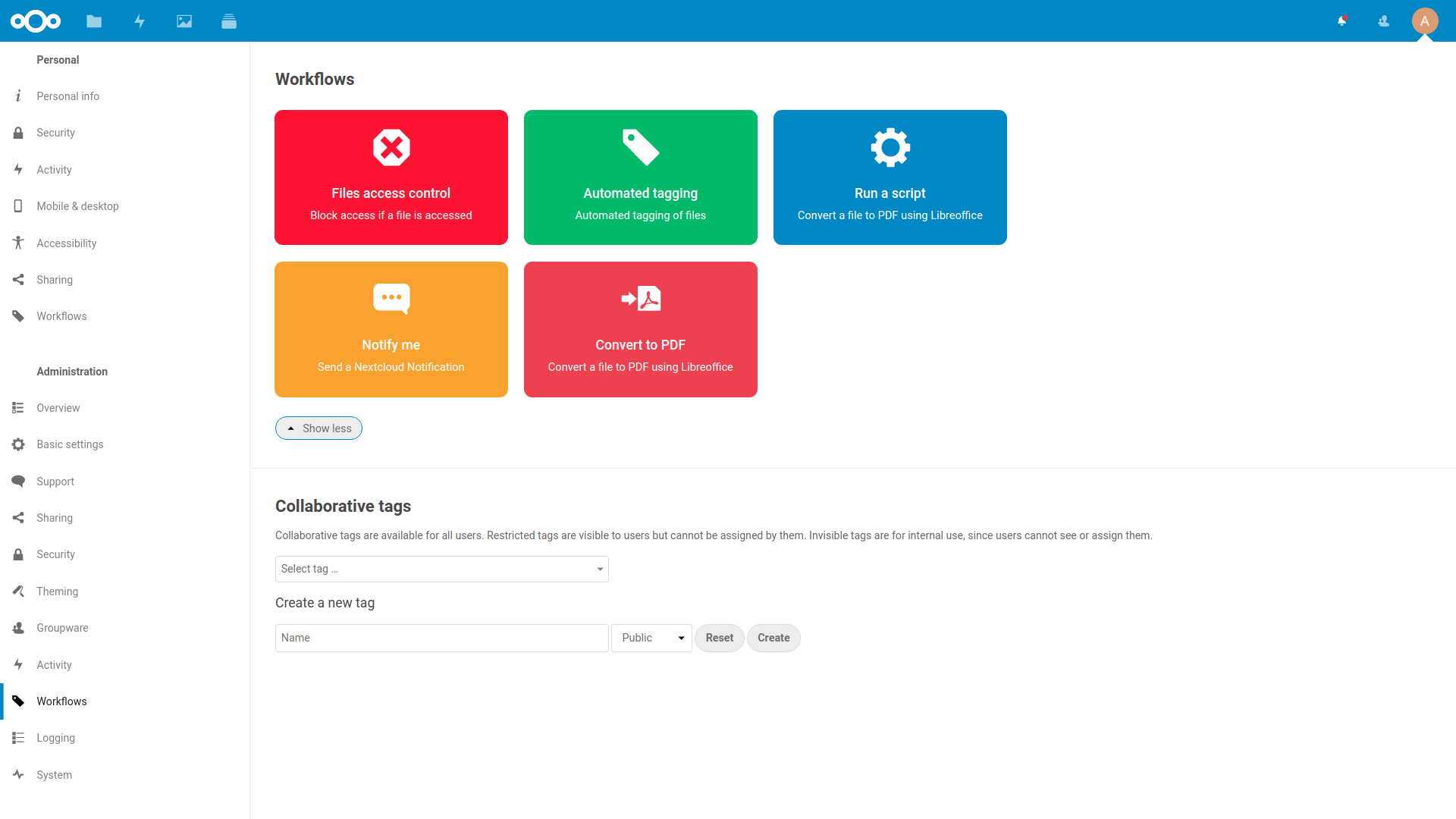
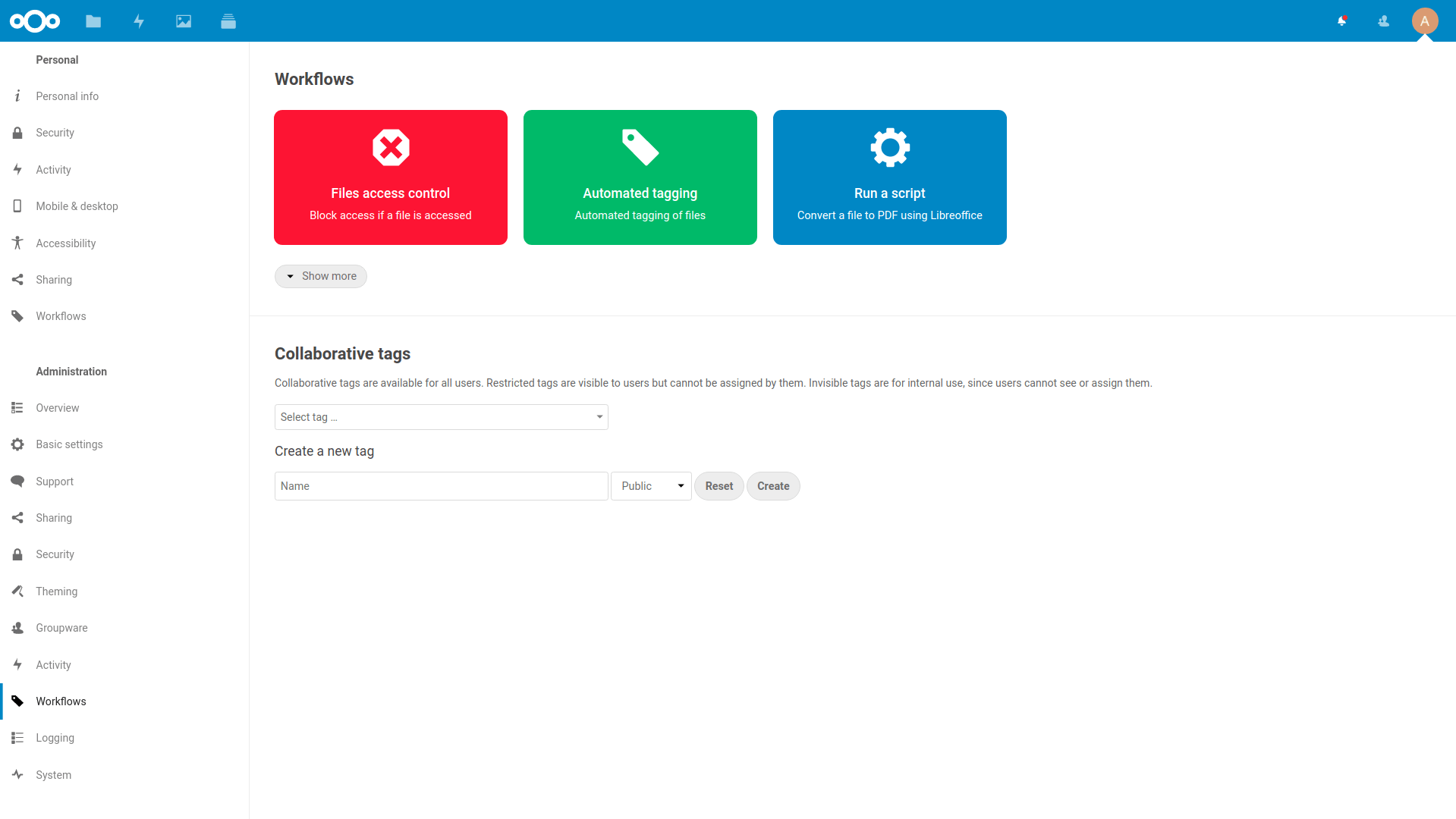
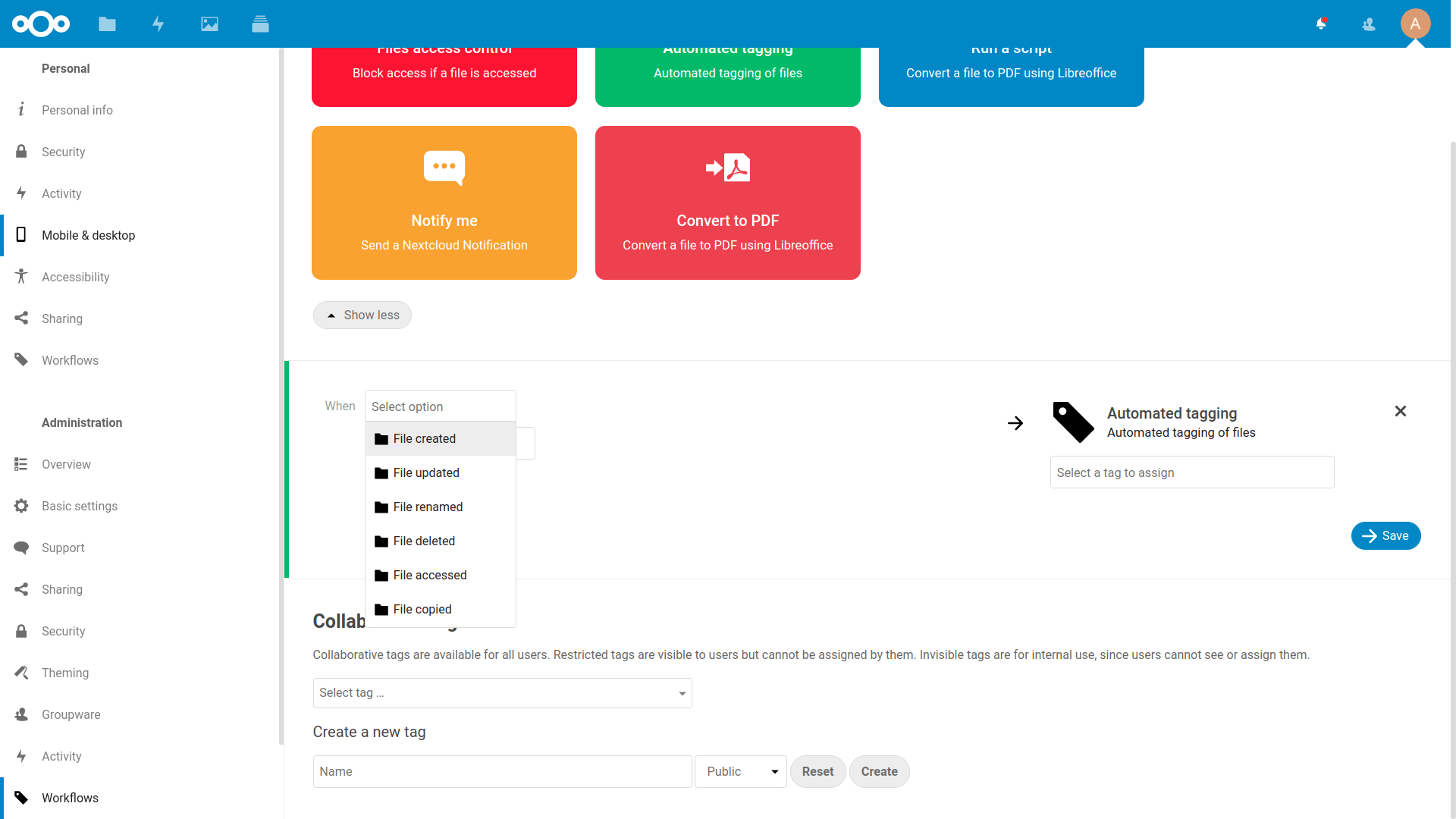
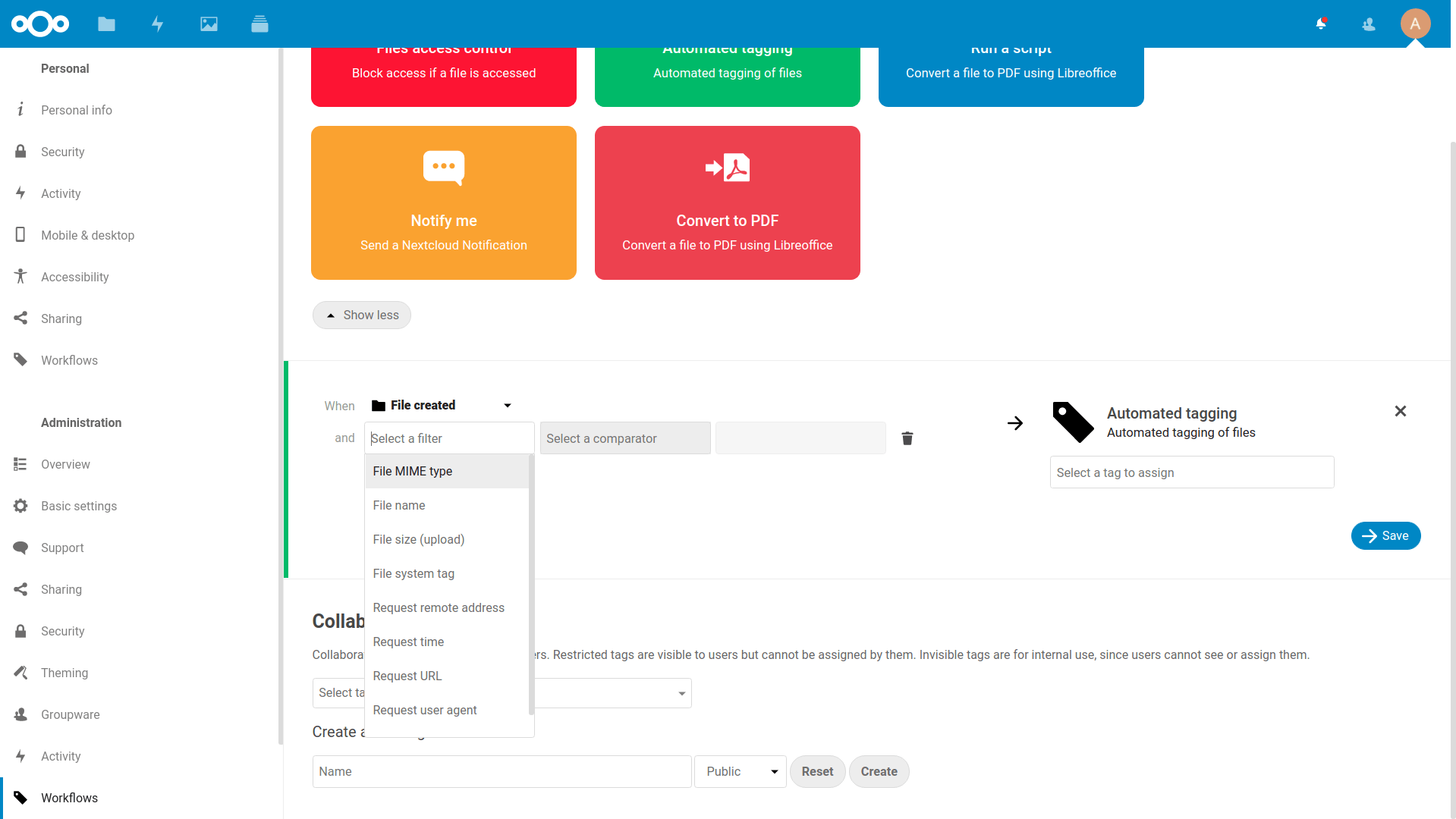
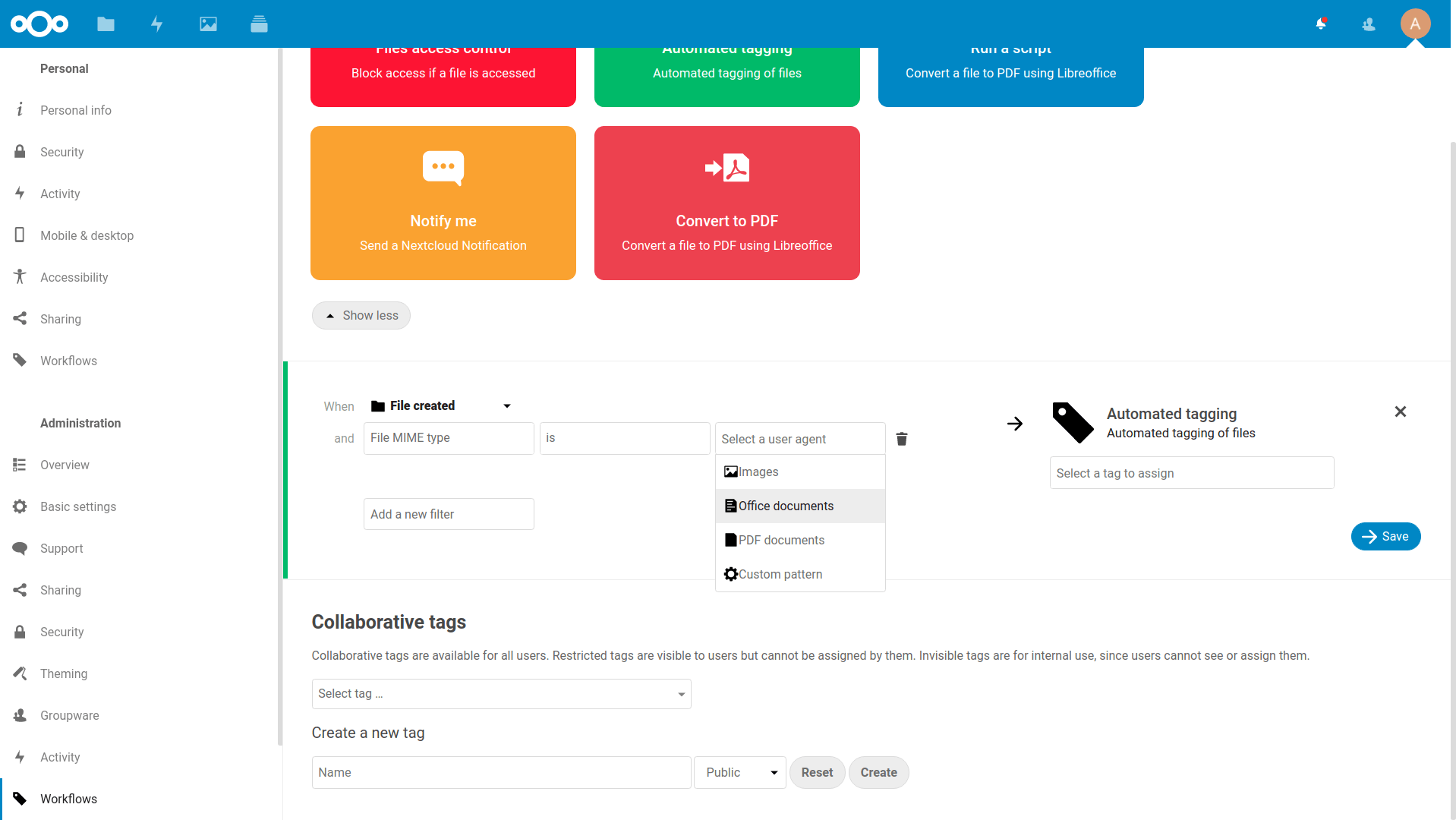
Screenshots of the current state:
Multiple OperationsCreate a workflowSelect Triggering EventAdd check to a ruleDefine mimetype rule with presetsAdditional check and operation optionsFlow screenshots
More news about the Nextcloud Community Conference
Nextcloud 18 was launched at the recent Nextcloud Conference. Want to explore more updates? Here’s all the news from the Nextcloud Conference:
Creato grazie all'impegno congiunto del nostro team, della community e dei partner, Nextcloud Hub 26 Summer prende forma da chi realmente utilizza i nostri strumenti ogni giorno. Crea lo spazio del tuo team con Nextcloud Teams, organizza i tuoi ricordi nel nuovo Nextcloud Foto e goditi gli aggiornamenti più richiesti in tutte le app. Continua a leggere per una panoramica completa della nostra ultima release!
Nextcloud Hub 25 Autumn semplifica l'avvio di una potente collaborazione con il pieno controllo dei tuoi dati. Dagli aggiornamenti del design globale al miglioramento dell'usabilità e delle prestazioni, scopri la nostra ultima release in questo blog.
Le organizzazioni, grandi e piccole, necessitano di una soluzione che garantisca la resilienza e la sovranità digitale delle loro operazioni: un'alternativa open source e rispettosa della privacy a Teams. E oggi presentiamo questa soluzione: Nextcloud Talk.
Michigan Tech Aerospace Enterprise migrated from Google Workspace and Microsoft SharePoint to Nextcloud, creating a unified, self-hosted collaboration platform that supports secure engineering workflows, mission coordination, and full control over data and infrastructure.
Salviamo alcuni cookie per contare i visitatori e rendere il sito più facile da usare. Questi dati non lasciano il nostro server e non servono a tracciare il tuo profilo personale! Per maggiori informazioni, consulta la nostra Informativa sulla privacy. Personalizza
I cookie statistici raccolgono informazioni in forma anonima e ci aiutano a capire come i visitatori utilizzano il nostro sito web. Utilizziamo Matomo in cloud.
Servizio:Matomo
Descrizione del cookie:
_pk_ses*: Conta la prima visita dell'utente
_pk_id*: Aiuta a non contare due volte le visite.
mtm_cookie_consent: Ricorda il consenso alla memorizzazione e all'utilizzo dei cookie dato dall'utente.
Scadenza del cookie:_pk_ses*: 30 minuti
_pk_id*: 13 mesi
mtm_cookie_consent: 30 giorni