2025 was a strong year for digital sovereign solutions. Over the past year, countless individuals, governments, and private organizations have taken steps to regain control over their data. And this is happening not just in Europe, but across the globe.
Two million new professional Nextcloud users
From Berlin to São Paulo and from Amsterdam to Austin, organizations are turning to Nextcloud to power a digital workplace that is secure and truly theirs. Over the last year, over two million new users across schools, government organizations, and businesses started using Nextcloud for their day-to-day tasks.
There are some prominent names and numbers in the list:
About 100,000 researchers, teachers, and students across Dutch universities will soon be able to start working with Nextcloud through the Dutch IT cooperative for education and research, SURF.
Another French ministry, the Ministry of Education, has rolled out Nextcloud to 400,000 of its administrative employees and continues this rollout until it is available to the full 1.2 million employees.
And, as covered widely in the press, the German state of Schleswig-Holstein has made Nextcloud Hub available to tens of thousands of employees across the state’s administrative apparatus.
Dirk Schrödter, Minister of Digitalization in Schleswig-Holstein, and Frank Karlitschek, CEO and founder of Nextcloud
These organizations, along with many others you can find on this page, are more than just Nextcloud users or customers. They are leaders, pioneers who prove that sovereignty isn’t a niche concept idea but the future. And they are part of the Nextcloud community itself, providing feedback, sharing their experience with others, and even directly collaborating on code and improvements to the code base.
A fast-growing global movement
This isn’t just a European trend. While Germany, France, and the US are leading the way in terms of absolute demand, countries such as the Netherlands, Brazil, and Denmark are experiencing some of the fastest growth in demand.
For the company, this surge in adoption has resulted in a growth in bookings of over 50% compared to 2024. This continues its nearly decade-long exponential growth path and clearly indicates that more organizations than ever are investing in sovereign solutions.
Recognising this, Nextcloud has committed to investing 250 million euros over the next five years in research and development, product innovation, partner enablement, public education, and community projects, with the aim of promoting digital sovereignty in Europe.
A platform, not just a product
These developments build on the fact that Nextcloud is not a monolithic product from a single company or closed community. Rather, it has developed into a platform that enables a wide range of developers and organizations to create, adapt, and build their own capabilities on.
Several hundred developers contribute code to both the base and to applications built on top of Nextcloud. Some work for their own or at a small business, others are employed by major Nextcloud customers, universities, or consulting firms to build the capabilities they need.
Today, major functionality is provided by independent open source companies, like Office document editing, project management, powerful wiki software, document signature mechanisms, and a range of authentication and storage mechanisms.
This provides organizations that look to deploy Nextcloud not only unparalleled flexibility and integration in their infrastructure, but also the peace of mind that the ecosystem they are building their sovereign workplace on is healthy, resilient, and not dependent on any single entity.
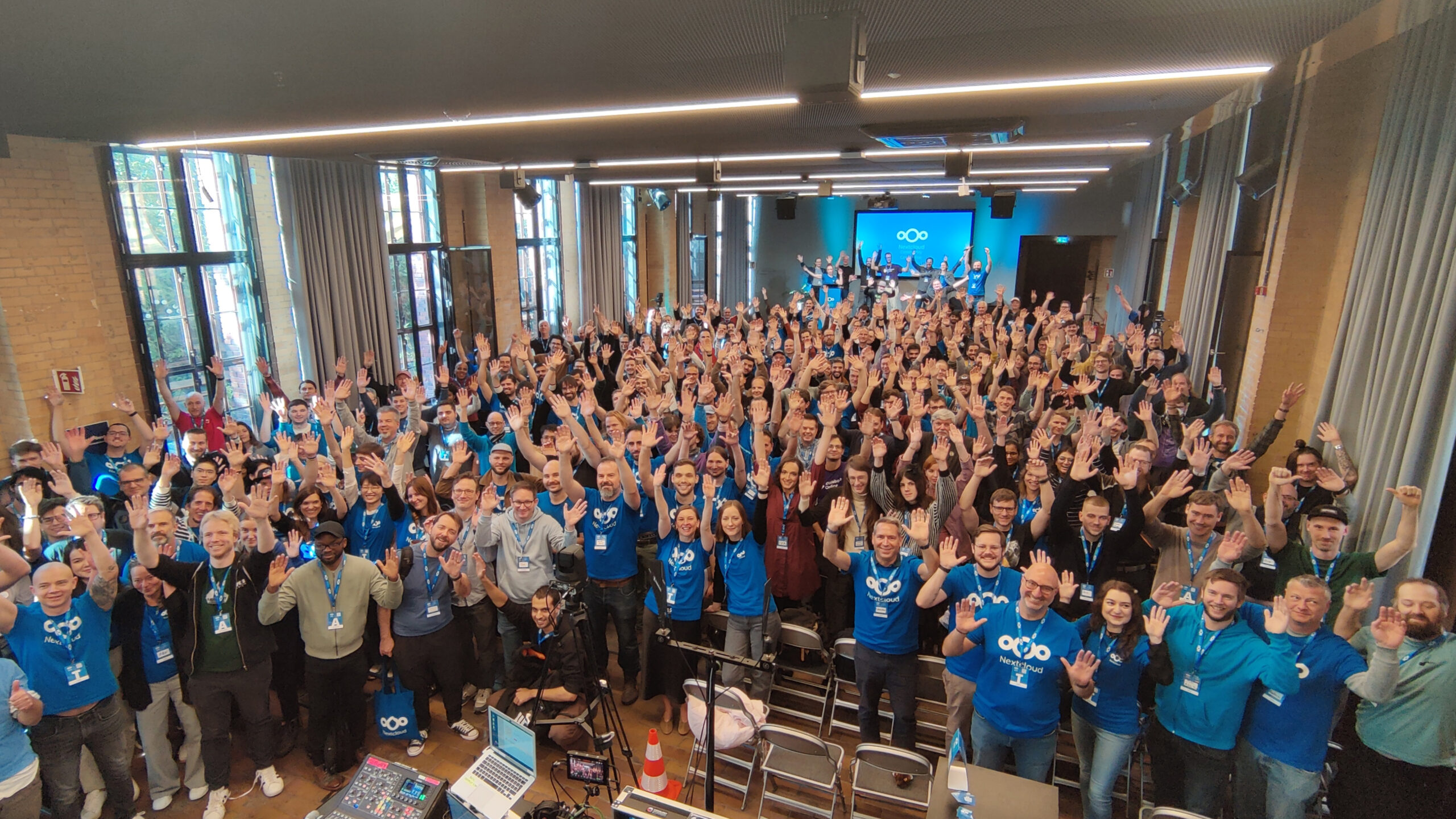
The Nextcloud community at the Community Conference in Berlin 2025
Growing partner ecosystem
The Nextcloud partner ecosystem also experienced enormous growth, expanding by 300% in 2025. Companies such as IONOS, Redpill Linpro, Smile, and KPN are helping to widen Nextcloud’s reach into regions and sectors in which they have expertise. Other companies are part of the bigger picture and are working with us to promote digital sovereignty.
Examples include:
XWiki has built a tool that can replace Confluence
Univention provides an identity and access management (IAM) alternative to Microsoft
OpenProject has created an open-source project management tool to compete with Jira
So, if you’re a developer looking to build on an open platform, an organization fed up with vendor lock-in, or someone who believes in digital freedom, now is your moment. The future of work isn’t just about efficiency, but about ownership.
Be part of the movement
Meet the community, explore real-world use cases, and connect with others building a more sovereign digital future. Explore events near you and join a growing global community of developers, partners, and organizations.
È il momento di riprendere in mano i propri dati. Presentiamo il nuovo Nextcloud Hub, una potente piattaforma di collaborazione open source che ti mette al comando. Scopri le novità in termini di prestazioni, design e sicurezza, con tanti strumenti nuovi e migliorati per il lavoro e la vita di ogni giorno.
Nextcloud Hub 25 Autumn semplifica l'avvio di una potente collaborazione con il pieno controllo dei tuoi dati. Dagli aggiornamenti del design globale al miglioramento dell'usabilità e delle prestazioni, scopri la nostra ultima release in questo blog.
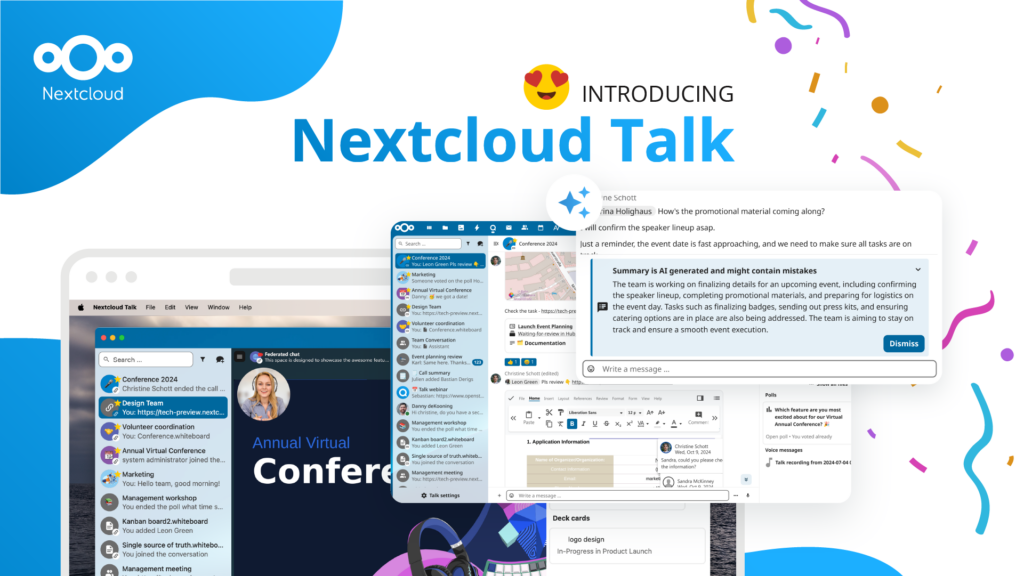
Le organizzazioni, grandi e piccole, necessitano di una soluzione che garantisca la resilienza e la sovranità digitale delle loro operazioni: un'alternativa open source e rispettosa della privacy a Teams. E oggi presentiamo questa soluzione: Nextcloud Talk.
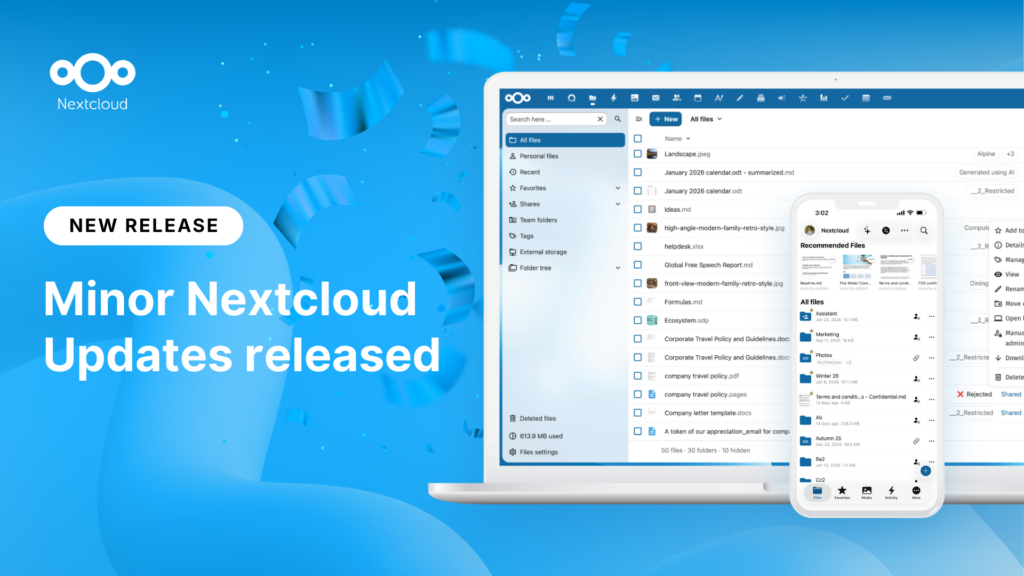
New maintenance updates are available for Nextcloud Hub. Read more in this post or access the full changelog on our website. Keep your server up-to-date!
Salviamo alcuni cookie per contare i visitatori e rendere il sito più facile da usare. Questi dati non lasciano il nostro server e non servono a tracciare il tuo profilo personale! Per maggiori informazioni, consulta la nostra Informativa sulla privacy. Personalizza
I cookie statistici raccolgono informazioni in forma anonima e ci aiutano a capire come i visitatori utilizzano il nostro sito web. Utilizziamo Matomo in cloud.
Servizio:Matomo
Descrizione del cookie:
_pk_ses*: Conta la prima visita dell'utente
_pk_id*: Aiuta a non contare due volte le visite.
mtm_cookie_consent: Ricorda il consenso alla memorizzazione e all'utilizzo dei cookie dato dall'utente.
Scadenza del cookie:_pk_ses*: 30 minuti
_pk_id*: 13 mesi
mtm_cookie_consent: 30 giorni