Spain has always had digital sovereignty, pioneers. Barcelona built Decidim, the Madrid region or the Basque Country run their own open source education platform, and Amnesty International Spain has relied on independent IT for over a decade.
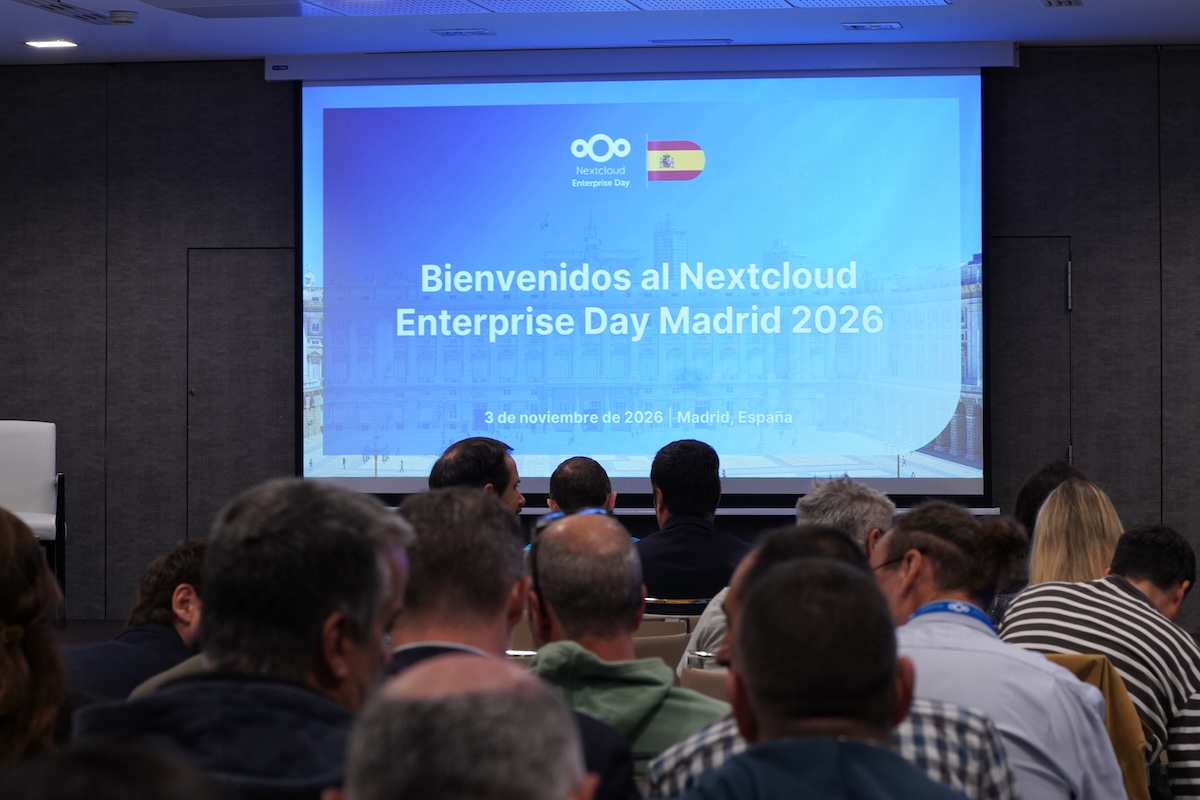
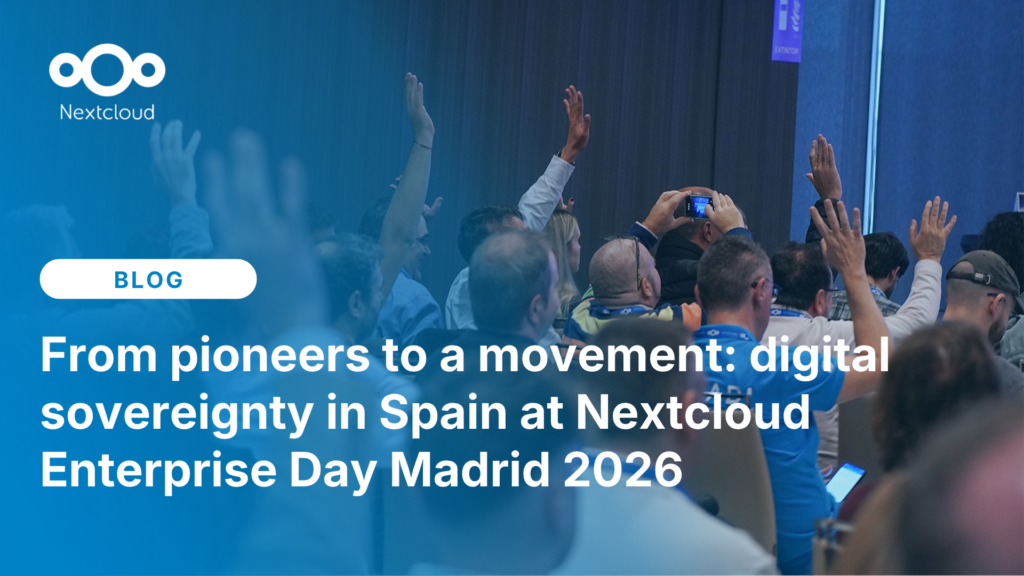
What’s new is the pace: more and more organizations are now asking how they can depend less on US Big Tech. On November 3, we held our first Nextcloud Enterprise Day in Spain, in Madrid. Public administrations, schools, NGOs, private companies, open source projects and Spain’s largest telecom provider joined us.
Why Spain, why now
Most Spanish organizations run email, documents, video calls, and cloud storage on US platforms. Experts have warned about this dependency for years but were not so much heard.
Then Spain landed in Donald Trump’s crosshairs. Washington has openly threatened the country with trade measures over political disagreements. If software access can turn into a political bargaining chip, IT departments are no longer the only ones who care. CEOs and ministers do too.
We heard this in more and more conversations with Spanish organizations. That’s why we brought Enterprise Day to Madrid. More than 160 people joined us, from public administration, education, private companies, NGOs, and the IT sector.
Andreas Rode, Chief Commercial Officer at Nextcloud, opened the day by giving an overview of what digital sovereignty really means and how it differs from the sovereignty-washing offerings from US providers. He mentioned three aspects to have in mind: data residence, operational autonomy, and legal jurisdiction. You are only truly sovereign when you have full control over your data in all three areas.
Mission (im)possible? A roadmap for Spain
The first guest speaker was Nil Homedes Busquet, Director of the Technical Office at the Decidim Association. Decidim is one of Spain’s open source pioneers. It started in Barcelona, and cities and governments around the world now use it.
Homedes asked what digital sovereignty actually means for Spain and what it could do for democracy and citizens. His answer: democratic control over technology. Software increasingly makes decisions that affect people’s lives, so citizens should be able to check how it works.
If code is law, why don’t we demand the same transparency for software as we do for laws?
Nil Homedes Busquet
Director of the Technical Office at the Decidim Association
Free software is a necessary condition for this, but not enough on its own, as long as around 80% of Europe’s digital infrastructure is imported. Spain already has building blocks such as the Barcelona Supercomputing Center, the public AI project ALIA and open source projects like Decidim and Penpot. Homedes called for concrete next steps: join the EU’s Digital Commons consortium (EDIC), map critical dependencies, and set up a state agency for free software.
The Basque Country and the Madrid region show how sovereignty works in schools
Daniel González Carbonero, Deputy Director of the Education Department at EJIE, brought a project that already runs. EJIE is the IT company of the Basque Government. For the region’s Department of Education, it built IRADI, an open source platform for digital teaching.
IRADI uses Nextcloud as its collaboration core, together with Collabora Online, Moodle and PeerTube, and stores all data in the Basque Government’s own data centers. After a pilot in four schools, it now serves 32 more. Next comes one Nextcloud instance per vocational school, plus AI running on local language models such as the Basque model Latxa.
We went from being mere consumers to building our own capabilities.
Daniel González Carbonero
Deputy Director of the Education Department at EJIE
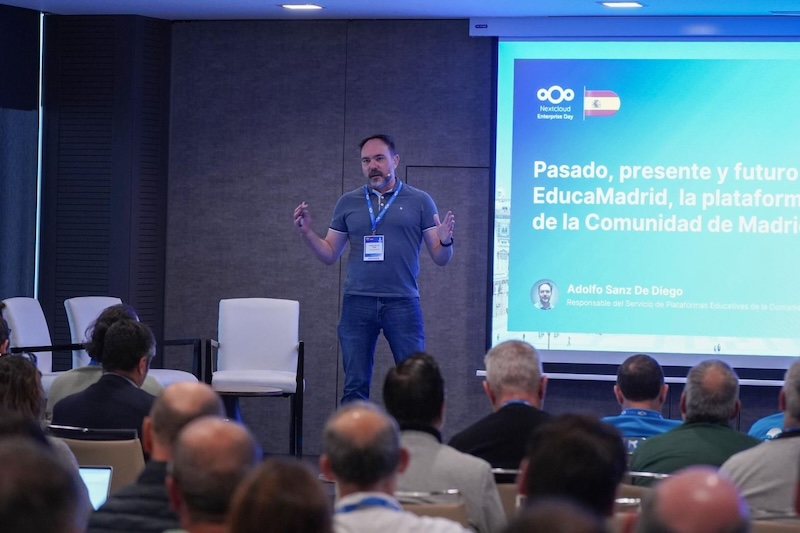
The Madrid region has its own example. Adolfo Sanz De Diego presented EducaMadrid, an education platform that runs on its own servers and open source software. Today it serves around 500,000 users, handles 400 million emails a year and uses Nextcloud and Collabora for file sharing and document editing. The goal is clear: to make EducaMadrid a European reference for digital sovereignty, and a model for Spain and the EU.
Telefónica: AI and cloud without giving up control
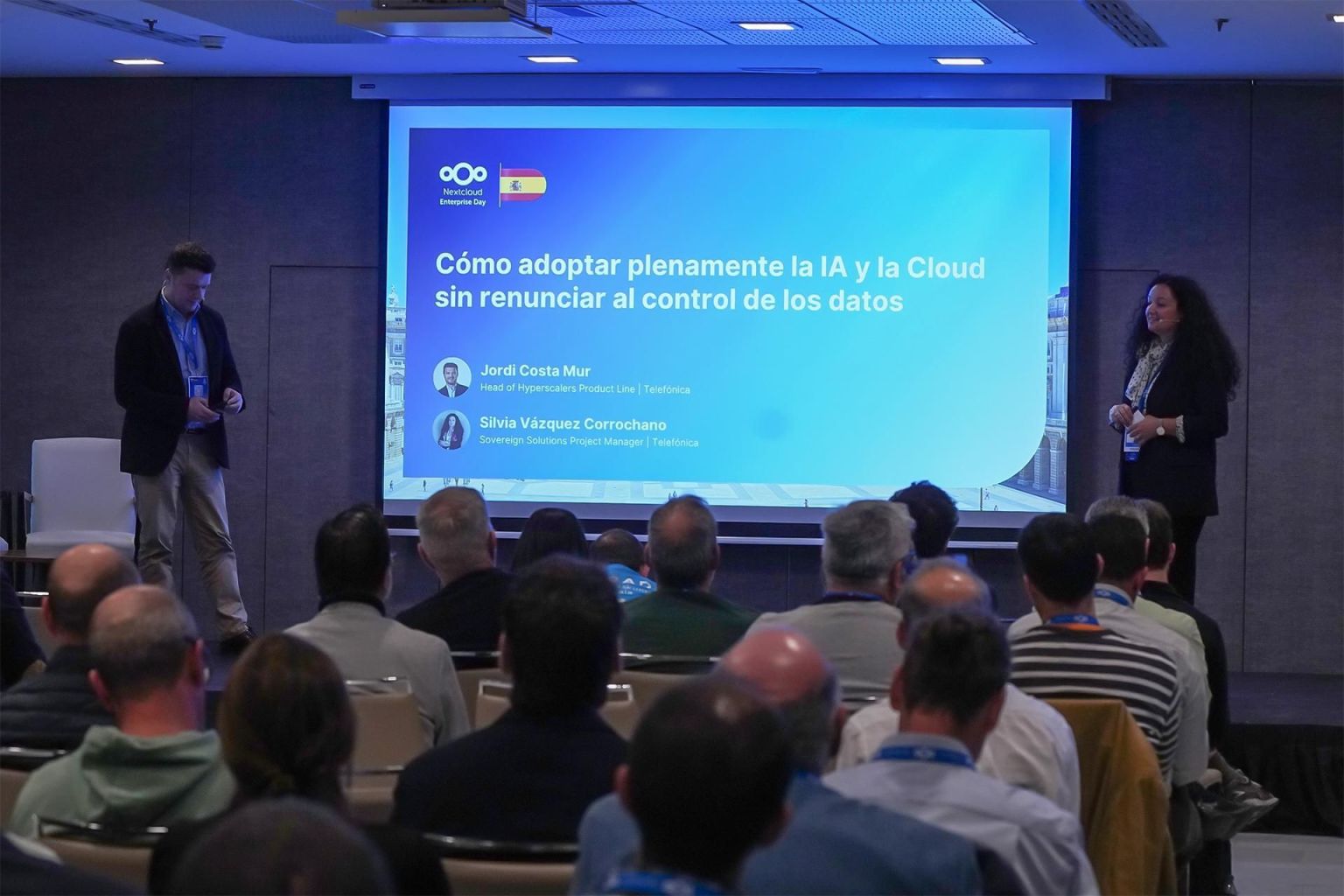
Telefónica’s keynote made clear that sovereignty is a topic for big companies too. Silvia Vázquez Corrochano, Sovereign Solutions Project Manager, and Jordi Costa Mur, Head of Hyperscalers Product Line, explained how organizations can use AI and the cloud and still keep control of their data.
According to Telefónica, it starts with four questions. What needs protection? Who can access the data? How may it be used? Which laws and dependencies apply? The answers decide where each workload should run.
Practical sessions: the ecosystem behind the switch
In the afternoon, two breakout tracks showed how the switch works in practice. Partners explained how organizations can leave Microsoft, Jira and Confluence without losing data or disrupting how their teams work.
On stage were Spanish IT provider Danysoft, migration specialist audriga, Microsoft integration specialist Sendent, IONOS Cloud Spain, Collabora Productivity, XWiki and OpenProject.
Panel: what triggers a real migration, and what holds it back
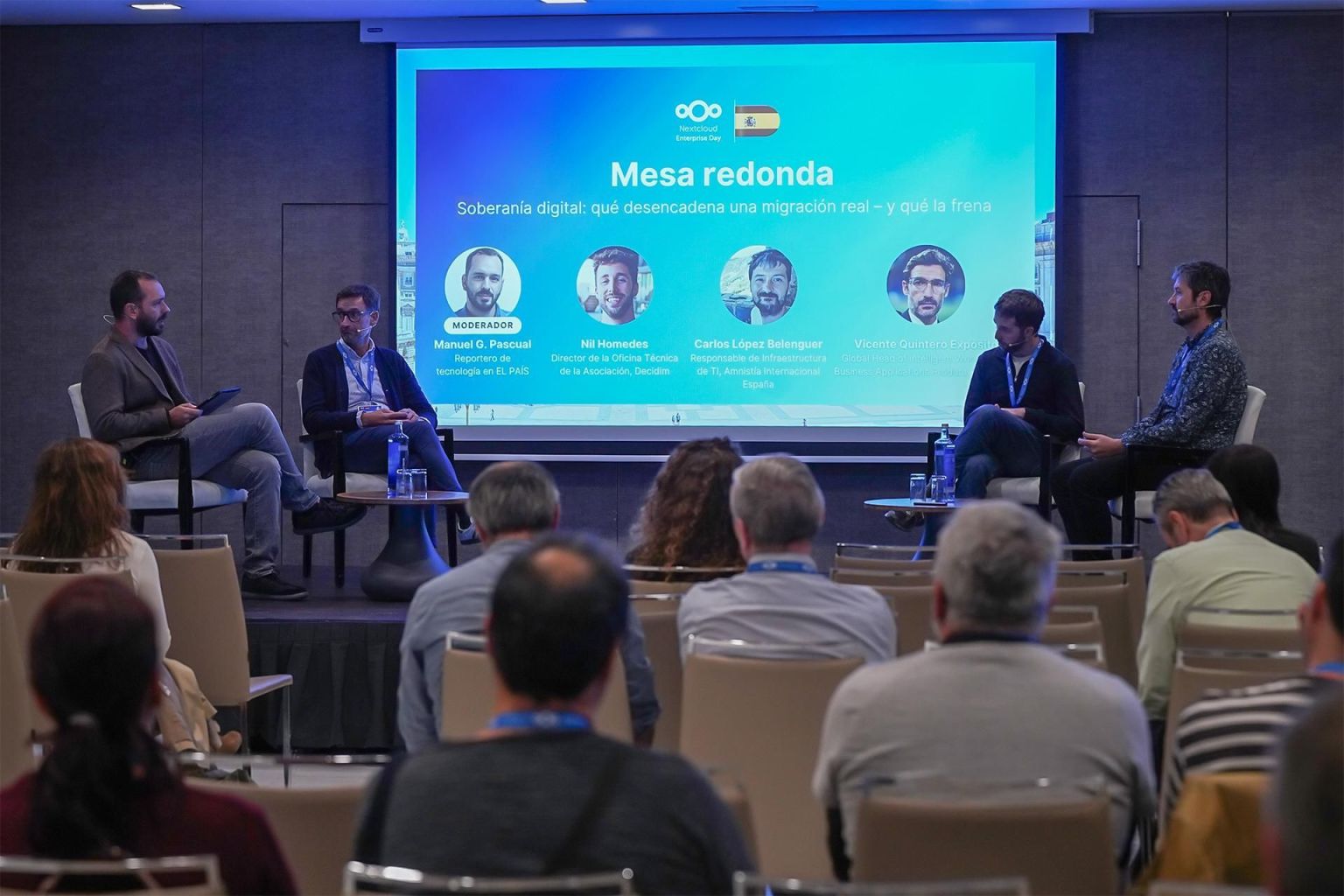
Manuel G. Pascual, technology journalist at El País, moderated the closing panel with Nil Homedes Busquet (Decidim), Carlos López Belenguer (Amnesty International Spain) and Vicente Expósito Quintero, Global Head of Intelligent Workplace at Telefónica. An open source association, an NGO and a telecom company: three very different organizations. Their answers were surprisingly close.
What makes an organization stop talking about sovereignty and actually switch? Right now it’s geopolitics, the panelists said, and above all pressure from the United States.
That pressure hits an NGO as much as a multinational company. Switching still has a price. A migration costs money, and productivity can drop at first. Many organizations also have small budgets and too few technical staff. So they stay with their provider even though they know about the lock-in, because the short-term pain looks bigger than the long-term risk. The panelists argued for the long view anyway: organizations that switch win back control and independence.
The way an organization migrates decides a lot. Users need to come along, and someone has to manage their expectations from day one.
The panel’s recommendation: start with a small pilot and add complexity step by step.
Spain is picking up speed
Spain doesn’t start from zero. The Basque Country and the Madrid region run open source platforms in their schools. Amnesty International Spain has relied on independent IT for over a decade. Decidim started in Barcelona and is now used around the world. What has changed is the momentum. Telefónica talks openly about data control, and the pressure from Washington speeds things up. Most organizations we met in Madrid no longer ask whether to switch, but how fast they can do it.
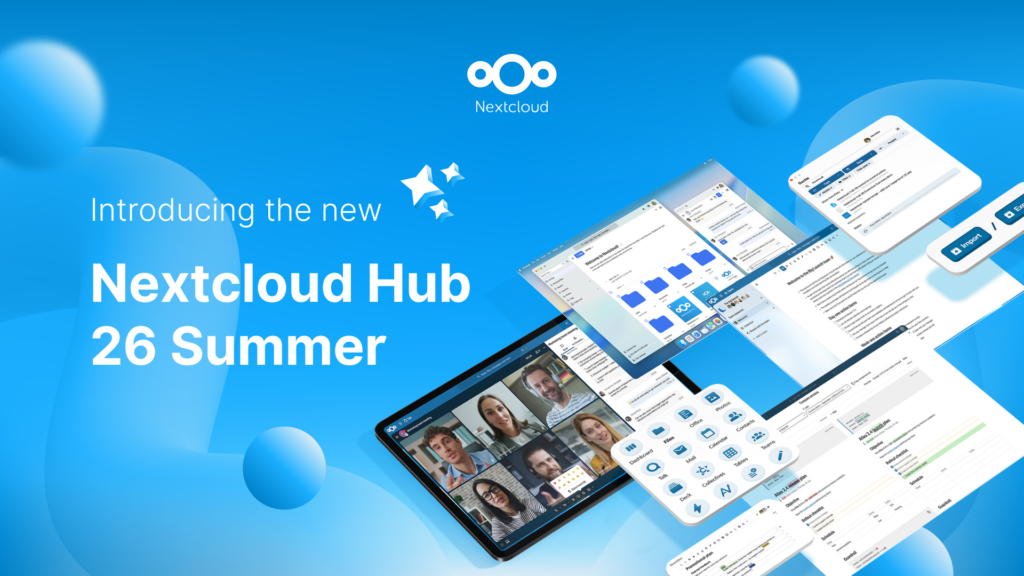
Fruto del trabajo conjunto de nuestro equipo, la comunidad y nuestros partners, Nextcloud Hub 26 Summer aprende de personas reales que utilizan nuestras herramientas a diario. Crea un espacio propio para tu equipo con Nextcloud Teams, organiza tus recuerdos en el nuevo Nextcloud Photos y disfruta de las actualizaciones que pediste en todas las aplicaciones. ¡Sigue leyendo para conocer todos los detalles de nuestra última versión!
Nextcloud Hub offers several types of integrations for AI, from completely self-hosted options to integrations with external services like Open AI. Here's an overview of what you can use and where, and where it stands on our Ethical AI scale.
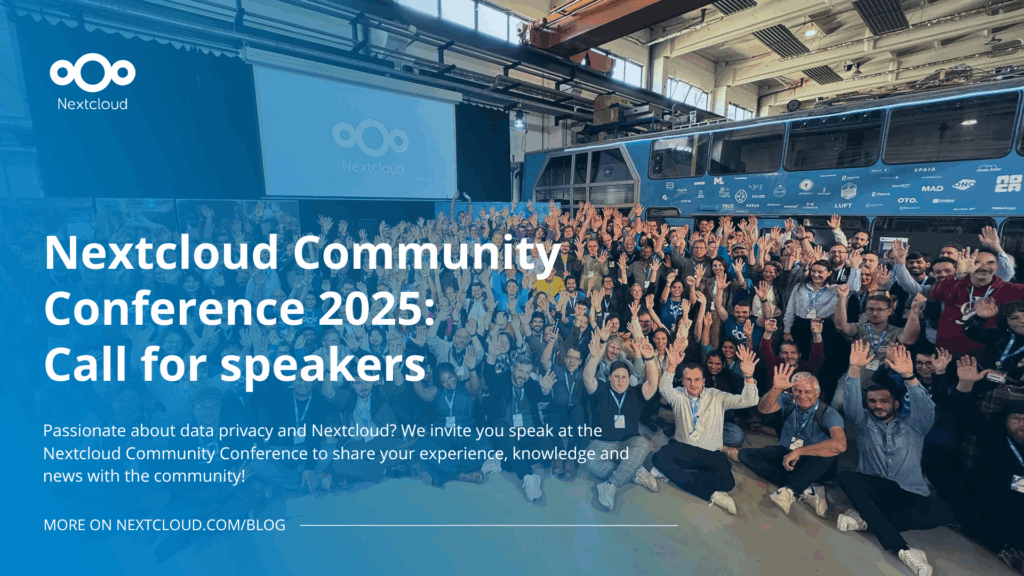
Passionate about data privacy and Nextcloud? We invite you speak at the Nextcloud Community Conference to share your experience, knowledge and news with the community!
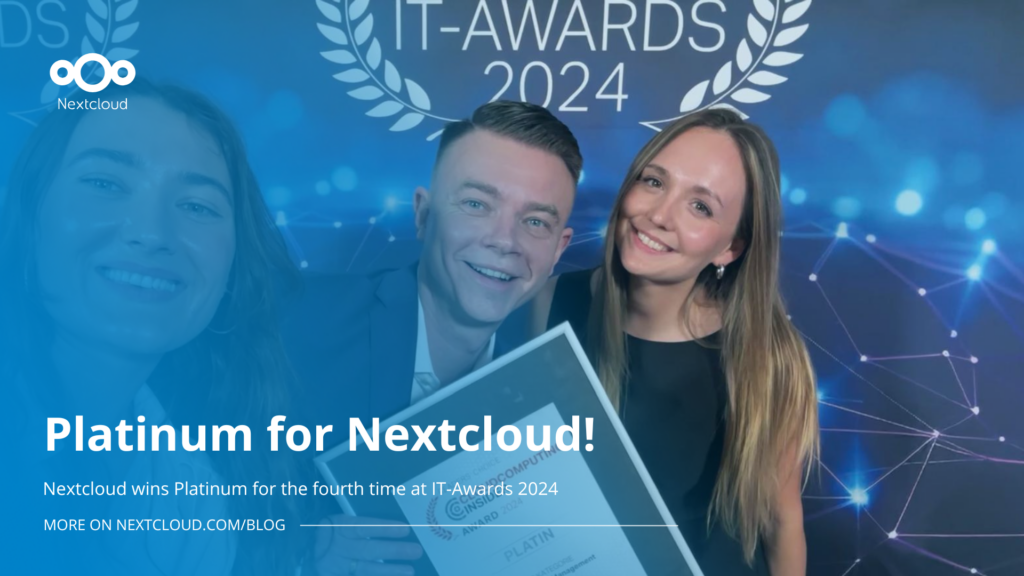
For the ninth time, Nextcloud has been nominated for the CloudComputing-Insider Readers’ Choice Award in the category of Cloud Content Management. We’d love to reach the top again! And we’re looking for the support of you and everyone else in our amazing community to get there. Nextcloud as the best Cloud Content Management tool? Only […]
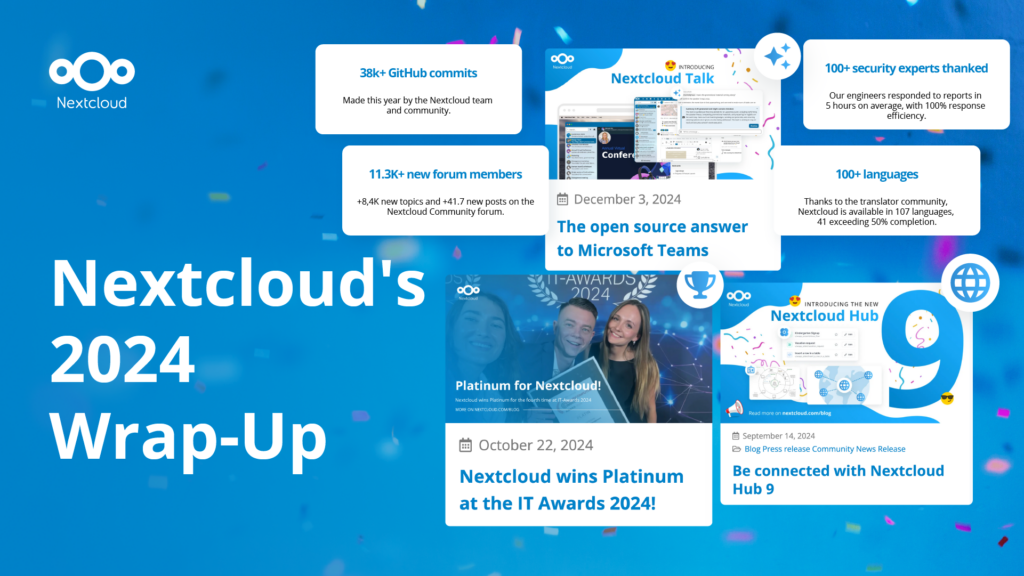
In the Nextcloud 2024 wrap-up, we want to take a moment to celebrate this year's achievements. Join us as we continue to reimagine what’s possible - shaping a world where open source, privacy and connection come together and drive progress for the greater good.
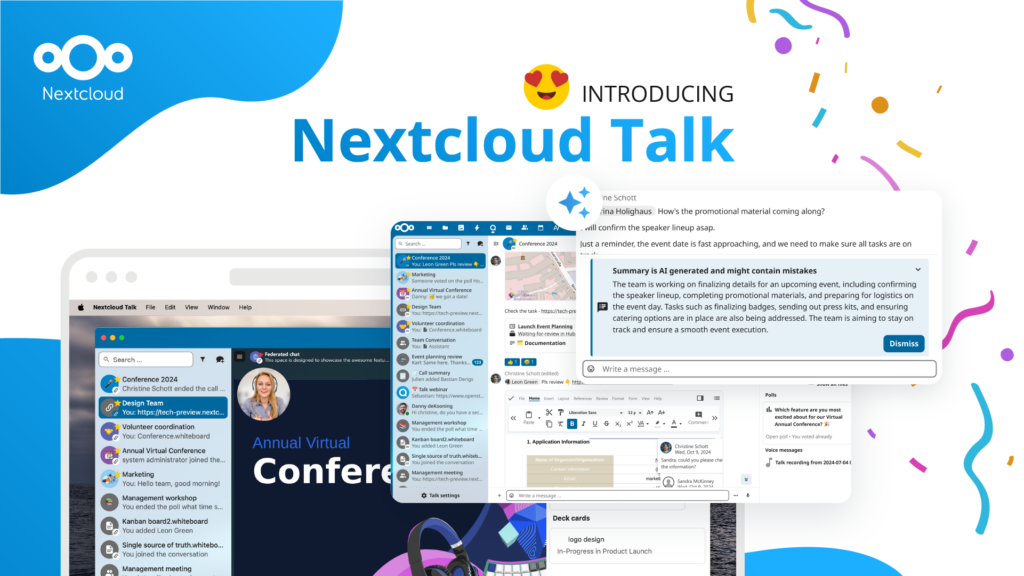
Las organizaciones, grandes y pequeñas, necesitan una forma de garantizar la resiliencia y la soberanía digital de sus operaciones: una alternativa de código abierto que respete la privacidad frente a Teams. Y hoy, presentamos esa solución: Nextcloud Talk.
Nextcloud has been recognized with the World Summit Award Germany that selects and promotes local digital innovation improving society, aiming to contribute to the United Nations' agenda of sustainable development goals.
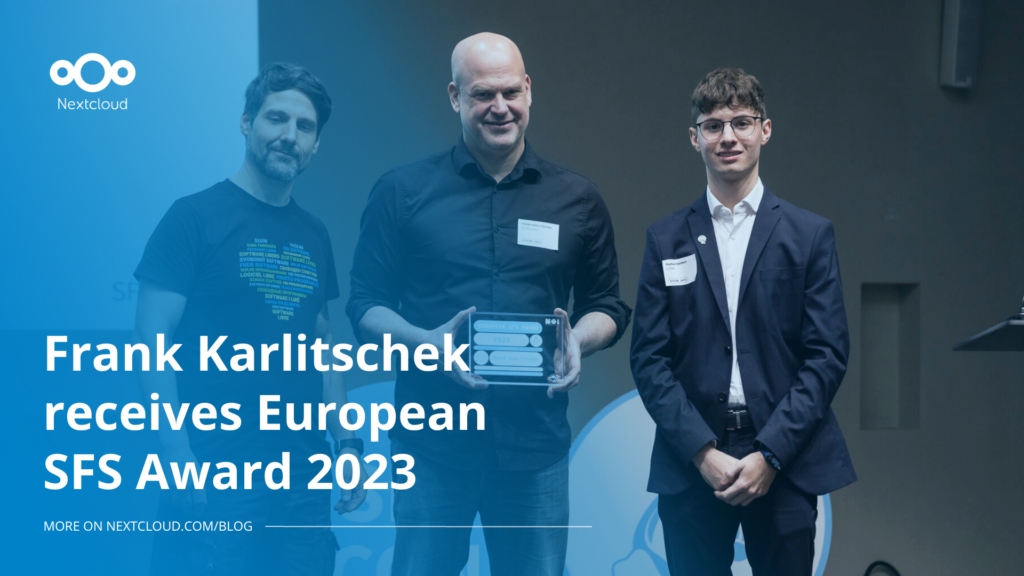
DIE ZEIT, a prominent German outlet, interviewed Nextcloud’s founder Frank Karlitschek for an article on Microsoft’s anti-competitive behaviour on the European office software market. Read for a recap of the article and the key takeaways.
MagentaCLOUD’s migration to Nextcloud in 2021 resulted in a fully equipped Online Storage with an integrated online office suite that further improves the user experience, flexibility and security for customers.
We bring you a major update to the Nextcloud AI Assistant, plus the news we work with several big hosting providers like IONOS and OVHcloud to bring AI-as-a-Service options to you!
Bechtle and Nextcloud announce today a complete managed collaboration platform for the public sector that requires no tender and can be deployed immediately.
Discover how to make the switch from ownCloud to Nextcloud. Our quick guide provides insights into the migration process, helping you make the transition smoothly.
Today, US-based file sync & share vendor Kiteworks announced their acquisition of ownCloud and Dracoon. Kiteworks points out that their customers now have access to their file-sharing application. It is to be expected they will not maintain 3 similar products, but customers will have to migrate to the US firms’ platform or look for another […]
As part of Schleswig-Holstein's state digitization strategy, the state chancellery has announced they will work with Nextcloud to develop AI for working with government documents. This comes just after we announced the first private AI assistant last weekend with Hub 6. The German state already uses Nextcloud and their AI strategy aligns with our work on ethical, local AI technologies.
Nuestra misión es ayudar a particulares, empresas y organizaciones a alcanzar la soberanía digital y recuperar el control sobre sus datos. Nextcloud Hub 5 supone un enorme paso adelante en la consecución de esta misión, poniendo el poder de la IA en tus manos, de forma que mantengas el control. Nueva versión, nuevas posibilidades Hub […]
Digital sovereignty in Spain is no longer a niche topic. At our first Nextcloud Enterprise Day in Madrid, more than 160 people from public administration, education, NGOs and companies, including Telefónica, discussed how to depend less on US Big Tech. Speakers from Decidim, EJIE, EducaMadrid and Amnesty International Spain shared what already works and what still holds organizations back.
Cyberattacks can now be carried out faster than ever, with less human involvement and on a much larger scale. Air-gapped environments offer a way to protect sensitive data and critical systems from increasingly sophisticated attacks.
Fancy names, same lock-in: here's why Microsoft’s digital sovereignty promises don’t protect European data from US law and why its “sovereign” cloud still leaves you dependent.
Guardamos algunas cookies para contar los visitantes y facilitar el uso del sitio. Esto no sale de nuestro servidor y no es para rastrearte personalmente. Consulta nuestra política de privacidad para obtener más información. Personalización
Cookies utilizadas para guardar los datos introducidos en los formularios, como nombre, correo electrónico, número de teléfono e idioma preferido.
Nombre de la cookie:nc_form_fields
Descripción de la cookie:Recuerda los datos introducidos en los formularios para la próxima vez (nombre, correo electrónico, teléfono e idioma preferido)
Caducidad de la cookie:30 días
Consentir
Nombre de la cookie:nc_utm_parameters
Descripción de la cookie:We use cookies to store UTM parameters from your visit so we can understand how you arrived at our website.
Las cookies estadísticas recopilan información de forma anónima y nos ayudan a comprender cómo utilizan nuestro sitio web nuestros visitantes. Utilizamos Matomo alojado en la nube.
Servicio:Matomo
Descripción de la cookie:
_pk_ses*: Cuenta la primera visita del usuario
_pk_id*: Ayuda a no contar dos veces las visitas.
mtm_cookie_consent: Recuerda que el usuario ha dado su consentimiento para almacenar y utilizar cookies.
Caducidad de la cookie:_pk_ses*: 30 minutos
_pk_id*: 13 meses
mtm_cookie_consent: 30 días