In this episode, we are joined by Prof. Dr. Johanna Pirker, professor of computer science at TU Munich and TU Graz, founder of the Game Lab Graz, and a member of the UN Independent International Scientific Panel on AI.
Johanna Pirker works at the intersection of AI, games, virtual and augmented reality, and human-computer interaction. In 2018, Forbes included her in the « 30 Under 30 Europe » list for her work in using VR and games to improve digital education. In 2020, she received the Käthe Leichter Prize for her efforts in diversity in engineering and the games industry. Her book « The Game Is On: How Gaming Revolutionizes Our World » published in 2025, makes the case for gaming as a means to reshape how people learn, work, and interact.
Inspired by her participation in the Nextcloud Summit 2026 panel session « From open source to open ecosystems: Europe’s next digital play », we invited Johanna to continue the conversation in our podcast. We tap into her perspective on where gaming meets learning, learning meets AI, and where open source tools foster innovation in her fields. What do video games and learning have in common? Why should we all learn how AI works and how it doesn’t? And finally, how can open source help us build a better future for science and innovation? Let’s find out!
I cannot think of anything negative coming out of open source. Open source is so good to show others what is going on, to involve them, to see what might not work yet, to find collaborations, to help to reproduce it, which is super important in science, to help boost open standards.
Johanna Pirker
Professor of Computer Science at TU Munich and TU Graz
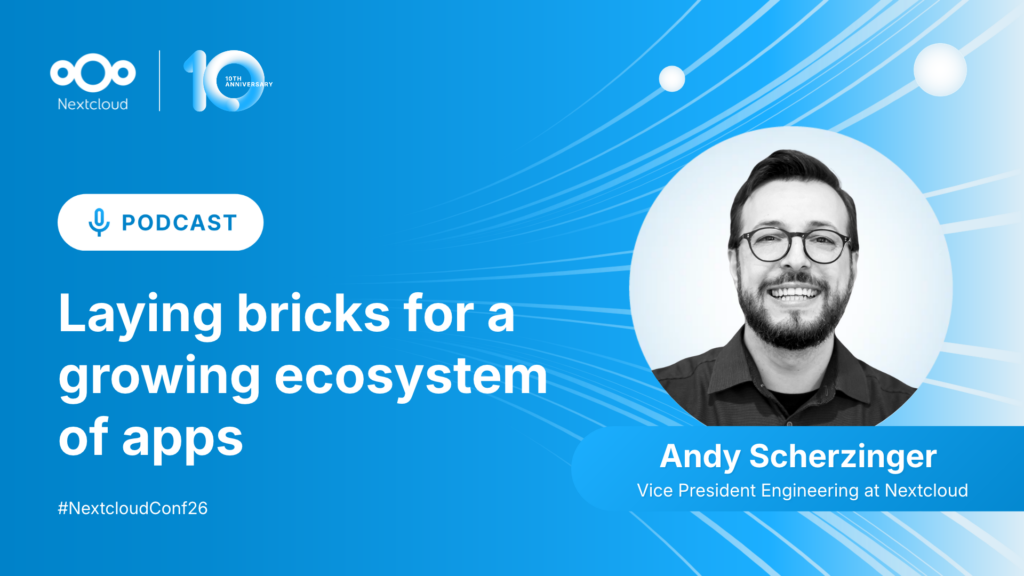
Andy Scherzinger, VP of Engineering at Nextcloud, talks about the goal of growing the Nextcloud App Store from 600 to 6,000 apps, explains when to build an ExApp instead of a classic PHP app, how abandoned apps can find new maintainers, and why AI coding agents can help keep older apps alive but don't replace code review and testing.
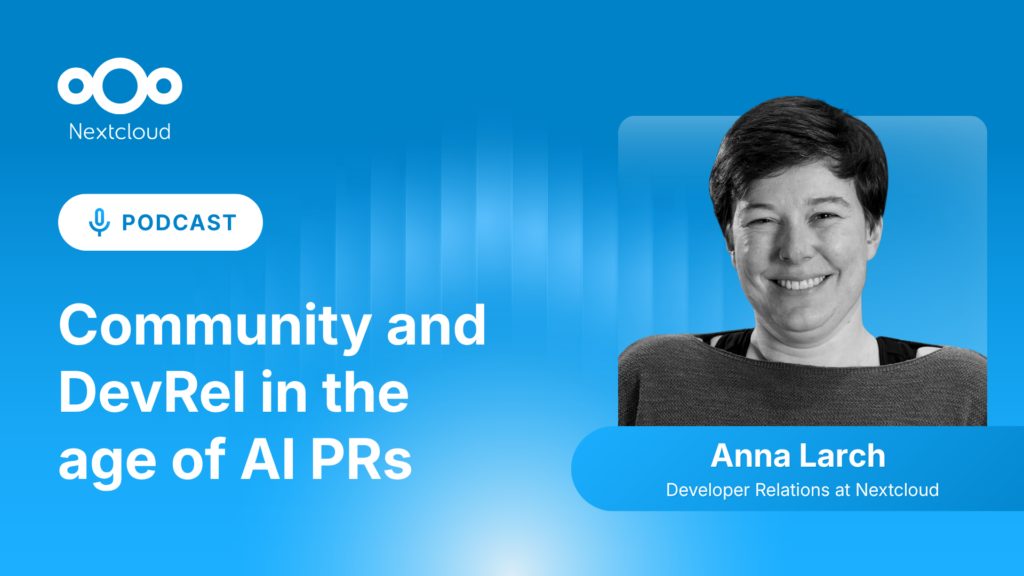
Anna Larch, Developer Relations at Nextcloud, talks about its shift toward more structured community management, shares her views on the growing need for digital sovereignty, Nextcloud's new ISV Partner Program, and why the Nextcloud Community Awards favor small and niche contributors instead of those with the biggest audiences.
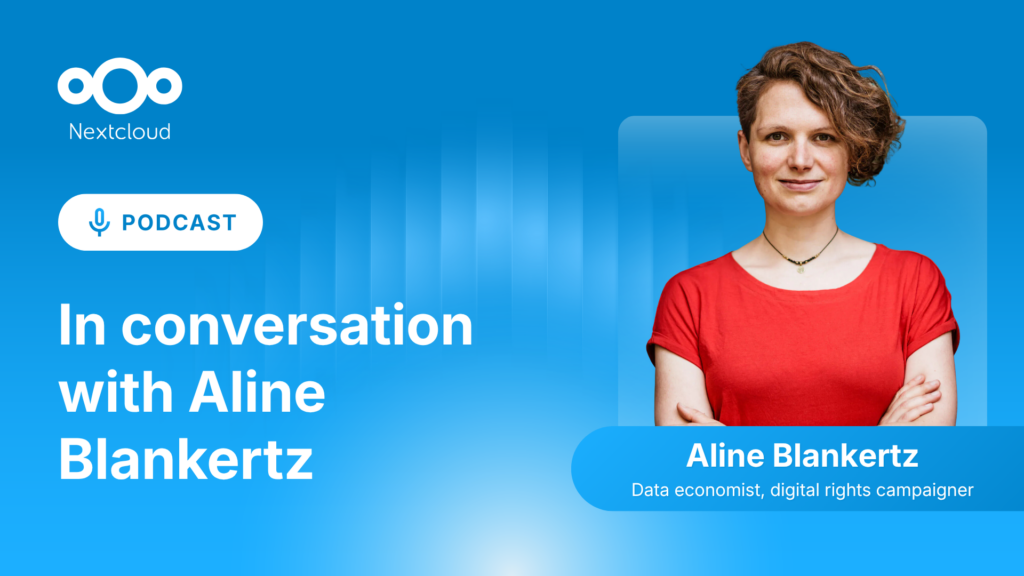
In this episode of the Nextcloud Podcast, we meet Aline Blankertz, a German data economist and digital rights campaigner. Aline is an economist and Tech Economy Lead at Rebalance Now, where she works on strategies to counter concentrated power in digital markets. She combines years of experience in competition economics with a strong commitment to making markets democratically accountable.
Nous enregistrons certains cookies pour compter les visiteurs et faciliter l'utilisation du site. Ces données ne quittent pas notre serveur et ne sont pas destinées à vous suivre personnellement ! Consultez notre politique de confidentialité pour plus d'informations Personnaliser
Les cookies utilisés pour enregistrer les données saisies dans les formulaires, telles que le nom, l'adresse électronique, le numéro de téléphone et la langue préférée.
Nom du cookie :nc_form_fields
Description du cookie :Mémorise les données saisies dans les formulaires pour une prochaine visite (nom, adresse électronique, numéro de téléphone et langue préférée).
Expiration du cookie :30 jours
Consentement
Nom du cookie :nc_utm_parameters
Description du cookie :We use cookies to store UTM parameters from your visit so we can understand how you arrived at our website.
Les cookies statistiques collectent des informations de manière anonyme et nous aident à comprendre comment nos visiteurs utilisent notre site web. Nous utilisons la solution open source de mesure de statistiques web Matomo
Service:Matomo
Description du cookie :
_pk_ses*: Compte la première visite de l'utilisateur
_pk_id*: Aide à ne pas compter deux fois les visites.
mtm_cookie_consent: Se souvient que l'utilisateur a donné son accord pour le stockage et l'utilisation de cookies.
Expiration du cookie :_pk_ses*: 30 minutes
_pk_id*: 13 mois
mtm_cookie_consent: 30 jours