Veneto Region – a regional administration serving millions of citizens
Located in northeastern Italy, the Veneto Region manages public services for nearly five million citizens through 28 principal offices and 44 departmental structures. Its mission is to support citizens, institutions, and businesses by promoting development, innovation, and transparent public administration.
As part of its digital agenda, the Region provides reliable access to public documentation while safeguarding sensitive information. This responsibility comes with strict requirements around data protection, cybersecurity, and regulatory compliance.
Below are the requests the Region had:
- Rationalization of repositories with an ad hoc mapping system
- Ability to securely publish documentation on institutional portals from a centralized platform
- Collaboration with external entities
- Infrastructure migration to containers/Kubernetes
- Updating of all instances with guided procedures.
- Smart collaboration with browser editing
- Addition of a new dedicated instance
- Addition of forms and tables
- Dedicated development of apps tailored to regional requirements
Replacing obsolete repositories without disruption
The project originated from a pressing operational need. Several legacy repositories, including box.com and an internally used solution derived from Pydio, were being decommissioned. These platforms were deeply embedded in institutional portals, with thousands of existing links pointing citizens and external stakeholders to public domains.
Simply replacing the repositories risked broken links, service interruptions, and a negative impact on public access to information. The administration required a solution that would allow for a transparent migration, ensuring documents remained accessible throughout the transition and that future publishing could be managed centrally.
At the same time, the Veneto Region wanted to comply with national guidelines favoring open source software and to retain full control over data through an on-premises deployment.
These requirements led the Veneto Region to look for a platform that could deliver:
- Full data control
All documents, links, and metadata needed to remain under the administration’s direct control, ensuring long-term ownership and transparent governance across institutional portals and external access points.
- Regulatory compliance by design
The solution had to meet public-sector and GDPR requirements, including data residency, access traceability, and audit readiness, without relying on external SaaS providers or third-country infrastructures.
- On-premises deployment without service disruption
Running the platform on the Region’s own infrastructure was essential to support a transparent migration, avoid broken public links, and guarantee uninterrupted access to information for citizens and external stakeholders.
- Open source flexibility and future scalability
The platform needed to align with national open-source guidelines while remaining flexible enough to scale, evolve, and integrate with existing systems as public digital services continue to grow.
Maura Raccanello
Holder of Advanced Qualification in ICT Management, Digital Agenda, and SOS ICT services and supplies, Veneto Region
We realized that Nextcloud could help us manage communications with entities outside the region, allowing us to keep data under control from our regional database, and that’s how the sharing instance was born.
A tailored implementation approach with Nextcloud
The Veneto Region, in collaboration with ITServicenet, an IT company based in Veneto, an official Nextcloud partner and member of the Italian Open Source Network (RIOS), provided technical support for the implementation of Nextcloud. The platform was selected by the region to streamline obsolete repositories and improve collaboration between employees and citizens, while progressively adopting additional functionalities that proved valuable during the implementation process.
Nextcloud was chosen for its ability to integrate with existing systems while meeting the stringent requirements of public administration. Furthermore, its open-source nature aligns with the Three-Year Plan for IT in Public Administration, which encourages public bodies to prioritize open technologies. Beyond licensing considerations, open technologies play a strategic role in public administration by promoting transparency, interoperability, and long-term sustainability, enabling institutions to fully understand, verify, and adapt the systems they rely on.
As the project evolved, other needs emerged, mainly related to managing relationships with external parties: the ability to share files and folders with external entities and publish documentation on institutional websites. Nextcloud Files perfectly met these requirements.
Alessandro Bolgia, Engineer
Owner of ITServicenet
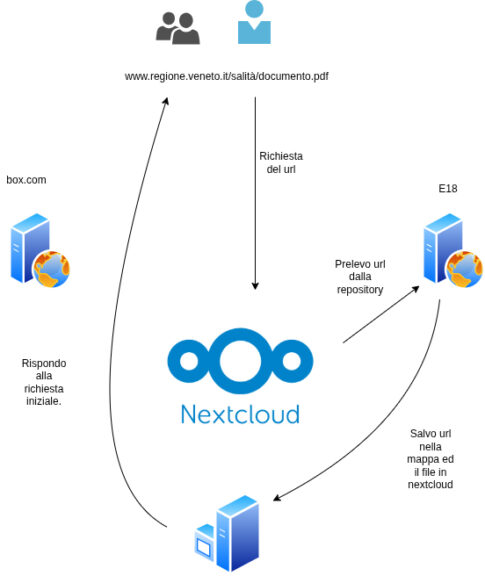
When a document was first requested via an old link, the system retrieved it from the decommissioned repository, copied it into Nextcloud, and generated a new reference. Subsequent requests were served directly from Nextcloud, ensuring continuity and performance. Through this approach, more than 625,5 GB of data were migrated, without affecting citizens or external users.
Developing new features
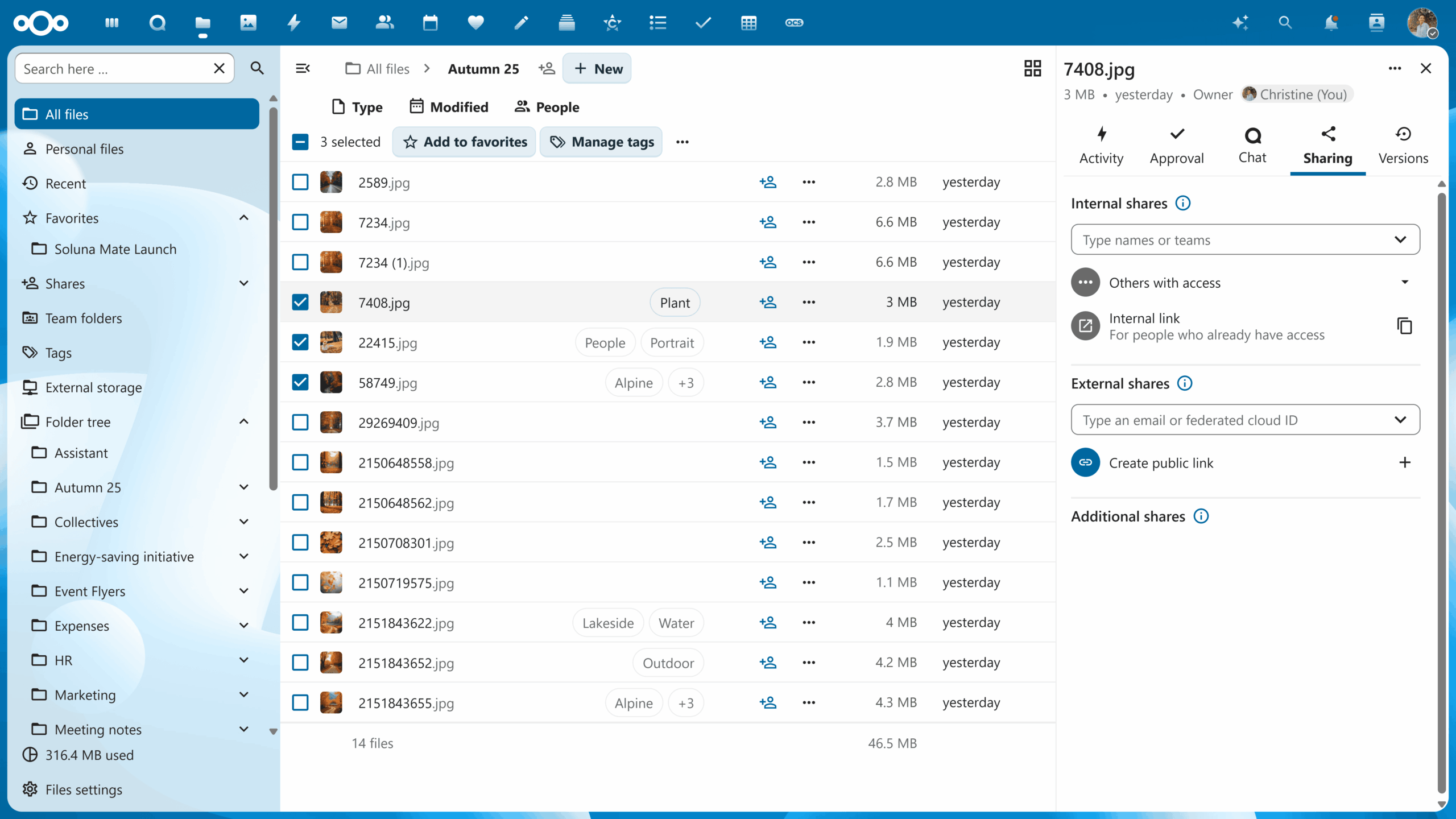
As the project progressed, additional needs came to light, particularly around collaboration with external entities. Nextcloud Files enabled secure sharing of documents and folders with non-regional users, while still keeping all data under the administration’s control. To support different use cases, two separate Nextcloud instances were deployed: one dedicated to hosting migrated public documents, and another focused on active collaboration.
We started with a specific need: to replace old repositories without creating disruption for citizens.
Then Nextcloud showed us other interesting aspects, so we evaluated its potential together with our supplier ITServicenet and decided to extend its functionality.
Maura Raccanello
Holder of Advanced Qualification in ICT Management, Digital Agenda, and SOS ICT services and supplies, Veneto Region
Immediate results in secure collaboration under full control
The transition to Nextcloud delivered instant and tangible benefits. The document migration was completed without any disruption to public services, and the Region gained a modern, centralized system for managing and publishing files.
Approximately 600 users have since been onboarded to the collaboration platform, who can now use secure file sharing and cooperate efficiently with external partners. At the same time, the rationalizing of repositories reduced complexity and improved overall data governance.
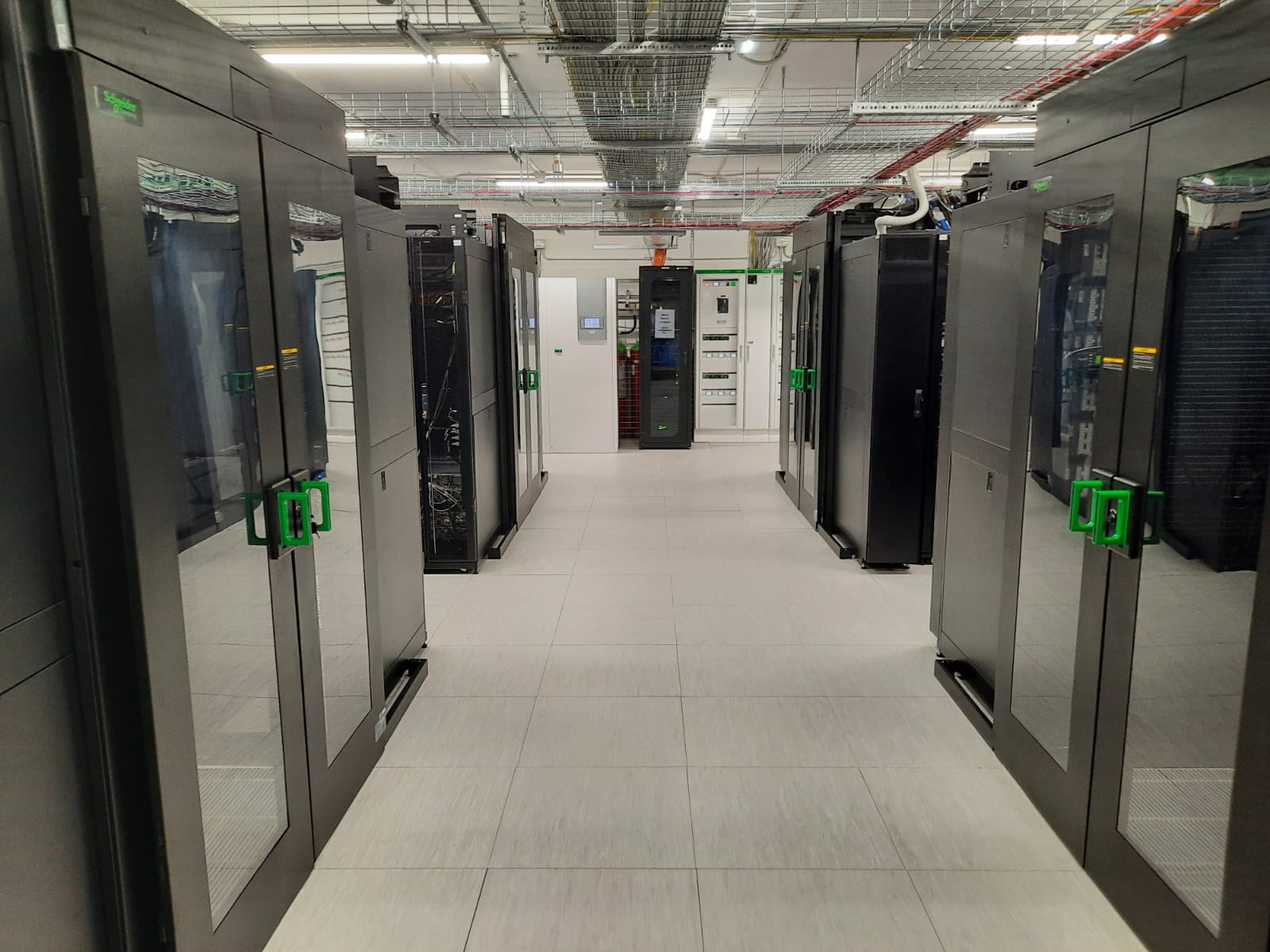
In 2025, the Veneto Region completed a major infrastructure upgrade by migrating its Nextcloud environment to a container-based platform orchestrated with Kubernetes. At the same time, all instances were updated, and browser-based document editing was introduced for selected users through ONLYOFFICE.
With this roadmap, the Veneto Region continues to strengthen its digital sovereignty while delivering efficient, transparent, and citizen-centric public services, entirely under its control.
The Veneto Region shows that large-scale modernization does not have to come at the cost of service continuity or data control. By combining digital sovereignty with modern online collaboration, the Region replaced deeply embedded legacy systems without disrupting public access, while retaining full ownership of data and meeting strict regulatory requirements. An on-premises, open source platform enabled long-term compliance, interoperability, and independence from vendor lock-in, while remaining scalable and adaptable to future needs. The result is a modular, future-proof foundation for public digital services that supports efficiency, transparency, and citizen trust.