Welcome to our second podcast episode! In this episode we continue our conversation with Nextcloud designer, Jan-Christoph Borchardt, and turn our attention towards design. What is design and how do we handle design at Nextcloud? How to collaborate and what tools to use?
Jan answers these questions and many more, discussing the process of deciding on design changes and community building, accessibility, language support, and usability testing. But Jan also walks through what a new app developer can do to build an app for Nextcloud and how the interaction with them and the wider community and designers goes. Community events, where and how people get together to code and design Nextcloud, release planning – this podcast is 50 minutes and covers almost everything!
Find the feed on our podcast page. If you have not heard the first episode, you can find it there as well.
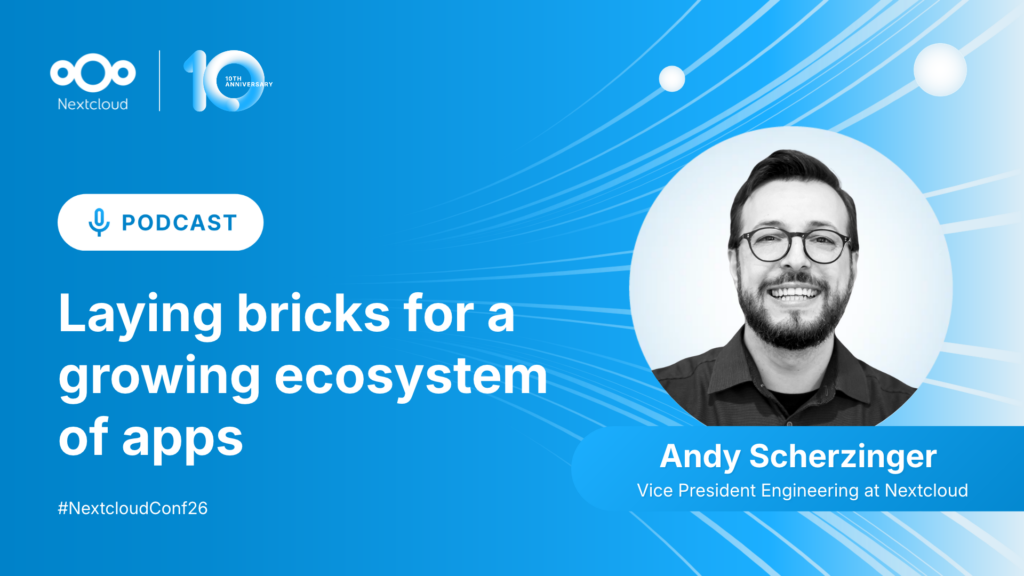
Andy Scherzinger, VP of Engineering at Nextcloud, talks about the goal of growing the Nextcloud App Store from 600 to 6,000 apps, explains when to build an ExApp instead of a classic PHP app, how abandoned apps can find new maintainers, and why AI coding agents can help keep older apps alive but don't replace code review and testing.
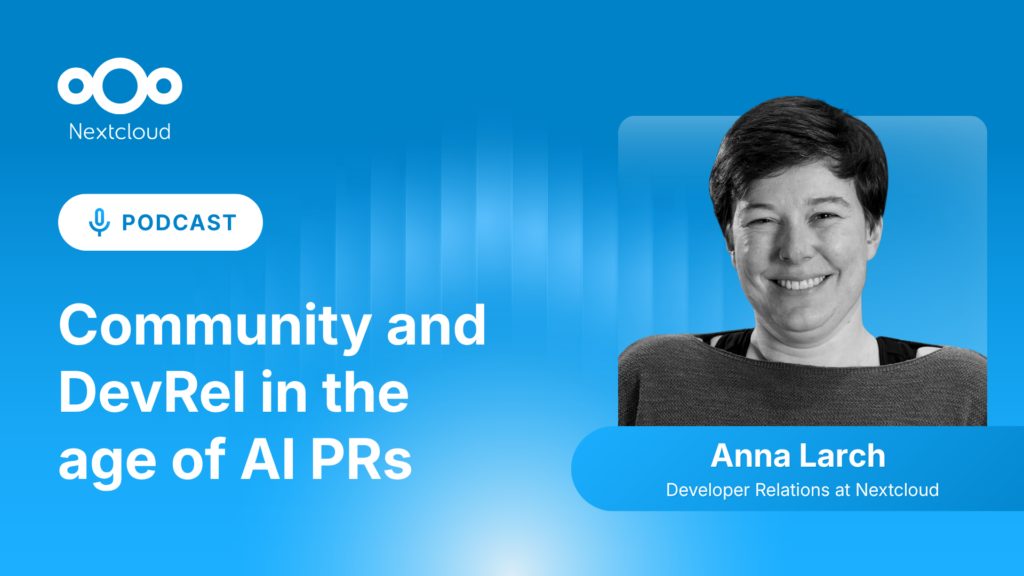
Anna Larch, Developer Relations at Nextcloud, talks about its shift toward more structured community management, shares her views on the growing need for digital sovereignty, Nextcloud's new ISV Partner Program, and why the Nextcloud Community Awards favor small and niche contributors instead of those with the biggest audiences.
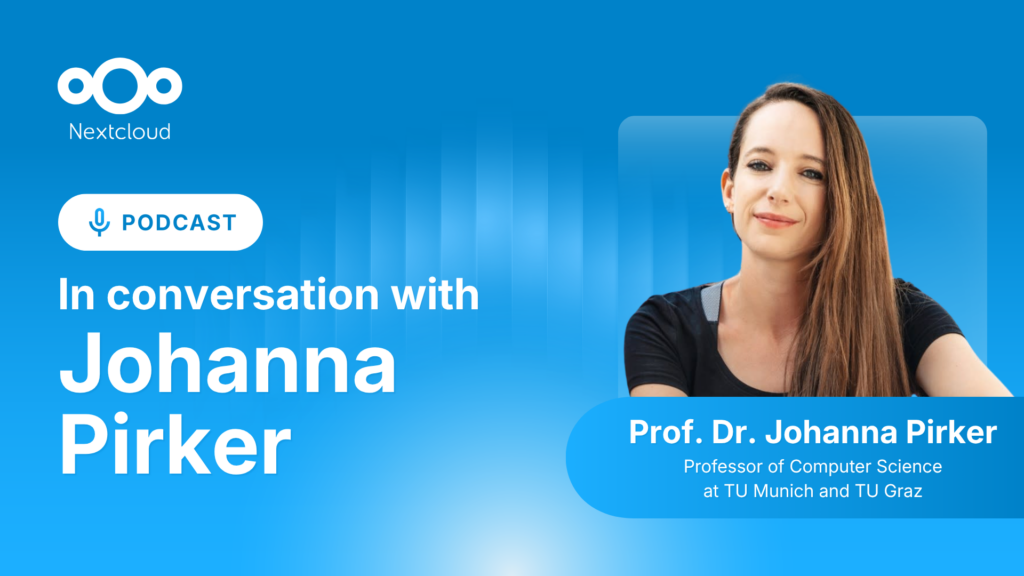
Johanna Pirker is a professor of computer science at TU Munich and TU Graz, founder of the Game Lab Graz, and a member of the UN Independent International Scientific Panel on AI. She works at the intersection of AI, games, virtual and augmented reality, and human-computer interaction. We tap into her perspective on where gaming meets learning, learning meets AI, and where open source tools foster innovation in her fields.
Guardamos algunas cookies para contar los visitantes y facilitar el uso del sitio. Esto no sale de nuestro servidor y no es para rastrearte personalmente. Consulta nuestra política de privacidad para obtener más información. Personalización
Cookies utilizadas para guardar los datos introducidos en los formularios, como nombre, correo electrónico, número de teléfono e idioma preferido.
Nombre de la cookie:nc_form_fields
Descripción de la cookie:Recuerda los datos introducidos en los formularios para la próxima vez (nombre, correo electrónico, teléfono e idioma preferido)
Caducidad de la cookie:30 días
Consentir
Nombre de la cookie:nc_utm_parameters
Descripción de la cookie:We use cookies to store UTM parameters from your visit so we can understand how you arrived at our website.
Las cookies estadísticas recopilan información de forma anónima y nos ayudan a comprender cómo utilizan nuestro sitio web nuestros visitantes. Utilizamos Matomo alojado en la nube.
Servicio:Matomo
Descripción de la cookie:
_pk_ses*: Cuenta la primera visita del usuario
_pk_id*: Ayuda a no contar dos veces las visitas.
mtm_cookie_consent: Recuerda que el usuario ha dado su consentimiento para almacenar y utilizar cookies.
Caducidad de la cookie:_pk_ses*: 30 minutos
_pk_id*: 13 meses
mtm_cookie_consent: 30 días